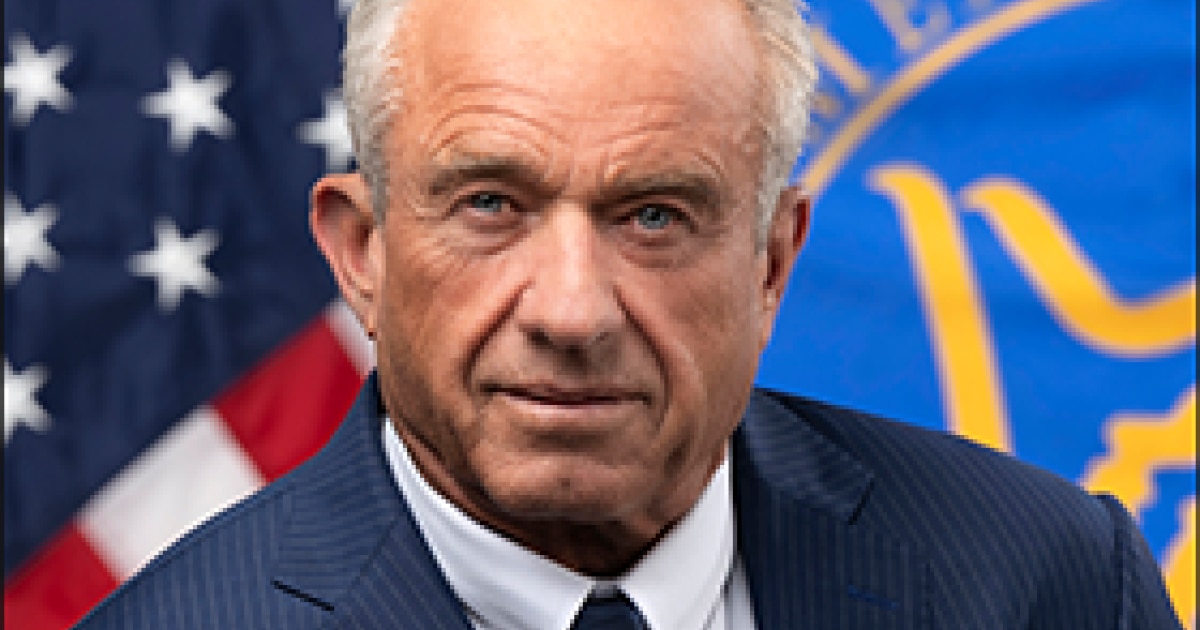
Robert F. Kennedy Jr. marked his one-year anniversary as Secretary of the Department of Health and Human Services in February 2026, amid intense scrutiny over his leadership. While his administration claims to have launched a "Make America Healthy Again" mission, critics argue his tenure has undermined public health infrastructure and vaccine trust.
The "Make America Healthy Again" Mission and Internal Messaging
As of February 2026, the Department of Health and Human Services (HHS) maintains a dedicated portal highlighting the first year of Robert F. Kennedy Jr.’s leadership. According to the official HHS website, Kennedy—who previously co-founded the nonprofit Children’s Health Defense—has focused his career on environmental health and the impact of pollution on human ecosystems. Under the banner of "Make America Healthy Again," the agency reports it is taking steps to identify the root causes of the chronic disease epidemic.
The operational framework for this mission, as outlined in the HHS Fiscal Year 2026 Congressional Justification, prioritizes the reduction of processed food additives and a shift toward what the agency terms "metabolic health optimization." Agency officials have stated that this involves a cross-departmental review of the National Institutes of Health (NIH) grant allocations, specifically targeting research into the intersections of autoimmune conditions and environmental exposures. However, internal documents leaked to the Government Accountability Office (GAO) in January 2026 suggest that staff morale within the Centers for Disease Control and Prevention (CDC) has reached a decade-low, citing a lack of clarity regarding the scientific standards required for new agency initiatives.
However, the department’s self-assessment contrasts sharply with external perspectives. During a news conference on February 10, 2026, Brad Woodhouse, president of the nonprofit Protect Our Care, characterized the administration’s impact as negative. As reported by USA Today, Woodhouse emphasized that the institutional erosion during this period has been profound.
"In one year, RFK Jr. has made America sicker. He’s let measles get a foothold in the U.S. again. He continues to undermine the efficacy of the measles vaccine. He’s undermined public trust in vaccines. He’s promoted dangerous conspiracy theories. He’s installed quacks in key position to wreak havoc on our nation’s public health infrastructure.
Measles Outbreaks and Shifting Vaccination Rhetoric
A central point of contention in Kennedy’s first year has been his public stance on immunizations. In April 2025, faced with the first U.S. measles fatalities in a decade, Kennedy urged the public to pursue vaccination. During an interview with CBS News, he noted, "We encourage people to get the measles vaccine," and later reinforced this on X, stating, "The most effective way to prevent the spread of measles is the MMR vaccine."
This pivot drew rare praise from some in the medical community. Dr. Neil Stone, an infectious disease clinician-scientist, remarked, "Words I never thought I would hear Robert F Kennedy Jr say. He’s absolutely 100% correct, and I’m relieved to hear him say it." Yet, the administration’s messaging remained inconsistent. By late April 2025, Kennedy shifted his tone, describing the measles vaccine as "leaky" due to waning effectiveness—a characterization that medical experts continue to dispute. By February 2026, as measles cases climbed to hundreds nationwide, the debate over his influence on public compliance remains a primary focus for health policy observers.
The clinical reality, according to the Morbidity and Mortality Weekly Report (MMWR) published by the CDC in January 2026, indicates that the current outbreak is concentrated in geographic clusters with vaccination rates falling below the 95% threshold required for community immunity. Epidemiologists at Johns Hopkins University have noted in independent analyses that the resurgence is linked to a 12% drop in MMR uptake among pediatric populations over the last 18 months. While Kennedy has publicly acknowledged the efficacy of the vaccine, critics argue his earlier rhetoric—specifically statements made during his 2024 campaign regarding the National Vaccine Injury Compensation Program—created a lingering skepticism that clinical outreach efforts have struggled to overcome.
Regulatory Changes to Food Supply and Dye Regulations
Beyond vaccines, Kennedy’s tenure has seen a tangible shift in food safety policy. In April 2025, he announced a push to remove petroleum-based synthetic dyes from the U.S. food supply. Kennedy stated, "For too long, some food producers have been feeding Americans petroleum-based chemicals without their knowledge or consent."
While no formal legislation has been enacted to ban these substances, the Food and Drug Administration (FDA) has committed to a goal of phasing out such dyes by the end of 2026. According to Kennedy, this effort relies on a "mutual understanding" between the federal government and the food industry rather than a legislative mandate. While food activists have largely welcomed this direction, the efficacy of this voluntary approach compared to traditional regulatory enforcement remains a key metric for evaluating his second year in office.
The FDA’s strategy, as detailed in an agency memorandum released in December 2025, involves a "voluntary reformulation initiative" where manufacturers are encouraged to replace Red 40, Yellow 5, and Yellow 6 with naturally derived colorants. Industry groups, including the Grocery Manufacturers Association, have expressed concern regarding the feasibility of this timeline, citing supply chain constraints and the stability of natural alternatives. Independent food toxicologists have pointed out that while the FDA is prioritizing these dyes, the agency has not yet released new peer-reviewed risk assessments to support the pivot, leaving the scientific basis for the accelerated timeline a subject of debate among regulatory experts.
Institutional Stability and Public Health Oversight
Kennedy’s policies have also been criticized for undermining public trust in established medical research and promoting conspiracy theories that have led to a significant increase in preventable diseases. The American Medical Association (AMA) issued a statement in January 2026 expressing "grave concern" over the leadership changes at the NIH, where several long-standing directors of infectious disease research resigned citing a lack of alignment with the administration’s new priorities.
Observers note that the administration has increasingly relied on non-traditional advisers, including figures previously associated with alternative wellness movements, to shape its public health guidance. This has created a bifurcated reality: official HHS communications continue to provide standard health information, while the Secretary’s personal communications platforms frequently contradict the data provided by his own career staff. For patients navigating this environment, public health researchers recommend consulting with primary care physicians or board-certified specialists to verify health guidance. Patients are advised to rely on evidence-based clinical guidelines established by professional medical societies rather than policy-driven rhetoric, ensuring that individual health decisions are based on peer-reviewed data rather than political mandates.
As the administration moves into the second year of its mandate, the gap between the agency’s stated mission to "Make America Healthy Again" and the concerns raised by public health advocates regarding vaccine trust and institutional stability continues to define the landscape of federal health policy.