Kevin Warsh faced intense questioning during his Senate Banking Committee confirmation hearing to become the next Federal Reserve chair on April 21, 2026.
The 56-year-old financier and former Fed governor, nominated by President Donald Trump to succeed Jerome Powell, appeared before senators amid scrutiny over his financial disclosures and independence from the White House.
Warsh’s paperwork revealed more than $100 million in holdings tied to his work for investor Stanley Druckenmiller, with the largest assets labeled only as the “Juggernaut Fund” due to a confidentiality agreement.
The Office of Government Ethics determined Warsh was not in compliance with disclosure requirements for those holdings, though it noted he would be once he divests them.
Senate Democrats, led by Elizabeth Warren of Massachusetts, pressed Warsh on the issue, requesting that the committee note the ethics concern in the hearing record.
Republicans on the committee countered that Warsh remains in compliance, with Senator Thom Tillis of North Carolina stating he confirmed with staff that Warsh would be compliant if he executes the divestment agreement.
Warsh told Senator Jack Reed of Rhode Island that he had disclosed all information he was permitted to share and agreed to divest virtually all of his financial assets, with a majority to be sold before his swearing-in.
During Warren’s grilling, Warsh attempted to ease tension with a joke about Trump’s frequent “central casting” compliment, saying he would look older and grayer if he truly fit the description, perhaps showing up with a cigar.
The remark drew one or two chuckles from the packed hearing room, but Warren responded that while the comment was “adorable,” the nation needs a Fed chair who is independent.
Warsh repeatedly declined to state whether Trump lost the 2020 election, saying he tries to keep politics separate from the Federal Reserve’s work.
Warren countered that confirming the election result is a factual question, not a political one, and that independence requires courage to answer such basic truths.
The nominee brought a traditional résumé to the hearing: Ivy League education, prior service on the Federal Reserve Board from 2006 to 2011, Wall Street experience at Morgan Stanley, and time at the Hoover Institution, a conservative think tank.
He served on the Board through the 2008 financial crisis, departing in 2011 after being nominated by George W. Bush following a role on Bush’s National Economic Council.
Once known as a relatively hawkish Fed governor who favored higher rates and emphasized inflation concerns, Warsh has shifted his public stance, now advocating for lower short-term rates through balance sheet reduction.
He has criticized the Fed’s reliance on data and its balance sheet expansion, going so far as to call for “regime change” at the central bank since emerging as a top contender for the chairmanship.
Warsh defended his independence amid skepticism over his ties to Trump and Wall Street
He emphasized his intention to separate Fed policy from political influence, though he refused to validate the 2020 election outcome when pressed.
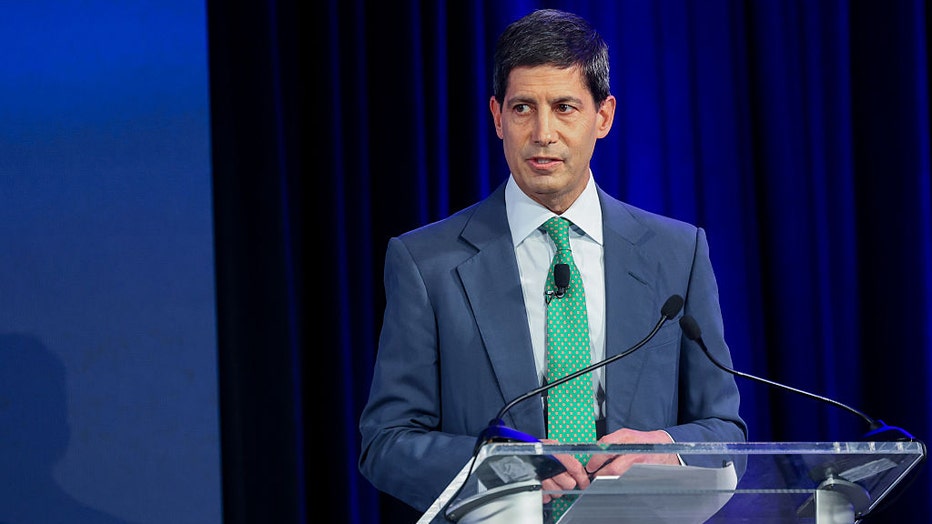
His attempt at humor during Warren’s questioning fell flat, underscoring the gravity of the independence probe.
Financial disclosures became a focal point of Democratic criticism
The $100+ million in undisclosed-linked assets raised concerns about potential conflicts, despite Warsh’s pledge to divest before assuming office.
Republicans maintained the ethics issue was resolvable through compliance with the divestment agreement.
Why did Warsh refuse to confirm Trump lost the 2020 election?
Warsh said he tries to keep politics separate from the Federal Reserve’s work when asked about the 2020 election outcome.
What happens next if Warsh is confirmed?
If confirmed, Warsh would succeed Jerome Powell as Federal Reserve chair, with his term beginning later in 2026 after Powell’s current term ends.