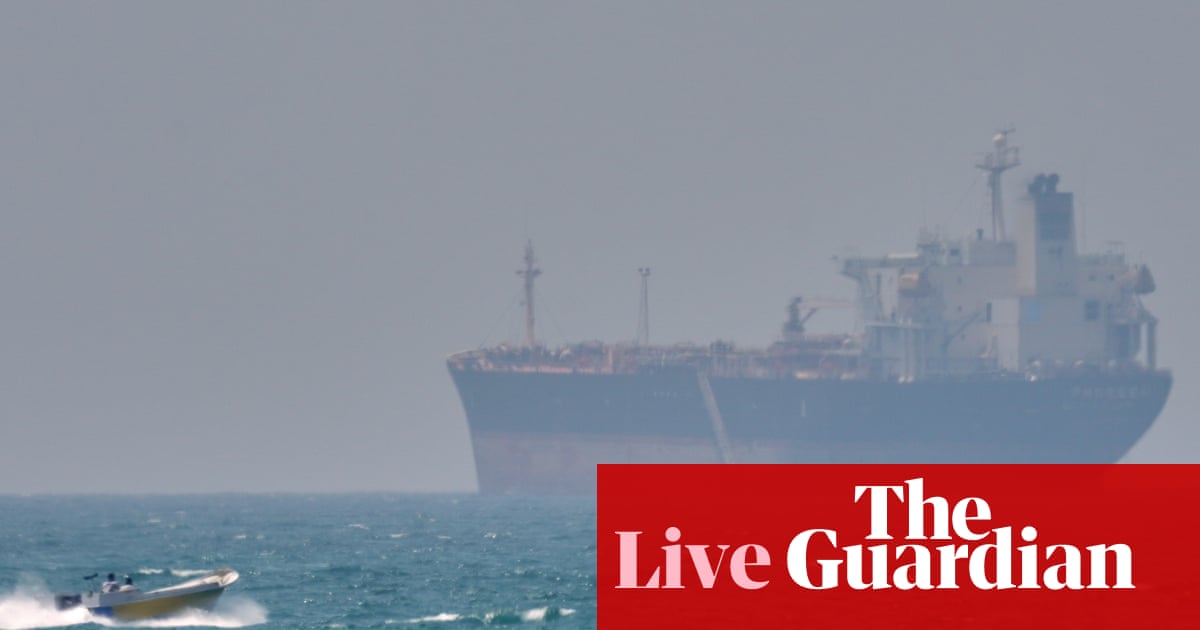
Oil prices jumped more than 5% on Monday as Iran reversed its decision to reopen the Strait of Hormuz, reigniting fears of a broader U.S.-Iran confrontation that had briefly eased after a ceasefire declaration.
The move came after Tehran accused Washington of maintaining a de facto blockade on Iranian ports, prompting Iran to halt shipping through the vital waterway and fire on vessels attempting to pass. In response, U.S. Forces seized an Iranian-flagged cargo ship in the Gulf of Oman, with President Donald Trump declaring on social media that the vessel was “in full custody” and under inspection.
Brent crude rose to $95.60 a barrel, recovering from a 9% drop on Friday when the strait had been declared open again. West Texas Intermediate futures climbed 8% to $90.54, while international Brent advanced 6% to $96.50, according to trading data cited by both outlets.
Market analysts noted a rapid shift from complacency to concern. Kyle Rodda, senior financial market analyst at Capital.com, told The Guardian that investors had assumed the ceasefire would hold and a broader peace deal was imminent — assumptions now under threat as tensions over control of the strait flare again.
“The markets are set for a spicy start to the week, with initial moves in futures and FX violent,” Rodda said, adding that while the ceasefire hasn’t formally collapsed, it is “on tenterhooks” due to mutual accusations of non-compliance.
Peter Boockvar, chief investment officer at OnePoint BFG Wealth Partners, echoed the sentiment in a CNBC interview, warning that after 13 consecutive winning sessions for the Nasdaq Composite — its longest streak since 1992 — the market had become overbought and vulnerable to a sharp pullback if geopolitical risks persist.
For more on this story, see Oil prices surge as Iran accuses US of breaking ceasefire, Strait of Hormuz disrupted.
Energy stocks led gains in Europe, with BP up 2.7% and Shell up 2.4% in early FTSE 100 trading, as higher oil prices boosted producer outlook. Conversely, airline shares fell sharply: IAG, parent of British Airways, dropped 2.8%, while Wizz Air and easyJet declined 4.2% and 3.5% respectively. Lufthansa and Air France also slipped, reflecting fears of jet fuel shortages.
The Guardian cited the head of the International Energy Agency, who warned last week that Europe has only six weeks of jet fuel reserves remaining — a buffer now under renewed strain as shipping disruptions in the Hormuz corridor threaten to delay deliveries.
CNBC reported that Wall Street futures opened lower, with Dow Jones Industrial Average futures down 0.72%, S&P 500 futures off 0.58%, and Nasdaq-100 futures down 0.53%, as traders reacted to the weekend escalation. The S&P 500 had gained 4.5% the prior week, and the Nasdaq 7.2%, following a separate ceasefire between Iran and Lebanon that had briefly buoyed risk appetite.
This follows our earlier report, IMF warns finance ministers of economic panic from Iran war.
Despite Iran’s declaration that the strait was reopened, state media said by Saturday that vessel traffic remained restricted, blaming the U.S. For failing to meet its obligations. Trump has insisted the U.S. Blockade will remain until Iran agrees to American demands, even as Tehran claims it is not planning to re-enter talks.
The situation leaves global markets exposed to a potential energy shock, with oil prices sensitive to any further miscalculation in the narrow waterway through which roughly 20% of global oil supply passes.
Why did oil prices rise despite a recent ceasefire?
Oil prices rose given that Iran reversed its decision to reopen the Strait of Hormuz, accusing the U.S. Of maintaining a blockade on its ports, which triggered fears of renewed conflict and disrupted shipping in a critical global oil chokepoint.
How are different sectors reacting to the renewed tensions?
Energy producers like BP and Shell saw share gains from higher oil prices, while airlines such as IAG, Wizz Air, easyJet, Lufthansa, and Air France declined due to jet fuel cost concerns and supply risks.