President Donald Trump signed an executive order on April 19, 2026, directing federal agencies to accelerate research on psychedelics such as psilocybin, MDMA, and ibogaine for medical use.
The order, signed over the weekend, aims to expand clinical trials and broaden access under the “Right to Try” framework for patients with serious mental health conditions, while leaving the drugs’ scheduling status unchanged.
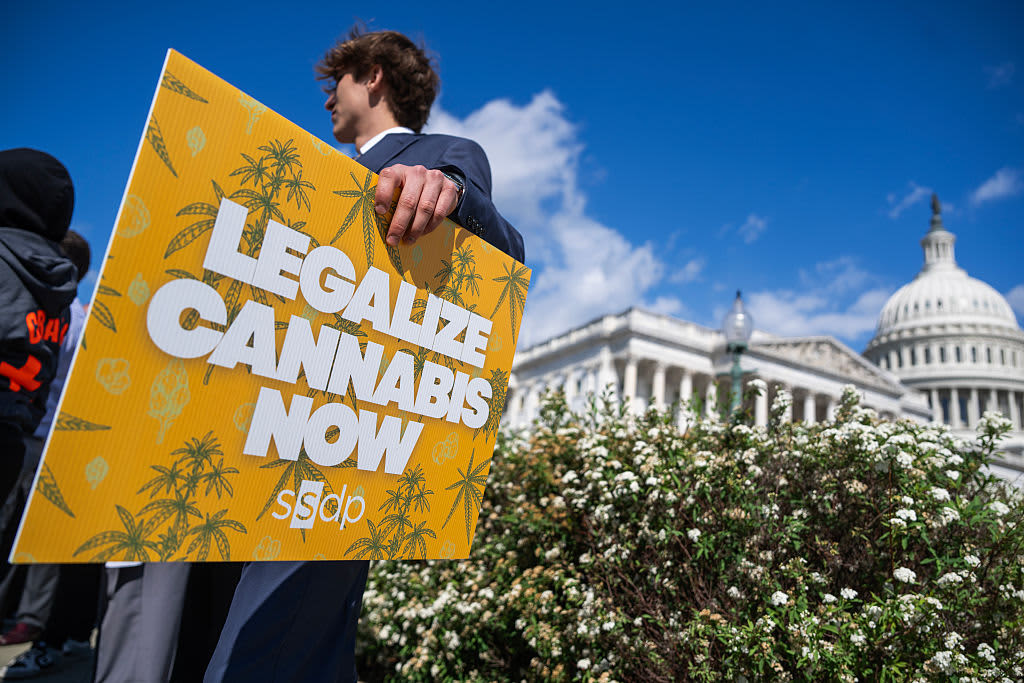
It follows a similar directive from four months earlier seeking to reschedule cannabis from Schedule I to Schedule III, a move that has since stalled in interagency review at the Drug Enforcement Administration.
Advocates note the irony: while the psychedelics order advances research quickly, cannabis reform remains bogged down in bureaucratic review despite years of advocacy.
Shawn Hauser, a partner at Vicente LLP and counsel to the National Compassionate Care Council, said the delay reflects how drug policy often slows once it enters interagency review, where science, law, and politics collide.
“The process has certainly been sluggish and frustrating for stakeholders when you consider they have spent decades fighting marijuana’s outrageous 1970s-era misclassification,” Hauser said.
She added that the psychedelics order signals a broader shift in Washington toward a medical-first, patient-centered approach to drug policy.
“The science-, patient-, health-care-first approach is winning in Washington right now,” Hauser said, suggesting cannabis advocates could adopt similar strategies.
The psychedelics pathway — built on physician-led protocols, clinical research, and compassionate use — offers a model cannabis reformers should study and emulate more aggressively, she argued.
Market reaction was immediate: AtaiBeckley’s stock rose roughly 25% on Monday, with smaller players like Compass Pathways, Definium Therapeutics, and U.S.-listed Cybin also gaining.
The order includes ibogaine, a naturally occurring psychoactive compound with known safety risks, drawing particular scrutiny from health experts.
While the directive does not legalize or reschedule any substances, it creates a research framework that could eventually support broader policy shifts.
For now, cannabis remains in Schedule I, and the DEA’s review of its rescheduling petition continues without a timeline for completion.
What does the executive order actually do?
It directs agencies like the FDA to expand clinical trials and expand “Right to Try” access for psychedelics in treating serious mental health conditions, but does not change their legal classification.
Why hasn’t cannabis rescheduling moved forward?
Despite an earlier Trump administration effort to reschedule cannabis, the DEA review remains ongoing, stalled in the interagency process that evaluates science, legal standards, and political factors.