The NASA X-59 QueSST, an experimental supersonic aircraft designed to break the sound barrier without generating a sonic boom, is set to conduct its first supersonic test flight in June 2026, marking a potential revival of commercial transatlantic travel at speeds exceeding 1,000 mph. If successful, the aircraft could slash the London-to-New York flight time from over seven hours to just three, using a radical design that replaces the iconic “boom” with a sound akin to a car door closing.
A Radical Redesign: How the X-59 Silences the Sonic Boom
The X-59’s breakthrough lies in its 30-meter-long fuselage, which features an elongated nose occupying nearly a third of its length—a design that deliberately disrupts the formation of shockwaves when the aircraft exceeds Mach 1. While traditional supersonic jets like the Concorde produced a double “boom” capable of rattling windows and disturbing communities on the ground, the X-59’s geometry scatters these waves into a series of smaller disturbances. According to NASA’s technical documents, the resulting sound is expected to be no louder than 75 decibels—comparable to “the sound of a car door closing from inside a house” or a distant thunderclap, as described by Perfil.

The aircraft’s General Electric F414-GE-100 engines, mounted high on the fuselage to direct noise upward, further reduce ground-level disturbance. With a cruising altitude of 16,800 meters and a top speed of Mach 1.4 (1,488 km/h), the X-59 is not just a speed demon—it’s a regulatory experiment. NASA’s Low-Boom Flight Demonstration program will collect data on public perception of the aircraft’s noise profile, which will then be submitted to the International Civil Aviation Organization (ICAO) and the Federal Aviation Administration (FAA) to potentially overturn decades-old bans on supersonic overland flight.
The Concorde’s Ghost: Why Supersonic Travel Died—and How the X-59 Might Bring It Back
“The era of supersonic travel ended when the Concorde became too noisy for cities to tolerate.”
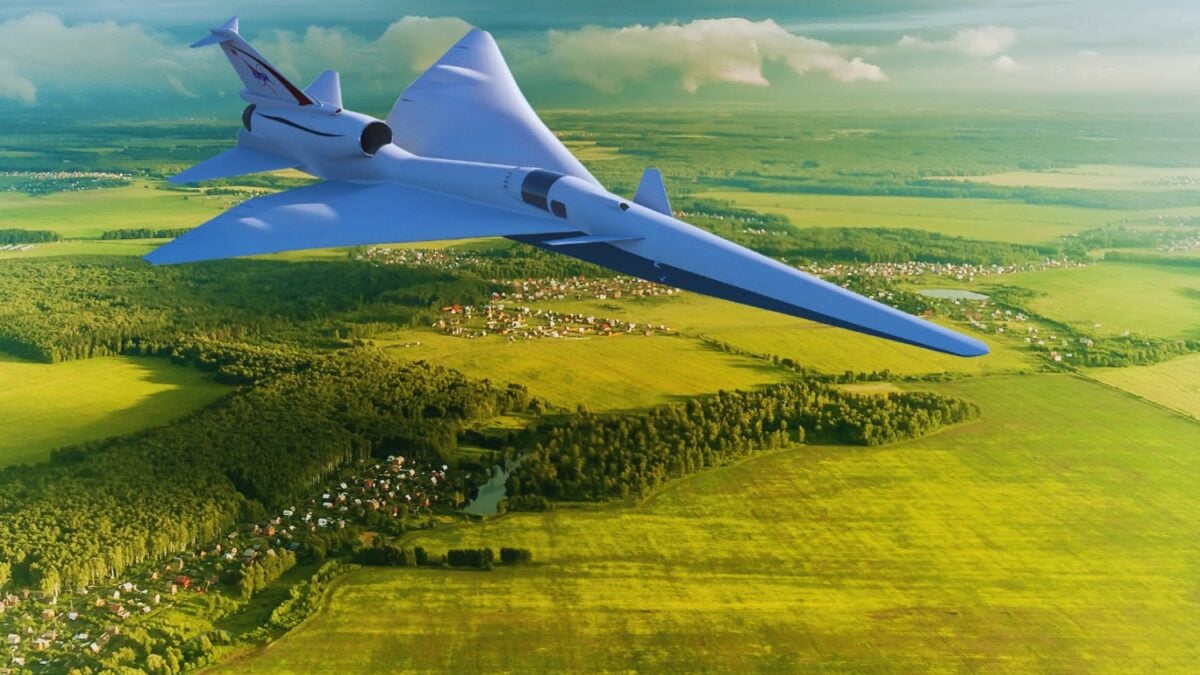
The Concorde’s retirement in 2003 wasn’t just about economics—it was a sonic reckoning. The aircraft’s Mach 2 speed (1,350 mph) made it a marvel, but its signature double sonic boom forced regulators to restrict supersonic flights over land, effectively killing commercial viability. The X-59, developed in partnership with Lockheed Martin, aims to rewrite those rules by proving that supersonic flight can coexist with urban life. As Gizmodo notes, the X-59’s design is a direct response to the Concorde’s fatal flaw: noise.
The stakes are high. If the X-59’s noise profile meets regulatory thresholds, airlines could reintroduce supersonic routes—imagine London to New York in 3 hours and 44 minutes, as projected by UCV Radio, cutting transatlantic travel in half. But the path isn’t guaranteed. The FAA’s current rules prohibit supersonic flight over land unless the noise level doesn’t exceed 85 decibels—a threshold the X-59’s 75-decibel target comfortably meets. The challenge now is convincing regulators that the data will hold up in real-world conditions.
The Test Flight Timeline: What to Expect in June 2026
- Phase 1 (Early June 2026): The X-59 will break the sound barrier for the first time, reaching 630 mph (Mach 0.88) at 43,000 feet (13,100 meters). This marks the aircraft’s first supersonic flight, a milestone NASA has been preparing for since its maiden flight in October 2025.
- Phase 2 (Summer 2026): The aircraft will push to Mach 1.4 (925 mph) at 55,000 feet, the speed and altitude NASA needs for community noise surveys. These tests will determine whether the “thump” (as NASA calls it) is as benign as simulations suggest.
- Post-Flight Data Collection: NASA will fly the X-59 over select communities to gather real-world noise perception data, which will be critical for lobbying the FAA and ICAO to lift overland flight bans.
The timeline reflects a cautious approach. As El Planeta reports, the X-59 has already completed 16 test flights since October 2025, including a critical April 2026 test where it retracted its landing gear and reached Mach 0.95—just shy of the sound barrier. The upcoming supersonic tests are the next logical step, but they also carry risk. If the noise profile exceeds expectations, the entire project could stall.
The Pilot’s Dilemma: Flying Blind in the X-59’s Cockpit
The X-59’s most unusual feature isn’t its speed—it’s its lack of forward visibility. The aircraft’s 9-meter-long nose, which occupies a third of its fuselage, blocks the pilot’s direct line of sight. To compensate, NASA equipped the cockpit with an external vision system (EVS) that projects a real-time camera feed onto a display, allowing the pilot to “see” through the nose. This isn’t just a quirk; it’s a necessity for safe operations at supersonic speeds.
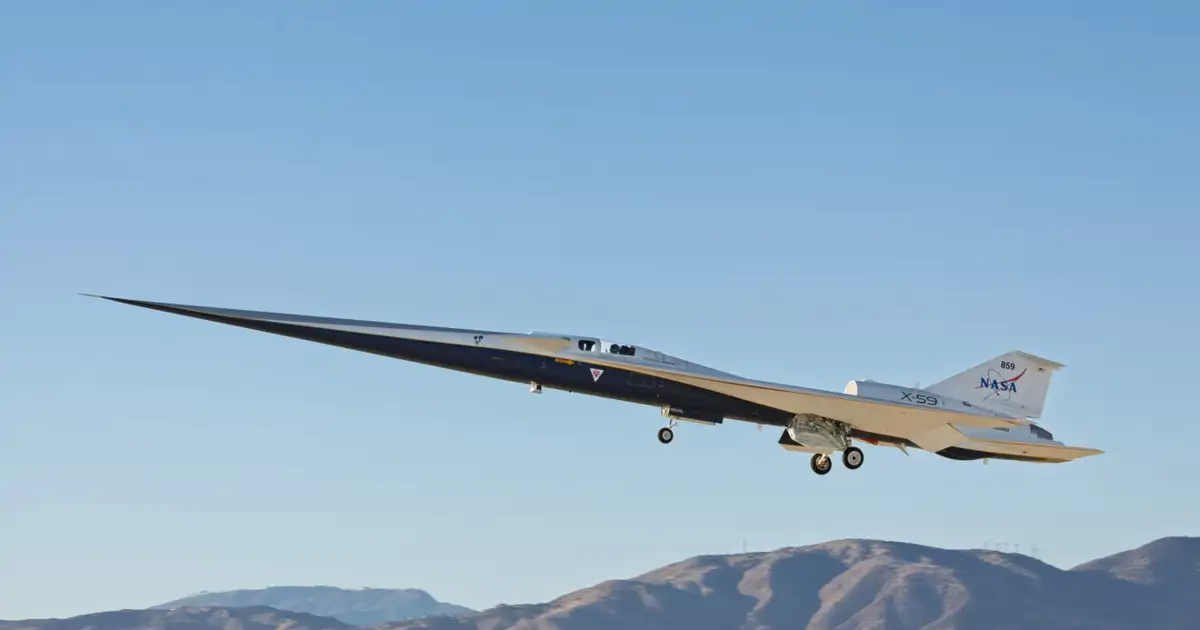
The design trade-off is striking: the longer the nose, the quieter the boom. But as National Geographic highlights, this also means the pilot can’t look straight ahead—a first for commercial aviation. While the EVS mitigates the risk, it raises questions about long-term ergonomics. Could pilots adapt? Would airlines accept the added complexity?
What’s Next: The Regulatory and Commercial Hurdles Ahead
The X-59’s success hinges on two fronts: technology and politics. Technically, NASA must prove the aircraft’s noise profile is as quiet as simulations predict. Politically, the agency must convince the FAA and ICAO that the data justifies lifting the supersonic overland flight ban—a process that could take years. Even if the X-59 succeeds, commercial supersonic jets won’t appear overnight. Boeing and other manufacturers would need to adopt similar designs, and airlines would require new routes, crew training, and public acceptance.
Yet the potential is undeniable. A London-to-New York flight in three hours would reshape global business travel, much like the jet age did in the 1950s. The X-59 isn’t just a testbed—it’s a gambit. If it works, it could unlock a new era of air travel. If it fails, the dream of quiet supersonic flight may remain just that: a dream.
The first test flight in June 2026 will be the moment of truth. For now, the world watches—and listens.