SpaceX lit the engines of its Version 3 Starship upper stage on Tuesday evening, clearing the final ground hurdle before a maiden flight targeted for early or mid-May. This test, a full-duration static fire, kept the vehicle anchored to the pad while validating the propulsion systems of a rocket that is both larger and more powerful than any previous iteration. We see a technical victory that arrives at a moment of extreme financial and operational tension for the company.
SpaceX completed a full-duration static fire of the V3 upper stage
The Tuesday test marks the first time the V3 upper stage has undergone a full-duration burn. It follows a more tentative start to the V3 testing cycle; four weeks ago, a first-stage trial involved only 10 of the booster’s 33 Raptor engines and ended prematurely due to ground equipment failure. That early setback didn’t derail the timeline, but it highlighted the volatility of testing the most powerful rocket ever built.
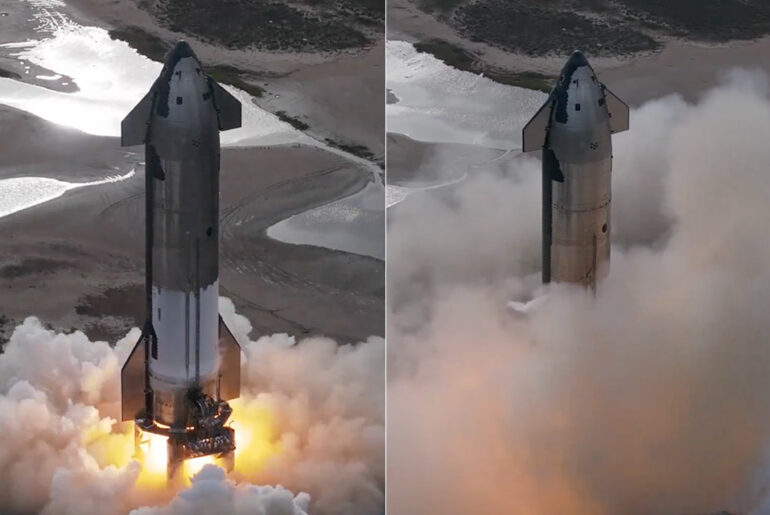
Flight 12 will be the 12th overall test for the Starship program, but it represents a clean break from the V2 generation. SpaceX has flown 11 suborbital missions to date, with the last five utilizing the V2 design. The company has recorded six successes and five failures across those attempts, a record that reflects a “fail fast” engineering philosophy that is now colliding with a rigid corporate calendar.
Why the V3 design carries more weight than its predecessors
The V3 isn’t just a marginal upgrade in height. New V3 Raptor engines provide a massive leap in lift capacity. Elon Musk has stated that this variant can deliver more than 100 tons to low Earth orbit, nearly tripling the 35-ton capacity of the V2.
This increased payload is a requirement for the company’s broader ambitions. Beyond the immediate test flights, Starship is designed to launch larger Starlink satellites and orbital AI data centers. The scale of the V3 is a prerequisite for these goals, as well as for the logistics of a permanent lunar presence.
A $2 trillion IPO creates a volatile window for Flight 12
Financial stakes now rival the technical ones. SpaceX is reportedly targeting an initial public offering with a $2 trillion valuation, roughly five times its value from last year. This valuation reflects an aggressive pivot toward the artificial intelligence market, attempting to position the rocket company as a vehicle for investor speculation in AI infrastructure.
The timing is precarious. A successful Flight 12 in May would provide a powerful narrative for an IPO potentially arriving in June. Conversely, the program remains prone to disaster. An engine for a Starship rocket burst into flames on Monday during a firing test at the company’s McGregor, Texas facility, reminding observers that the path to orbit is rarely linear.
Chief Financial Officer Bret Johnsen has indicated that SpaceX will reserve a significant portion of shares for retail investors. The company even plans to host 1,500 retail investors at an event in June following the IPO roadshow. By courting the retail market, Musk is leveraging a loyal base that often overlooks missed deadlines or explosive failures in favor of long-term vision.
Under the Artemis program, NASA requires a working lander by 2028
NASA’s lunar timeline provides a hard deadline that no amount of investor enthusiasm can shift. The agency selected Starship as the first crewed lunar lander for the Artemis program. While Artemis 2 recently completed a crewed flight around the moon, the focus has shifted to Artemis 3, targeted for mid-2027.
Artemis 3 will test critical docking operations in Earth orbit between the Orion capsule and the lunar landers. If those tests succeed, Artemis 4 is scheduled to position astronauts on the lunar south pole in late 2028. SpaceX is competing with Blue Origin’s Blue Moon for this role, meaning any prolonged setbacks with the V3 design could jeopardize NASA’s confidence in Starship as the primary vehicle for lunar descent.
How many times has Starship flown so far?
Starship has completed 11 suborbital test missions, with the most recent flight occurring in October 2025. Of these, six were successful and five ended in failure.
What makes Version 3 different from Version 2?
The V3 is 408.1 feet tall, which is about 4 feet taller than the V2. It uses new V3 Raptor engines that increase its payload capacity to over 100 tons to low Earth orbit, compared to the V2’s 35 tons.

When is the next Starship flight scheduled?
SpaceX is targeting early to mid-May 2026 for the 12th overall test flight, which will be the maiden voyage for the V3 vehicle.