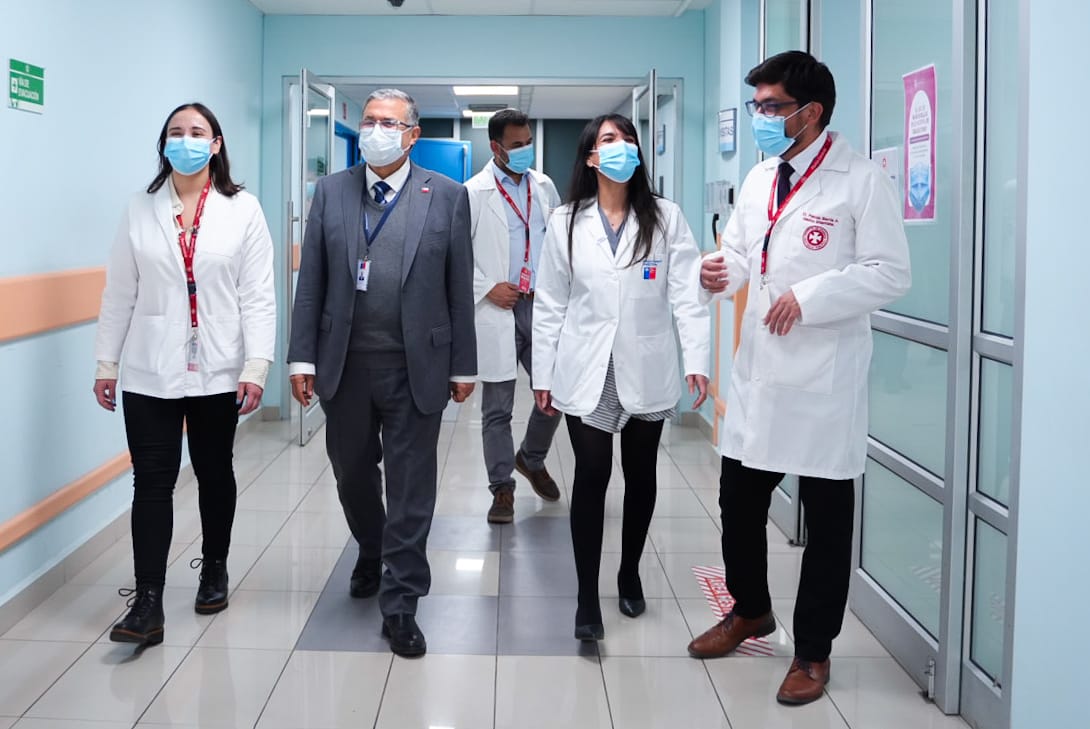
On Wednesday, May 27, 2026, the Undersecretary of Healthcare Networks, Julio Montt, visited the Hospital of Urgency and Public Assistance (HUAP) in Santiago. The visit, part of the 2026 Winter Campaign, aimed to assess the facility’s operational capacity and management strategies as health authorities prepare for a seasonal rise in respiratory viruses.
Operational Assessment at the HUAP
During his tour of the facility, often referred to as the ex Posta Central, Julio Montt observed how the hospital manages patient inflows. As reported by the Ministry of Health, the undersecretary focused on the institution’s ability to maintain order and discipline despite high demand. His visit serves as the official kickoff for the 2026 Winter Campaign, a nationwide strategy designed to synchronize health responses across all levels of care.
This annual initiative is not merely a reactive measure; it involves detailed planning, programming, and the execution of activities intended to ensure that the healthcare system can absorb the predictable surge in illness as temperatures drop. By integrating services across the network, the ministry aims to provide a more efficient and timely response to the public.

According to the Undersecretary’s office, the HUAP—which operates as a high-complexity referral center—has implemented new triage protocols since April 2026. These protocols were designed to categorize patients more rapidly upon entry to the emergency department, a move intended to reduce the “door-to-doctor” wait time. During the May 27 inspection, Montt reviewed the real-time bed occupancy data displayed on the hospital’s centralized digital dashboard, which tracks ventilator availability and staffing ratios across the facility’s intensive care and intermediate care units.
The Ministry of Health’s 2026 Winter Campaign budget, authorized by the National Congress earlier this year, allocates a 12% increase in funding specifically for seasonal personnel hiring at the HUAP. This includes temporary contracts for nursing staff and respiratory therapists, whose presence is prioritized for the peak circulation period expected between June 15 and August 30. During the walkthrough, Montt verified that 85% of these temporary staff positions had been filled as of the last week of May.
Official Recognition of Hospital Performance
The undersecretary offered a positive assessment of the hospital’s current management, highlighting its status as a self-managed establishment within the network. He specifically praised the staff for their focus on patient flow and clinical discipline.

“The emergency unit is highly demanded, but very orderly and very disciplined regarding patient care flows. I congratulate the team for what they have achieved, not only regarding preparing for the Winter Campaign, but, in general, for their results as a self-managed hospital in the network, one of the good hospitals in the country.”
Julio Montt, Undersecretary of Healthcare Networks
Patricio Barría, the director of the HUAP, welcomed the oversight from the Ministry of Health. Beyond the inspection of the emergency department, Barría viewed the visit as a vital conduit for communicating the specific needs of the hospital network to central authorities. Barría noted in a post-visit briefing that the hospital has successfully reduced the turnover time for diagnostic imaging by 15 minutes per patient compared to the same period in 2025. This improvement, attributed to the procurement of a new high-speed CT scanner installed in February, has been a central pillar of the hospital’s current strategy to manage high-volume trauma and respiratory cases simultaneously.
Representatives from the hospital’s labor union, present during the visit, engaged in a brief dialogue with the Undersecretary regarding the long-term sustainability of the current staffing levels. While the union acknowledged the success of the 2026 hiring surge, they emphasized the need for permanent structural increases in the HUAP’s base budget, citing that the “ex Posta Central” handles a disproportionate share of the metropolitan area’s emergency trauma cases alongside seasonal viral surges. Montt confirmed that the Ministry is currently reviewing the “Self-Managed Hospital” performance indicators to determine if additional permanent allocations will be integrated into the 2027 fiscal planning.
Public Health Strategy and Vaccination Efforts
As the country prepares for a season characterized by a peak in viral circulation, authorities are emphasizing the importance of individual responsibility and the correct utilization of the healthcare system. The strategy for 2026 relies on a synergy between primary care and specialized emergency centers.
According to the details provided by the Ministry of Health, the message to the public is clear: utilize primary care services first and reserve emergency departments for urgent needs. This approach is intended to prevent the systemic bottlenecks that often occur during the coldest months of the year. The Ministry’s epidemiological bulletin released on May 25, 2026, indicates that while influenza circulation remains within expected parameters for late May, there is a noted uptick in Respiratory Syncytial Virus (RSV) cases among pediatric patients in the Santiago Metropolitan region.

“The call is to make good use of the network and Primary Health Care, and to go to the care centers when necessary. We are prepared to resist another winter with a viral peak. And we also call for vaccination, very important in this season in which the circulation of respiratory viruses increases.”
Patricio Barría, Director of the HUAP
To support this, the Ministry of Health has coordinated with the Santiago municipal health departments to extend operating hours for 40 local primary care centers (CESFAM) through the end of July. Data provided by the Ministry indicates that vaccination coverage for the influenza strain identified by the World Health Organization for the 2026 southern hemisphere season has reached 72% among the target high-risk population. Public health officials are targeting 85% by the end of June to ensure sufficient herd immunity to prevent hospital overcrowding.
Outlook for the 2026 Winter Season
The visit to the HUAP marks the beginning of a period of heightened surveillance and resource allocation. As the Ministry of Health continues its deployment, the emphasis remains on maintaining the stability of the network. The challenge for the coming weeks is to ensure that the Winter Campaign 2026 provides a buffer against respiratory surges.
While the government has expressed confidence in the current state of the facilities, the next 30 days will be critical. Health authorities are expected to continue their weekly monitoring, providing updates on epidemiological trends to adjust resource distribution as the season progresses. The focus remains on preventing the collapse of emergency services by encouraging early intervention and vaccination. The Ministry of Health’s emergency operations center is currently holding daily briefings with regional directors to monitor the “saturation rate” of emergency rooms, a metric that will dictate the activation of additional “surge beds” if regional capacity exceeds 90% utilization.
Local authorities in the Metropolitan Region have also confirmed that they have established a direct communication channel between the HUAP and the Emergency Medical System (SAMU). This coordination is intended to ensure that ambulances carrying high-acuity patients are diverted to other hospitals in the network if the HUAP’s emergency department reaches peak capacity, a move designed to maintain the “order and discipline” noted by Undersecretary Montt during his visit. The effectiveness of these diversions will be measured in the weekly reports to be released by the Subsecretariat starting in early June.