
Colombia’s presidential race reached a fever pitch this weekend as Paloma Valencia, the conservative candidate backed by former president Álvaro Uribe, delivered a combative closing speech in Medellín, vowing to end President Gustavo Petro’s “Paz Total” policy and reactivate arrest warrants against armed groups. With just days until the election, Valencia’s hardline stance on security has reshaped the campaign’s final act, contrasting sharply with Petro’s peace negotiations with guerrilla factions. Her rallies in Antioquia—Colombia’s political heartland—drew thousands, blending fiery rhetoric with cultural spectacle, from vallenato performances by Elder Dayán to symbolic gestures like freezing peajes for motorcycles during her visit to Envigado. But behind the showmanship lies a high-stakes gamble: whether Colombia’s voters will prioritize stability or a return to a tougher law-and-order approach.
Security as the Campaign’s Final Battleground
Valencia’s message in Medellín was unambiguous: “En mi gobierno se acaba la Paz Total y se reactivan las órdenes de captura de los bandidos” (“In my government, ‘Paz Total’ ends and arrest warrants against criminals are reactivated”), she declared to a crowd that filled the Parque de Belén. The pledge—repeated in Rionegro and Envigado—marks a direct challenge to Petro’s signature policy, which has seen high-profile negotiations with the ELN, dissident FARC factions, and other armed groups. Valencia framed the policy as a failure, pointing to recent violence in Antioquia, including the killing of journalist Mateo Pérez and the capture (and subsequent release) of dissident leader “Calarcá,” who was held in UNP vehicles before being freed under peace talks.
Her rhetoric resonated with a constituency weary of crime. “Me duele que la Antioquia libre hoy esté viviendo nuevamente la violencia que traen los grupos ilegales,” she said, blaming Petro’s administration for “kneeling” Colombia’s security forces. The contrast with Petro’s approach—who has framed peace talks as a path to demobilization—could not be starker. While Petro’s camp argues that negotiations reduce bloodshed, Valencia’s supporters see them as surrender. “Iván Cepeda, with his ‘Paz Total,’ handed Antioquia and Colombia over to criminals,” she told the crowd, referencing her rival’s role in the peace process.
“El miedo que hoy sienten nuestros compatriotas, es el que van a sentir los del ELN, los de las Farc y los del Ejército Gaitanista.”
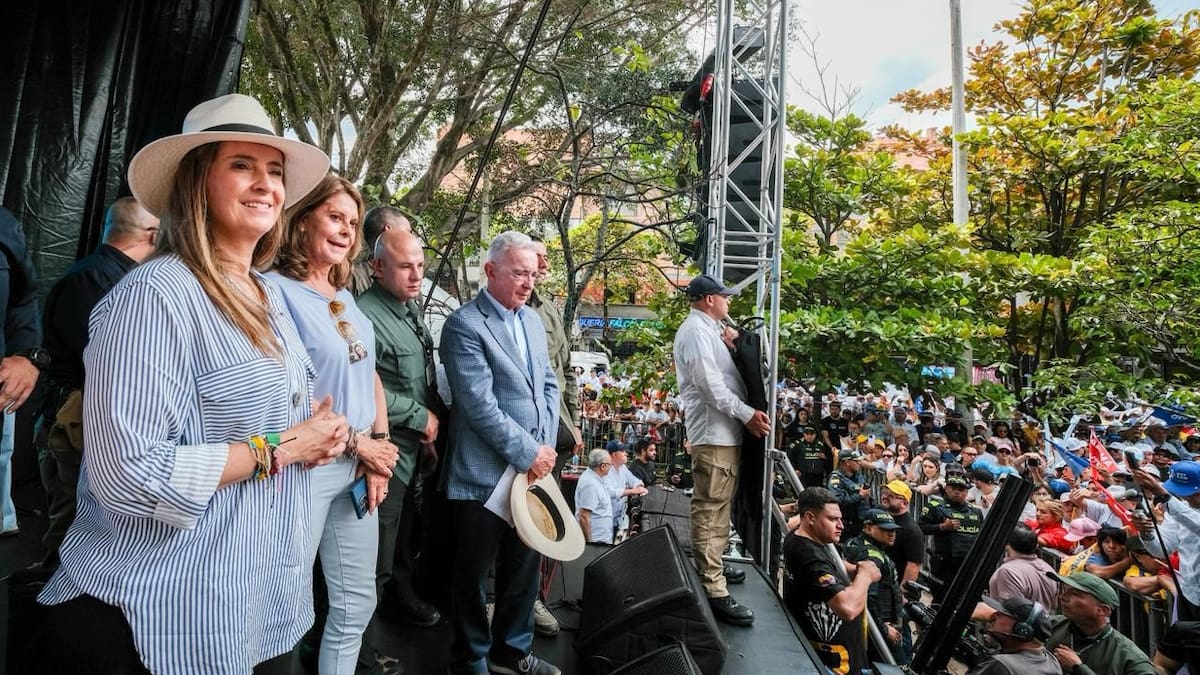
Valencia’s promise to reactivate arrest warrants—including for figures like “Chala” and “Macho Viejo,” accused of ordering Pérez’s murder—has galvanized her base. However, legal experts consulted by Semana warn that rolling back peace talks without a clear alternative could reignite conflict. The Attorney General’s Office has already expressed concerns about the feasibility of reactivating warrants for high-profile figures without risking further escalation. Yet for Valencia’s supporters, the message is clear: Petro’s approach has failed, and only a return to aggressive enforcement will restore order.
During her visit to Envigado, Valencia met with local police commanders who detailed rising concerns over armed group activity in the area. Colonel María Elena Rojas, head of the Antioquia Police’s Criminal Investigation Division, told reporters that while the department has seen a “notable increase” in violent incidents linked to dissident groups, the majority of victims are civilians, not security personnel. “The population is exhausted,” Rojas said. “They want to see action, not just negotiations.”
Valencia’s security proposals extend beyond arrest warrants. She has pledged to reinstate military patrols in high-risk zones, a policy suspended under Petro’s administration, and to accelerate judicial proceedings against armed group leaders. However, her campaign has not detailed how she would balance these measures with ongoing peace talks, leaving legal scholars divided. “The constitutional court has already ruled that peace agreements cannot be unilaterally revoked,” noted Professor Carlos Alberto Vargas of the University of Antioquia. “Valencia would need a new legal framework, and that takes time.”
The Culture War Behind the Campaign
Valencia’s campaign has never been just about policy—it’s a cultural reckoning. In Barranquilla, where she faced skepticism from liberal strongholds, she pivoted to a message of female empowerment, dismissing doubters who question whether a woman can lead Colombia’s security forces. “Hay algunos que dicen que una mujer no es capaz de imponer la seguridad que necesita Colombia. Se equivocan,” she told a crowd, adding: “Desde Belén le digo al ELN, al Ejército Gaitanista y a las Farc, que van a sentir el puño de acero de la mujer colombiana.”
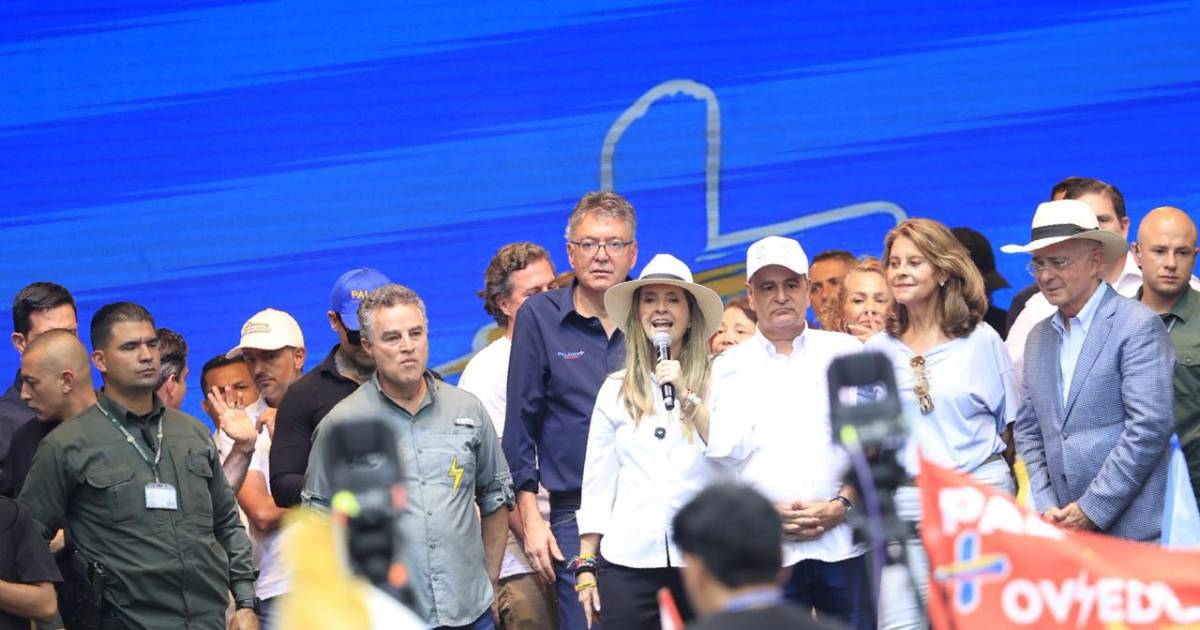
“Las mujeres podemos con los hijos, con el oficio, con la casa, con el marido, con los suegros, y claro que podemos con los bandidos.”
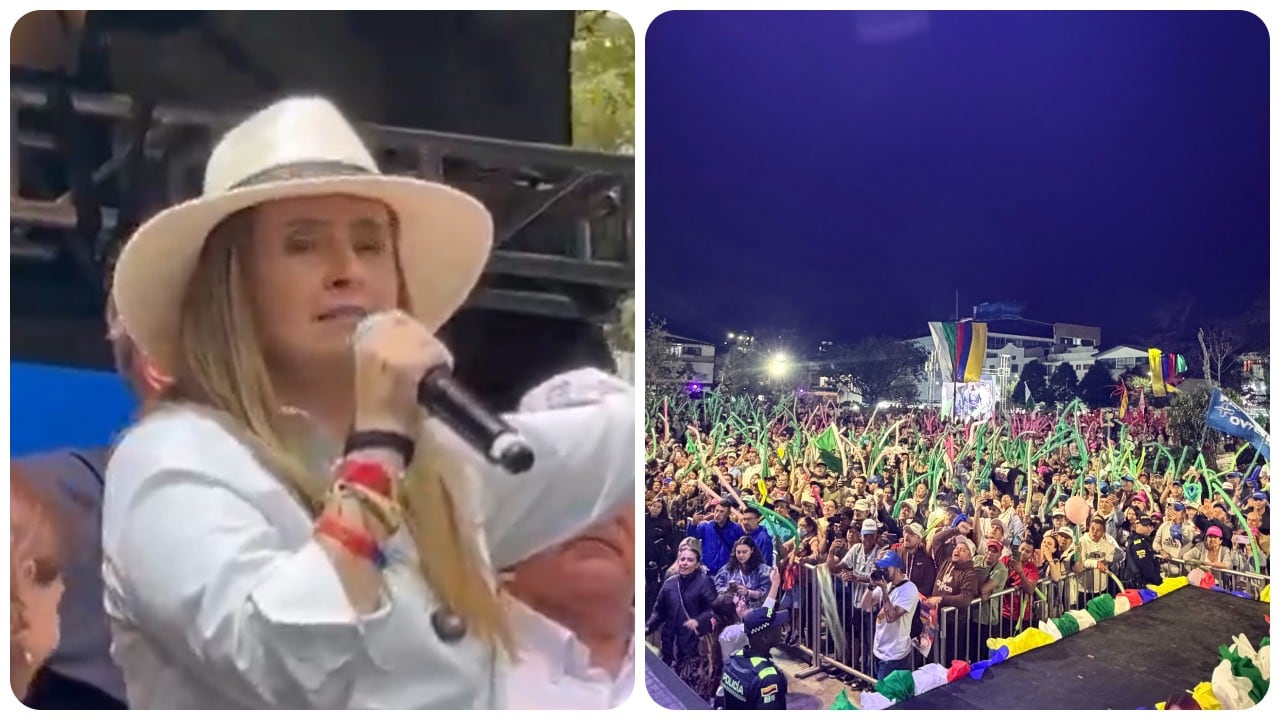
The gendered framing was deliberate. With Colombia’s first female president still a theoretical possibility, Valencia’s campaign has leaned into symbolism—from her promise to subsidize motorcycle insurance (a nod to working-class voters) to her alliance with vallenato star Elder Dayán, who closed her Barranquilla rally with a rousing verse: “De una manera sonora, yo miro de maravilla, yo quiero que Barranquilla le haga una bulla a Paloma.” The cultural crossover—mixing political rallies with regional music—reflects a strategy to broaden appeal beyond her traditional conservative base.
Yet the gender politics also expose fractures. While Valencia courted women with promises of equality, her coalition includes figures like Modesto Aguilera, a congressman convicted of sexual assault, whose presence on her campaign stage drew criticism from women’s rights groups. The National Women’s Caucus issued a statement calling for his exclusion, arguing that his inclusion undermines Valencia’s claims of feminist leadership. “A true commitment to gender equality cannot coexist with impunity for predators,” said caucus president Ana María Ramírez. The tension between her progressive rhetoric and conservative alliances underscores the complexity of her project: a woman leading a right-wing push to roll back Petro’s leftist policies.
In Medellín, Valencia’s team organized a “Women’s Security Brigade” training session, where over 500 women participated in self-defense workshops. The event was framed as both a security initiative and a symbolic rejection of Petro’s policies. “We are not asking for charity; we are demanding justice,” said participant María Teresa Gómez, a small-business owner from El Poblado. “If Paloma wins, we want to see real changes—not just words.”
What’s at Stake in Antioquia—and Beyond
Antioquia is the prize. The department, home to Medellín and key industrial hubs, has long been a bellwether for Colombia’s political mood. Valencia’s rallies there—packed with flags, anthems, and even a tango performance before her speech—showed her ability to mobilize. But the region’s security crisis looms large. Recent killings of journalists and the resurgence of armed groups have eroded public trust in Petro’s peace process. Valencia’s promise to “defeat neocommunism” taps into deep-seated fears about Colombia’s trajectory.
Local authorities in Antioquia have reported a significant uptick in armed group activity. According to a recent report from the Antioquia Governor’s Office, there have been over 30 violent incidents in the first five months of 2026, compared to 18 in the same period last year. The majority of these involve dissident FARC factions and the ELN, both of which have rejected Petro’s peace overtures. “The situation is critical,” said Governor Andrés Fernando Arias in a press conference. “We need a national strategy, not just local solutions.”
Valencia’s campaign has capitalized on this anxiety, framing the election as a choice between stability and chaos. Her proposals include:
- Security: End peace talks with armed groups, reactivate arrest warrants, and deploy military patrols in high-risk zones.
- Economy: Freeze motorcycle peajes and subsidize SOAT insurance, targeting working-class voters.
- Health: Overhaul the system within 100 days, criticizing Petro’s appointment of Medellín’s former mayor as Health Superintendent.
- Culture: Frame the election as a battle between “freedom” and “neocommunism,” using gender and regional identity to rally support.
The stakes extend beyond Antioquia. If Valencia wins, her administration would face immediate challenges: rebuilding trust with security forces demoralized by Petro’s policies, navigating a fractured Congress, and managing expectations about what “ending Paz Total” would look like in practice. Her critics argue that without a clear plan for demobilization, her approach risks simply displacing violence rather than ending it.
“Colombia no caiga, que Colombia resista y que podamos preservar la Democracia, la Libertad y el Bienestar social.”
Valencia’s campaign has also faced pushback from international observers. The United Nations Resident Coordinator in Colombia, Luis Felipe López-Calva, issued a statement urging both candidates to “prioritize dialogue over confrontation” to avoid a return to armed conflict. “The cost of reversing peace processes has been paid in blood before,” López-Calva said. “We urge all parties to consider the long-term implications of their actions.”
The Road Ahead: What Happens Next?
The election is May 29, but the real drama may lie in the aftermath. If no candidate secures a majority, Colombia heads to a runoff—likely between Valencia and Petro’s chosen successor, Iván Cepeda. The coming days will test Valencia’s ability to consolidate her coalition, particularly in urban centers like Bogotá and Cali, where Petro’s support remains strong. Her rallies have shown energy, but the urban vote could decide the race.
In Bogotá, Valencia’s campaign has struggled to gain traction. Local polls suggest Petro’s candidate, Cepeda, leads by a margin of 12 points in the capital. However, Valencia’s team is focusing on mobilizing young voters, many of whom have expressed frustration with Petro’s economic policies. “The youth are tired of promises,” said campaign strategist Diego Mendoza. “They want to see concrete actions, not more negotiations.”
For now, the campaign’s tone is set: Valencia’s closing speeches have been a mix of defiance and optimism, blending security hawkishness with cultural symbolism. Whether that resonates enough to overcome Petro’s base remains the question. One thing is clear—Colombia’s future hinges on whether voters believe in peace talks or a return to enforcement. The next five days will determine which path the country takes.
The final act of Colombia’s presidential campaign has arrived. With Paloma Valencia’s hardline stance on security and cultural messaging, the stage is set for a defining moment—not just for Antioquia, but for the nation’s soul.