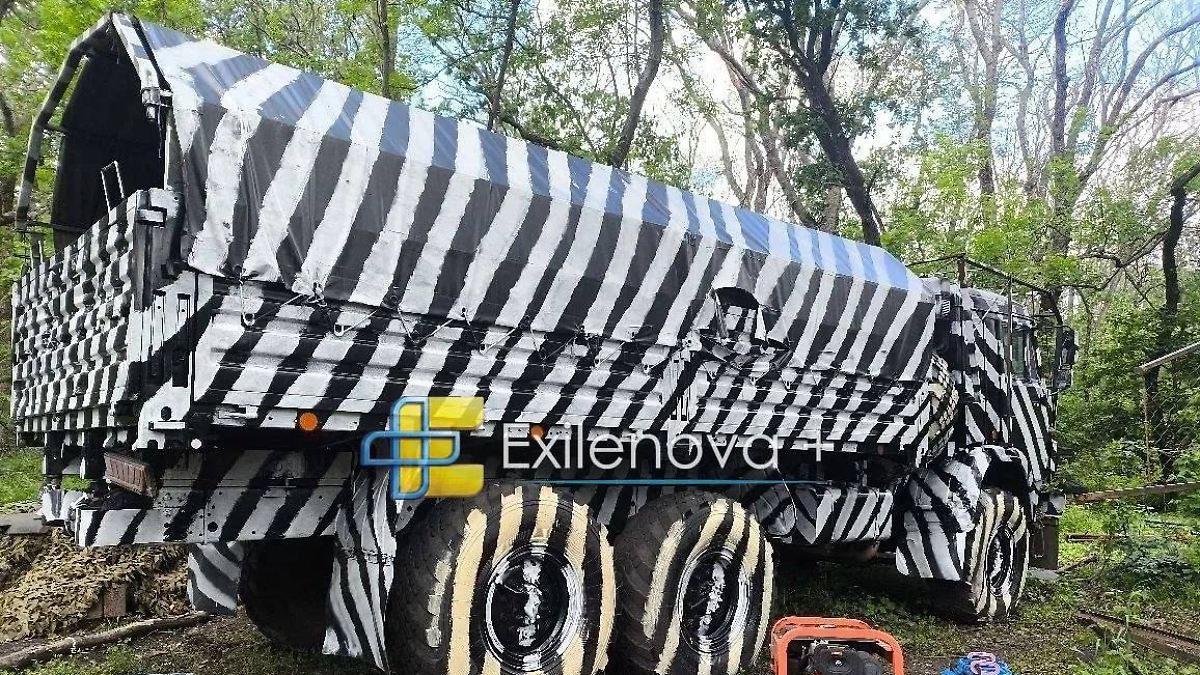
Russian forces have deployed a zebra-striped camouflage pattern on KamAZ trucks in Ukraine, aiming to disrupt Ukrainian AI-equipped drones. The tactic, resembling World War I dazzle camouflage, seeks to confuse automated targeting systems by breaking vehicle outlines. The strategy emerged as Kyiv intensifies strikes on Moscow’s logistics networks, with reports of Hornet drones operating up to 150 kilometers behind frontlines.
Origins of the Zebra Pattern: A WWI Tactic Reimagined
The black-and-white striped design, first observed on a KamAZ truck photographed by Ukrainian channel Exilenova+, echoes early 20th-century naval camouflage. Defense Express described the pattern as a “dazzle camouflage” meant to distort visual perception, though modern AI systems may not be as vulnerable. “These patterns were developed to mislead optical rangefinders, not machine learning algorithms,” noted the publication, highlighting a potential mismatch between historical tactics and contemporary technology.

The tactic’s effectiveness remains unproven. Modern AI targeting relies on algorithmic pattern recognition rather than traditional optical measurements. Russian military analysts suggest the design might still serve a psychological purpose, creating visual ambiguity for human operators monitoring drone feeds.
Ukrainian Drone Campaigns Intensify
Ukrainian forces have expanded their drone attacks on Russian supply lines, with the Hornet system—developed by U.S. firm Swift Beat—reportedly conducting strikes deep in occupied territory. The drone’s autonomous navigation capabilities, which function without GPS, enable operations in contested environments. “This represents a significant evolution in precision strike technology,” a defense analyst told n-tv, though the exact operational range and success rate remain classified.
Russian officials have not publicly acknowledged the zebra pattern, but intercepted communications suggest the tactic is part of a broader effort to counter drone surveillance. The strategy aligns with Moscow’s reported use of electronic warfare to jam GPS signals, complicating autonomous targeting systems.
Technological Arms Race in Ukraine
The conflict has accelerated the development of counter-drone measures, with both sides investing in AI-driven defense systems. Ukrainian forces have deployed thermal imaging and radar-based detection networks to track low-flying drones, while Russian engineers focus on decoy technologies and signal jamming. “This is no longer a simple kinetic battle—it’s a contest of algorithms and sensor fusion,” said a NATO defense official, citing the increasing reliance on machine learning for target identification.

The zebra pattern reflects a broader trend of repurposing historical military tactics for modern digital warfare. Similar approaches include the use of “smart” decoys that mimic vehicle signatures and the deployment of AI-powered false target generators. These innovations highlight the fluid nature of 21st-century combat, where traditional camouflage techniques are being reinterpreted through the lens of machine learning.
What Comes Next?
As both sides refine their drone capabilities, the zebra pattern may evolve into a more sophisticated optical deception system. Potential developments include adaptive camouflage that changes patterns based on environmental sensors or the integration of infrared-reflective materials to counter thermal imaging. The effectiveness of these measures will depend on how quickly Ukrainian AI systems can adapt to new visual challenges.
For now, the zebra-patterned trucks remain an experimental tactic, one of many innovations shaping the conflict’s technological landscape. The true test will come as both nations continue to invest in autonomous systems, pushing the boundaries of what is possible in modern warfare.