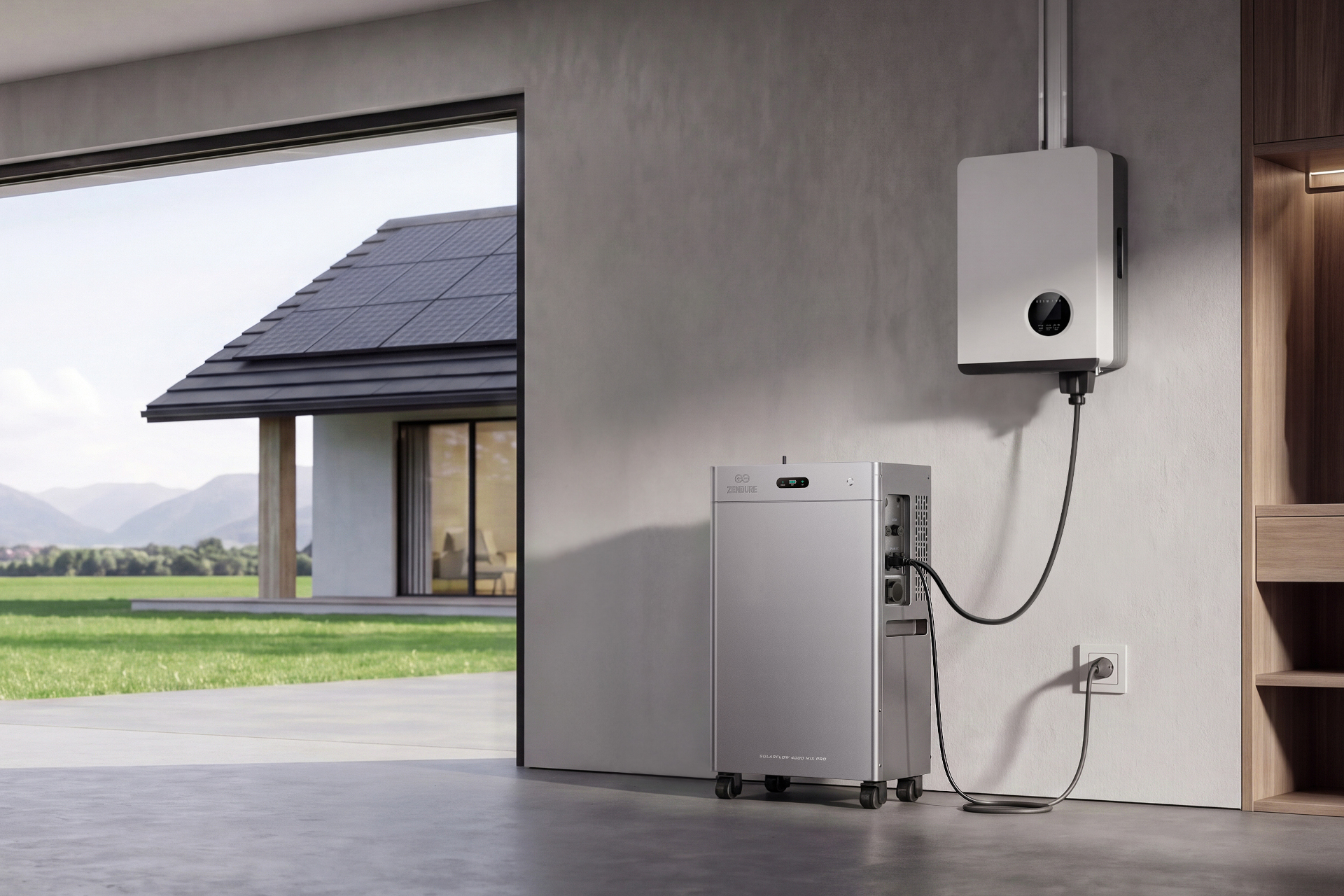
Zendure’s SolarFlow Mix Series isn’t just another battery—it’s a full-blown energy ecosystem, merging plug-and-play simplicity with whole-home power management in Europe’s fastest-growing solar market.
A Three-Part Revolution: How Zendure Redefined Home Energy Storage
On April 23, 2026, Zendure—best known for pioneering Europe’s balcony solar revolution—unveiled its most ambitious project yet: the SolarFlow Mix Series, a trio of batteries designed to power everything from single-family homes to small commercial spaces. Unlike competitors offering niche solutions, Zendure fused three previously separate markets—high-power home storage, balcony-friendly plug-and-play systems, and mobile energy stations—into one modular platform. The result? A product line that starts at €2,000 for 8 kWh of storage and scales to 50 kWh per unit, with bidirectional AC power, AI-driven energy management, and compatibility with heat pumps, electric vehicles, and smart grids.
But the real breakthrough came on May 11, 2026, when Zendure introduced the PowerHub, Europe’s first plug-in Home Energy Management System (HEMS) hub. This isn’t just another battery controller—it’s the nervous system of a smart home, coordinating solar input, storage, grid backup, and even vehicle-to-grid (V2G) charging. With support for up to 150 kWh in multi-unit setups and three-phase EV charging up to 22 kW, the PowerHub turns any solar-equipped home into a mini power plant.
Why This Matters: The Death of the “One-Size-Fits-All” Battery
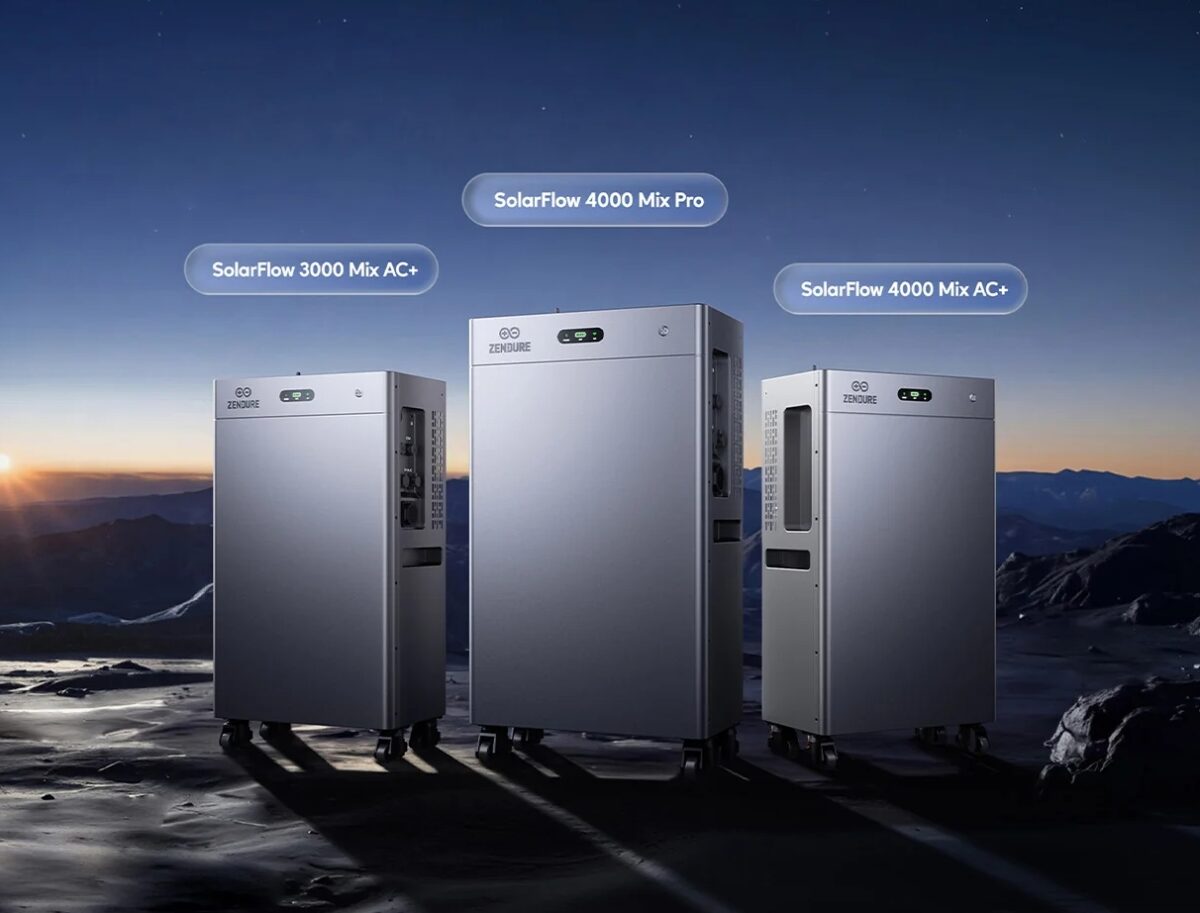
Traditional home batteries force consumers into binary choices: Do you want high capacity or low cost? Do you need off-grid readiness or grid-tied simplicity? Zendure’s Mix Series flips the script. The SolarFlow 4000 Mix Pro (8 kWh, 4 kW bidirectional AC, up to 13 kW PV input) and SolarFlow 4000 Mix AC+ (retrofit-friendly, AC-coupling only) cater to homeowners with existing solar setups, while the SolarFlow 3000 Mix AC+ targets smaller households or balcony installations. All three share a 15-year lifespan, 90% round-trip efficiency, and IP65 weatherproofing, but their real innovation lies in modular scalability—users can start with an 8 kWh unit and expand to 50 kWh as their needs grow.

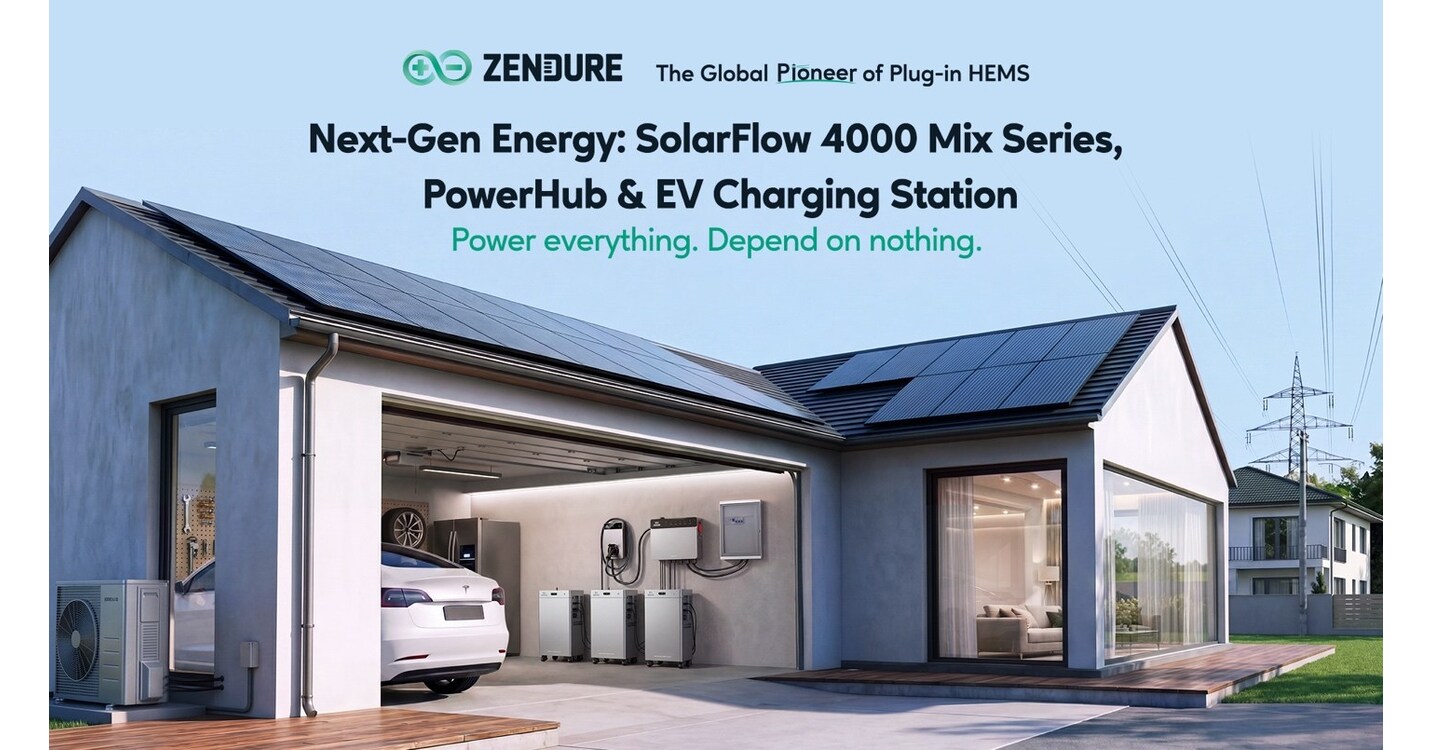
This isn’t just about capacity, though. Zendure’s ZENKI AI learns household energy patterns, weather forecasts, and dynamic electricity prices to optimize storage and usage in real time. Pair that with ZenWave™—a service that lets users trade energy on the spot market—and you’ve got a system that doesn’t just store power but profits from it. For example, a household with a heat pump and EV could sell excess solar energy back to the grid during peak hours, then draw from storage when prices spike.
The PowerHub: Where Smart Homes Meet the Grid
The PowerHub is Zendure’s answer to the fragmented energy ecosystem.
- Photovoltaics: Up to 43 kW three-phase or 14 kW single-phase solar input.
- Storage: Up to three SolarFlow Mix units (12 kW continuous output).
- Backup Power: Single-phase or three-phase redundancy for critical loads.
- Smart Loads: Heat pumps (SG-Ready standard), EV chargers (OCPP), and smart appliances (EEBus).
- Vehicle-to-Grid (V2G): Compatible with Zendure’s upcoming EVFlow AC chargers for bidirectional energy flow.
What sets the PowerHub apart is its open architecture. While competitors lock users into proprietary ecosystems, Zendure’s system supports third-party PV arrays, heat pumps, and EV chargers, making it the first true interoperable HEMS hub in Europe. This matters because, as Tom’s Hardware noted, the home energy market is still in its infancy—but it’s growing fast. By 2026, demand for smart storage isn’t just about backup power; it’s about energy independence.
Who Wins? The Battle for Europe’s Solar Future
- Homeowners with existing solar: The SolarFlow 4000 Mix AC+ lets them retrofit storage without rewiring, thanks to its AC-coupling design.
- Off-grid enthusiasts: The SolarFlow 4000 Mix Pro offers 3.68 kW off-grid power and dual MPPT inputs for direct panel connections.
- Commercial light users: Small businesses or multi-unit buildings can scale to 150 kWh with multiple PowerHubs.
The biggest winners, however, may be energy cooperatives and virtual power plants (VPPs). The PowerHub’s VPP-Ready certification means households can pool storage capacity to stabilize the grid—earning revenue while reducing reliance on fossil fuels. In Germany, where feed-in tariffs are shrinking, this could be a game-changer for rural communities with excess solar.
The losers? Legacy battery makers stuck in the “big box” model. Companies selling monolithic, non-modular systems risk obsolescence as consumers demand flexibility. Even Tesla’s Powerwall—once the gold standard—now faces competition from plug-and-play alternatives that integrate with existing infrastructure.
What’s Next? The Road to 100% Renewable Homes
Zendure isn’t stopping at hardware. Its ZEN+OS platform—powered by ZENKI AI—is designed to evolve with regulatory changes.
- Dynamic Tariffs: ZenWave™ will automatically adjust to EDF Tempo-style pricing, maximizing savings.
- Grid Services: Future updates may enable demand response, where homes earn credits for reducing load during peak hours.
- Expansion Beyond Europe: With R&D centers in Asia and operations in the U.S., Zendure is positioning itself as a global player.
The biggest question isn’t whether this tech works—it’s whether consumers will adopt it. The €2,000 entry price is a fraction of Tesla’s Powerwall, but will Europeans prioritize modularity over brand loyalty? Early adopters say yes. As one <a href="https://www.tomshardware.
For now, the SolarFlow Mix Series and PowerHub are available in Germany, France, and the Netherlands, with plans to expand. If adoption accelerates, we could see a shift from solar as a luxury to solar as a utility—one where every home is a node in a decentralized grid. The question is no longer if home energy storage will dominate, but how fast.
Key Specs at a Glance
| Model | Capacity | Output Power | PV Input | Key Features |
|---|---|---|---|---|
| SolarFlow 4000 Mix Pro | 8 kWh (scalable to 50 kWh) | 4 kW bidirectional AC | Up to 13 kW (2 × 4000W MPPT) | Dual MPPT, off-grid ready, 3.68 kW off-grid power |
| SolarFlow 4000 Mix AC+ | 8 kWh (scalable to 50 kWh) | 4 kW bidirectional AC | AC-coupled (retrofit) | No MPPT, ideal for existing solar setups |
| SolarFlow 3000 Mix AC+ | 8 kWh (non-scalable) | 3 kW bidirectional AC | AC-coupled | Balcony-friendly, 15-year lifespan |
| PowerHub | Scalable (up to 150 kWh) | Up to 12 kW continuous | 43 kW 3P / 14 kW 1P PV | HEMS hub, V2G, 3-phase EV charging, open standards |
The Bottom Line: Is This the Future?
Zendure’s bet is that the future of energy isn’t centralized—it’s modular, intelligent, and interconnected. The SolarFlow Mix Series and PowerHub prove that high-performance storage doesn’t have to mean high costs or complexity. For early adopters, the payoff is clear: lower bills, grid independence, and even revenue from excess energy. For the industry, the message is louder: If you’re not modular, you’re already obsolete.
One thing’s certain: Europe’s solar revolution isn’t slowing down. And with Zendure leading the charge, the question isn’t whether homes will become energy-positive—it’s when.
<!– /wp:paragraph Consumer adoption hinges on balancing cost efficiency with shifting long-term energy habits and trust in emerging battery ecosystems.