
The death of Carlos “El Indio” Solari, Argentina’s legendary rock frontman and leader of Patricio Rey y sus Redonditos de Ricota, has sent shockwaves across the country. At age 77, the musician died in the early hours of Friday, June 5, 2026, after suffering a non-traumatic hemorrhagic stroke while inside the heated pool of his home in Parque Leloir, Buenos Aires province. Officials confirmed his death was immediate, with no signs of drowning—his body discovered by his caregiver after she found him missing from the house.
A Nation in Mourning: How Argentina’s Cultural Icon Was Remembered
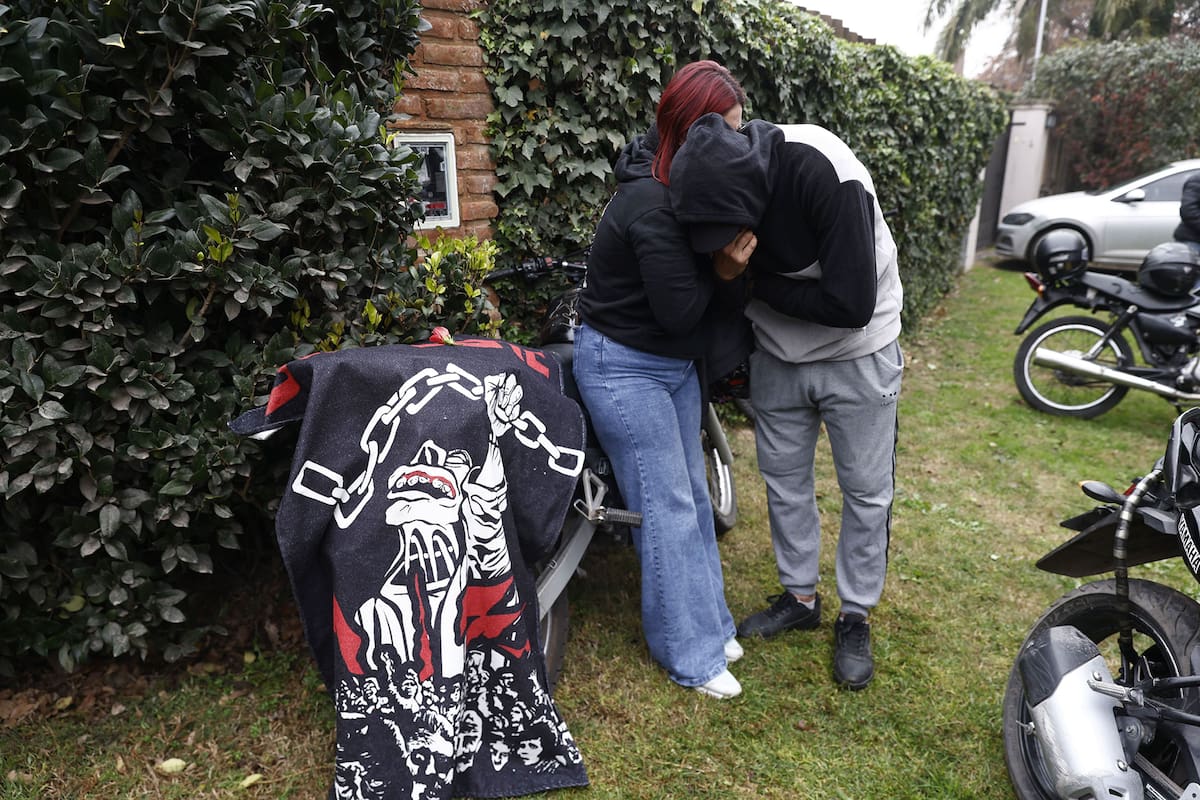
Solari’s passing triggered an outpouring of grief unlike any other in recent Argentine history. By Saturday morning, spontaneous tributes had erupted across Buenos Aires, with thousands gathering in Plaza de Mayo—where the musician had performed his final concert in 2000—to sing his songs, share memories, and pay homage to the man whose lyrics became anthems for generations. The scene was a mix of raw emotion and rock ‘n’ roll defiance, with fans of all ages—from teenagers who learned his music from their parents to elderly architects who first discovered him in the 1980s—chanting lyrics like *”Donde hay dolor, habrá canciones”* (“Where there is pain, there will be songs”). One woman, visibly moved, had even tattooed *”Patricio Rey y sus Redonditos de Ricota”* on her scalp.
Governor Axel Kicillof of Buenos Aires province, a self-proclaimed *”ricotero”*, called Solari a *”hero”* who *”gave voice to generations.”* Speaking at the University of La Plata, Kicillof framed the musician’s legacy as a symbol of *”true freedom, joy, and the future,”* adding that his death left an *”immense void”* in Argentine culture. The governor’s tribute reflected a broader sentiment: Solari wasn’t just a musician; he was a cultural architect whose lyrics—often surreal, political, and deeply human—resonated with Argentina’s struggles and triumphs.
Mayor Jorge Macri of Buenos Aires City, who had worked closely with Solari on cultural initiatives, echoed Kicillof’s sentiments, stating in a press conference at the Palacio Municipal that *”El Indio was the soundtrack of our rebellions, our joys, and our sorrows.”* Macri announced that the city would lower flags to half-mast until the funeral and that a permanent plaque would be installed in Plaza de Mayo to honor Solari’s contributions.
Fellow musicians and public figures also weighed in. Charly García, a longtime friend and collaborator, released a statement calling Solari *”the most Argentine of all Argentines”* and announced plans for a benefit concert at the Luna Park stadium. The Argentine Chamber of Deputies, led by Speaker Sergio Massa, unanimously approved a resolution declaring June 6 *”Día Nacional de la Cultura Popular”* in Solari’s honor, citing his role in *”preserving and elevating the country’s musical heritage.”*
In the working-class neighborhoods of Buenos Aires, where Solari’s music had deep roots, local radio stations played non-stop tributes. In La Boca, fans left flowers and handwritten notes outside the Caminito cultural center, where the band had performed in the 1990s. Meanwhile, in Belgrano R, a mural of Solari was hastily painted on a wall near his former recording studio, with the words *”El Indio nos dejó, pero su música sigue”* (“El Indio left us, but his music remains”).
“Hoy despedimos al Indio, a un artista, pero sobre todo, a un héroe argentino.”
—Governor Axel Kicillof, via Perfil
Solari’s influence extended beyond Argentina’s borders. In Uruguay, the band Los Fabulosos Cadillacs, who had toured with Redonditos in the 1990s, announced they would perform a free concert in Montevideo’s Plaza Independencia in his memory. In Spain, where Solari had performed multiple times, the Sala Cool in Barcelona projected his album covers on its facade and invited fans to share stories via social media using the hashtag #ElIndioVive (“El Indio Lives”).
The Medical Details: What Killed Argentina’s Rock Legend?
The official cause of death was confirmed by the Fiscalía General de Morón as a non-traumatic hemorrhagic stroke (ACV hemorrágico), occurring while Solari was in his pool. The autopsy, conducted at the Ituzaingó morgue, ruled out drowning, though emergency responders attempted resuscitation upon arrival. Solari’s longtime battle with Parkinson’s disease—publicly acknowledged in recent years—may have contributed to his vulnerability, though authorities emphasized that the stroke itself was the direct cause.
Dr. María Laura García, the forensic pathologist who led the autopsy, stated in a press briefing that *”the stroke was massive and occurred rapidly, with no signs of external trauma or foul play.”* She noted that Solari’s medical history, including Parkinson’s, had been documented in his personal records, which were provided to investigators by his family. García added that the pool’s heated water may have played a role in accelerating the stroke’s onset, though this was not the primary cause.
Fiscal Lucio Rivero, overseeing the case as an *”investigation of death causes,”* noted that forensic experts from the Buenos Aires Provincial Police were called in to analyze samples and determine whether any additional factors played a role. The case, classified under Article 251 of the Buenos Aires Criminal Procedure Code, is standard for deaths deemed *”suspicious”* or violent—though in this instance, the stroke was clearly the primary factor. Rivero assured the public that the investigation would be *”transparent and thorough,”* with findings expected within 10 days.
Solari’s wife, Virginia Mones Ruiz, and his caregiver, María José López, were present when emergency services arrived. López, who had worked for Solari for over five years, told reporters that she had last seen him alive at approximately 7:00 PM on June 4, when she brought him dinner. She described him as *”in good spirits”* but noted he had been *”more tired lately.”* The fiscal’s office stressed that the investigation would focus on establishing the precise medical cause, though no criminal or suspicious elements were initially suspected. The musician’s age—77—and his pre-existing health conditions were cited as context for the tragedy.
- 8:30 AM (June 5, 2026): Solari’s caregiver, María José López, arrived at his Parque Leloir home and found him missing.
- Discovery: She located his body in the heated pool area, which was locked from the inside.
- Emergency Response: Private medical services, including Dr. Alejandro Fernández of Servicios Médicos Urgentes, were called; resuscitation attempts were unsuccessful.
- Autopsy Confirmation: Death ruled immediate due to hemorrhagic stroke; no signs of trauma or external interference.
- Family Notification: Virginia Mones Ruiz was informed by police at 9:15 AM and arrived at the scene shortly after.
- Public Announcement: The Fiscalía General de Morón released a statement at 11:30 AM confirming the cause of death.
In a private moment captured by a neighbor’s security camera and later released to media, Solari’s daughter, Solange Solari, was seen arriving at the home in tears at approximately 10:00 AM. She has since declined public comment, though family sources told Clarín that she was *”devastated”* by the loss.
From Rock to Football: How Solari’s Legacy Played Out on the Global Stage
Even as Argentina mourned, Solari’s influence extended beyond music. On the same day of his death, the Argentine national football team—preparing for the 2026 World Cup in the U.S.—arrived in College Station, Texas, under a cloud of symbolism. The AFA’s official Instagram account posted a video of the squad boarding their flight to the University of Texas at Austin, set to a track by Solari’s side project, Los Fundamentalistas del Aire Acondicionado: *”Flight 956.”* The choice of song, paired with the caption *”Primera parada: College Station, Texas,”* was a deliberate nod to the musician’s enduring cultural footprint.
Lionel Messi, the team’s captain and a lifelong admirer of Solari’s work, paid tribute with a simple but powerful Instagram story: *”Siempre en nuestros corazones. QEPD”* (“Always in our hearts. Rest in peace”). The message, shared publicly, underscored how deeply Solari’s music had penetrated Argentina’s collective consciousness—even in sports, where his lyrics often mirrored the nation’s highs and lows. Messi’s post was later shared by the Argentine Football Association (AFA) with the hashtag #ElIndioNosUne (“El Indio Unites Us”).
“Siempre en nuestros corazones.”
—Lionel Messi, via Olé
The football team’s arrival in Texas—where they’ll face Honduras in a warm-up match before the World Cup—also highlighted the global reach of Solari’s music. His songs had been covered by artists worldwide, from Los Fabulosos Cadillacs in Latin America to Los Rodríguez in Spain. His themes of resistance, humor, and social critique had made him a cultural ambassador long before his death. Even in the midst of grief, Argentina’s footballers carried his legacy forward, proving that his influence transcended genres.
Scaloni, the Argentine coach, who had previously cited Solari’s music as inspiration for the team’s pre-match routines, told reporters at the team’s press conference: *”El Indio’s music is part of our identity. It’s about fighting, about joy, about never giving up—just like we do on the field.”* The team’s training session in College Station was accompanied by a playlist curated by assistant coach Pablo Aimar, which included multiple tracks from Redonditos and Fundamentalistas.
In a surprising turn, the U.S. soccer federation (USSF) also acknowledged Solari’s impact. The Heritage Park Stadium in Austin, where Argentina will play their first World Cup match, displayed a tribute banner reading *”In Memory of Carlos ‘El Indio’ Solari: A Global Icon of Music and Resistance.”* The banner was unveiled by USSF president Cindy Parlow Cone, who noted that Solari’s music *”resonates with the spirit of the World Cup—unity, passion, and defiance.”*
The Cultural Aftershock: What Comes Next?
As of Saturday, June 6, 2026, the focus remains on memorializing Solari while awaiting the results of the forensic investigation. His funeral is expected to take place on Sunday at 3:00 PM at the Cementerio de la Chacarita, with tributes planned across Buenos Aires and beyond. The city government has approved the use of Plaza de Mayo for a public memorial service on Monday, June 9, where cultural figures, politicians, and fans are expected to gather.
Fans have already begun organizing vigils, with the largest expected in Plaza Serrano on Saturday evening. Major venues—including the iconic Teatro Ópera and Luna Park—are likely to host memorial concerts in the coming weeks. The Argentine Ministry of Culture announced that it would be working with Solari’s estate to preserve his archives, including unreleased recordings and personal correspondence, for public access.
Beyond the immediate outpouring of grief, Solari’s death has reignited conversations about Argentina’s cultural heritage. His music, often dismissed by mainstream critics as *”underground,”* had quietly shaped the nation’s identity for decades. Now, as younger generations—who grew up with his lyrics—grapple with his absence, the question lingers: How will Argentina preserve the spirit of a man who refused to conform, even in death?
One thing is certain: Solari’s final days were as defiant as his life. Whether through his music, his political stances, or his unapologetic creativity, he left behind a legacy that refuses to fade. For now, Argentina mourns—but the songs, the pogo, and the laughter will endure.
In a symbolic gesture, the Argentine Congress passed a resolution on Saturday declaring June 6 *”Día Nacional de la Cultura Popular”* in Solari’s honor. The resolution, sponsored by deputies from across the political spectrum, cited his role in *”preserving and elevating the country’s musical heritage”* and called for the creation of a *”National Fund for the Promotion of Popular Music.”* President Javier Milei, who had previously attended a Redonditos concert in 2019, released a statement calling Solari *”a giant of Argentine culture”* and pledging government support for the fund.
Meanwhile, in the streets of Buenos Aires, the tributes continued unabated. In San Telmo, a group of teenagers organized an impromptu concert in front of the Mercado de San Telmo, playing covers of Solari’s songs on guitars and drums. In Palermo Soho, a bar called La Cueva, a longtime venue for Redonditos, held an all-night vigil with fans sharing stories and playing bootleg recordings of live shows.
Solari’s bandmate, Skay Beilinson, who had been hospitalized with a separate health issue, released a statement from his hospital bed: *”El Indio was the heart of our music. Without him, the world feels quieter.”* Beilinson, who had been scheduled to perform with Redonditos later this year, announced that the band would disband *”for now”* but would consider reunions in the future.
For more on the investigation into Solari’s death, see the Fiscalía General de Morón’s statement. For reactions from fellow artists, visit Perfil’s coverage. For updates on the public memorials, follow Buenos Aires Ministry of Culture.