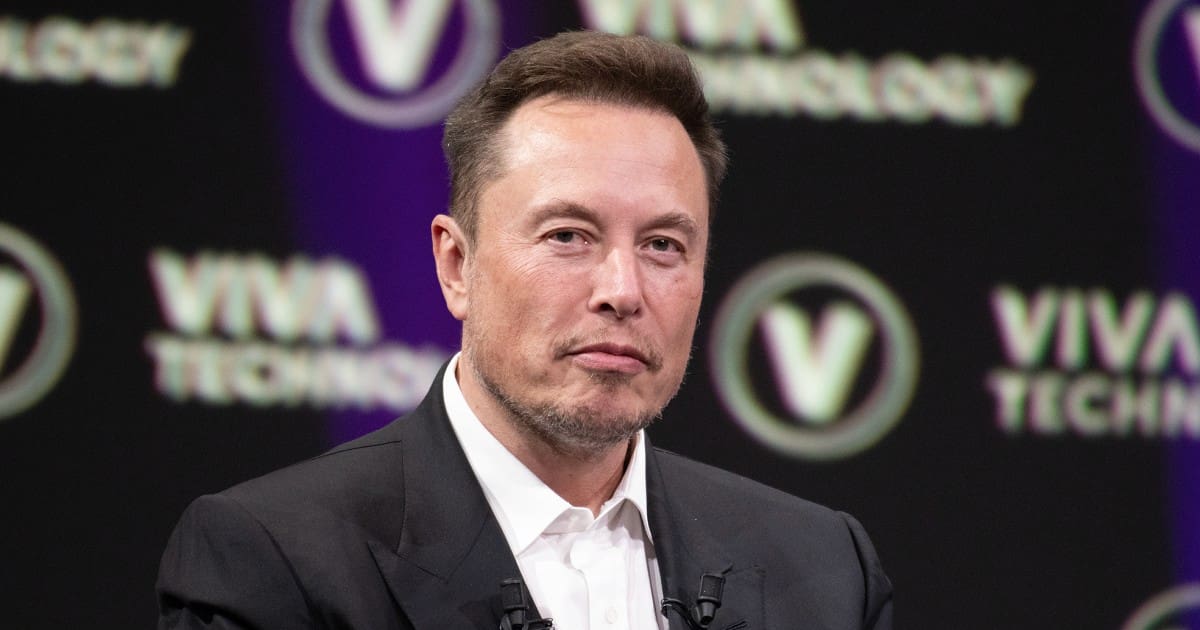
SpaceX, the Elon Musk-led aerospace and AI giant, has quietly scaled back its ambitious valuation target for its upcoming initial public offering (IPO) to at least $1.8 trillion—down from earlier aspirations of exceeding $2 trillion—while still aiming to raise a record $75 billion, according to multiple sources familiar with the process. The adjustment, confirmed by Bloomberg and Yahoo Finanzas, reflects a strategic recalibration as the company prepares for what would be the largest IPO in history. Musk himself dismissed the revised valuation as “false” on X, but the shift underscores the high-stakes balancing act between ambition and market reality as the company gears up to go public.
Why SpaceX’s Valuation Drop Matters
The $1.8 trillion valuation—still a staggering figure—marks a rare moment of humility for a company that has long operated outside traditional financial guardrails. Just one year ago, SpaceX was valued at $150 billion privately, and in February 2026, its acquisition of AI startup xAI alone valued the combined entity at $1 trillion, with xAI itself pegged at $250 billion. Yet the IPO’s scaled-back target reveals the challenges of translating private-sector hype into public-market discipline. The company’s financials tell the story: while revenue surged to $18.7 billion in 2025 (up from $14 billion in 2024), it also swung from a $791 million profit in 2024 to a $4.94 billion loss last year—a shift driven by aggressive expansion into AI infrastructure and orbital data centers. The numbers highlight a critical tension: SpaceX is betting big on long-term plays like Starlink’s $11.4 billion revenue stream (60% of its total) and its push into AI, which generated $3.2 billion in revenue but $6.4 billion in losses. The IPO isn’t just about raising capital; it’s about validating whether Wall Street will reward Musk’s vision of a “multiplanetary species” built on satellites, rockets, and AI—or demand a more conservative growth path.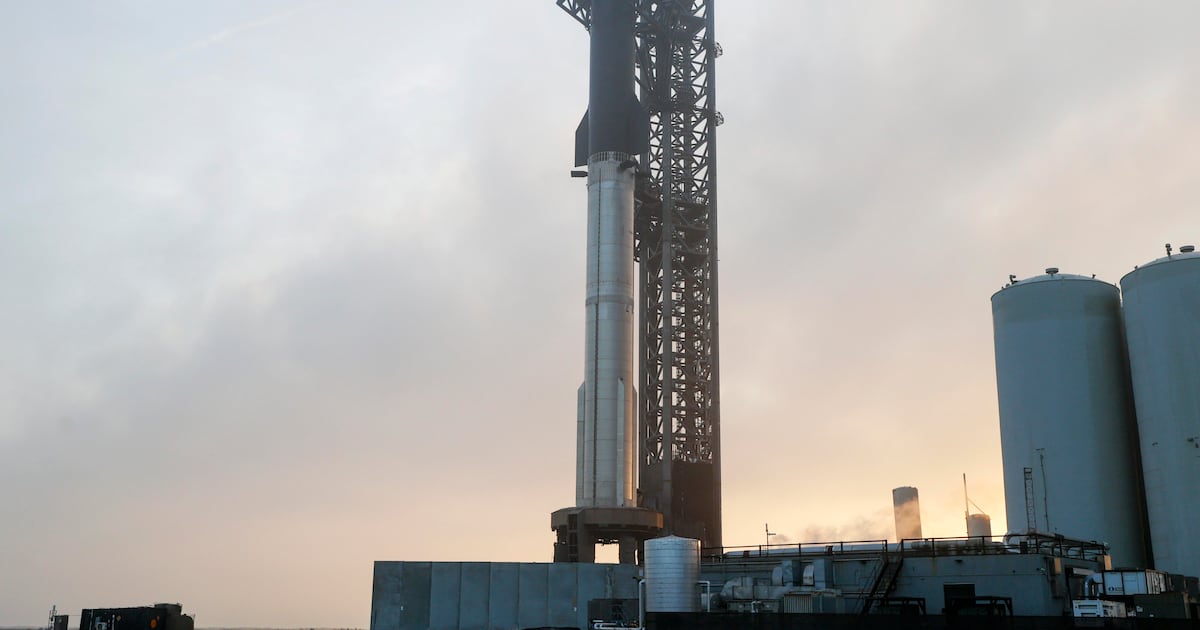
The Starlink Engine and AI’s Uncertain Future
Starlink remains SpaceX’s cash cow, generating nearly $11.4 billion in revenue in 2025 with 10.3 million subscribers across 164 countries and 9,600 satellites in orbit. Yet the segment’s profitability masks deeper questions about sustainability. The company’s prospectus reveals that Starlink’s operating margin was just 38%—hardly the kind of stability that typically justifies a $1.8 trillion valuation. Meanwhile, its AI division, which includes partnerships like the $1.25 billion monthly payment to Anthropic for access to its Colossus data center (a deal Musk downplayed as a “180-day lease with a 90-day cancellation clause”), is burning cash at an alarming rate. The contrast between Starlink’s profitability and AI’s losses reflects SpaceX’s dual strategy: leveraging proven revenue streams while betting on high-risk, high-reward infrastructure plays. The IPO’s success hinges on whether investors will buy into Musk’s long-term vision—or demand immediate returns. As Matthew Bloxham of Bloomberg Intelligence noted, “SpaceX is asking investors to value a company that’s part rocket manufacturer, part telecom giant, and part AI lab—none of which have ever coexisted in a single entity at this scale.”
What the IPO Means for SpaceX’s Competitors—and the World
SpaceX’s IPO isn’t just a corporate milestone; it’s a geopolitical and technological statement. By going public, Musk is forcing Wall Street to confront the reality that the next generation of infrastructure—from orbital data centers to Mars colonization—won’t be built by governments alone. The company’s prospectus estimates a $28.5 trillion market for its orbital infrastructure ambitions, a figure that dwarfs even the most optimistic projections for cloud computing or 5G. For competitors like Blue Origin or OneWeb, SpaceX’s move is a wake-up call. The company’s dominance in reusable rockets (with over 500 launches to date) and its Starlink network (which now serves remote regions from the Sahara to the Amazon) have already reshaped the industry. The IPO could accelerate this disruption, giving SpaceX deeper pockets to outmaneuver rivals in satellite launches, AI training, and even lunar missions. Meanwhile, governments may find themselves sidelined as SpaceX’s public listing turns its ambitions into a market-driven reality—one where the rules are set by investors, not regulators.