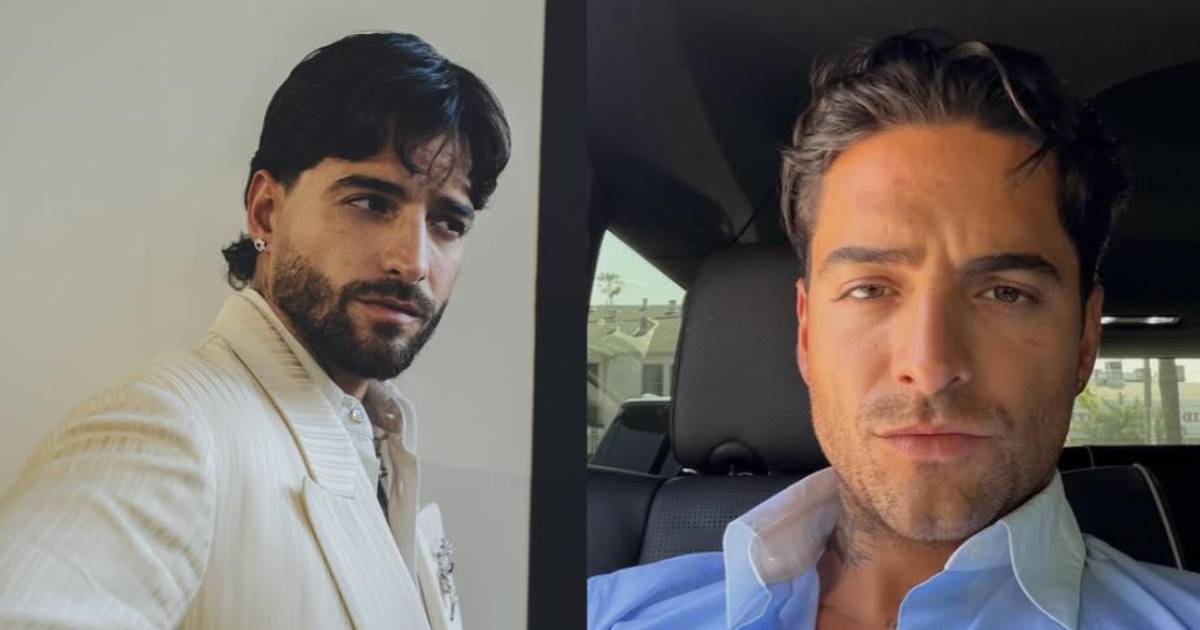
On the eve of Colombia’s presidential election, May 31, 2026, the country’s most globally recognized musician—Maluma—has broken his silence on politics in a way no one saw coming. The reggaeton superstar, whose career has spanned continents and genres, has launched an unexpected campaign: not for a candidate, but for voter turnout. In a series of interviews with El Colombiano and El Tiempo, Maluma revealed plans to rent buses and ferry voters to polling stations—a move that turns his 10 million Instagram followers into an unlikely electoral force. His message is simple, urgent, and personal: “It hurts me that my country hurts. And I want my children to grow up in a Colombia where they can thrive.”
What makes this moment extraordinary is not just the star power behind it, but the emotional stakes. Maluma, whose father once scoffed at his sudden political awakening (“I can’t believe you’ve been traveling for years and now you want to talk about politics”), has tied his own family’s future to Colombia’s electoral outcome. With his daughter, París, born in Medellín and a second child on the way, the artist’s plea transcends partisan lines. “I’m not telling you who to vote for,” he insists. “I’m just saying: vote.”
From Silent Star to Electoral Catalyst: Why Maluma’s Intervention Matters
Maluma’s intervention is the latest in a growing trend of Colombian celebrities using their platforms to combat abstentionism—a problem that has plagued the country’s elections for decades. In 2022, voter turnout hovered around 51%, a far cry from the 70%+ participation seen in some Latin American neighbors. This year, with polarization high and trust in institutions at historic lows, even small shifts in turnout could tip the balance. Maluma’s proposal to rent buses and transport voters is not just symbolic; it’s a logistical solution to a very real barrier: access. In rural and marginalized communities, where public transportation is unreliable, getting to polling stations can mean the difference between a voice being heard or silenced.
Yet his appeal cuts deeper than logistics. “My dad used to tell me, ‘You’ve been traveling for years—why do you care now?’” Maluma recalled in an interview with El Colombiano. “But this land hurts me. I want people to put their hand on their heart and vote.” The raw emotion behind his words reflects a shift in Colombian public sentiment: a growing exhaustion with political apathy and a demand for accountability. For a generation that has seen its country grapple with armed conflict, economic inequality, and now, the fallout from the 2023 peace accord’s implementation, Maluma’s message resonates as both a personal plea and a collective wake-up call.
The Personal Becomes Political: Maluma’s Family as Motivation
Maluma’s decision to speak out is deeply personal. As a father, he has become acutely aware of the fragility of Colombia’s future. “I want my daughter to enjoy this country,” he said, referencing his child París, born in Medellín. “She’s from here. The baby will be born here too.” His concern is not abstract; it’s rooted in the daily realities of life in Colombia. In interviews, he has spoken openly about how national instability affects his family—his parents, his sister, and now his children—who reside in Medellín, a city still recovering from decades of violence and economic disparity.

This emotional connection is what sets Maluma apart from other celebrity endorsements. Unlike politicians or activists, he carries no ideological baggage. His call to vote is not tied to a party or platform; it’s a plea for civic responsibility. “I’m not telling you who to vote for,” he reiterates. “I’m just saying: vote.” This neutrality may be his greatest strength. In a country where political polarization is rampant, Maluma’s message—rooted in love for his homeland rather than partisan loyalty—could bridge divides.
A Logistical Gambit: How Maluma’s Bus Plan Could Change the Game
Perhaps the most concrete—and surprising—element of Maluma’s intervention is his plan to rent buses and transport voters to polling stations. While the logistics are still being finalized, the idea is simple: address one of the most common excuses for not voting—difficulty getting to the polls. “I’m renting buses and starting to take people on election day,” he joked in his interview with El Colombiano. The proposal, while grassroots, has the potential to make a tangible impact, particularly in rural areas where public transportation is scarce.

This move is not without precedent. In 2018, Colombian comedian and activist Javier Camacho organized a similar initiative, “Vamos a Votar,” which used buses to transport young voters to polling stations. The campaign succeeded in increasing turnout among first-time voters by nearly 20%. If Maluma’s effort gains similar traction, it could serve as a model for future elections.
Yet challenges remain. Organizing such a large-scale operation in less than a week is no small feat. Maluma’s team will need to coordinate with local authorities, secure permits, and ensure the buses are distributed equitably across regions. There’s also the question of funding—while Maluma is covering the costs, scaling this initiative would require broader support from civil society organizations or political parties.
Beyond the Vote: Maluma’s Broader Impact on Colombian Culture
Maluma’s foray into politics is more than just a call to vote; it’s a reflection of a broader cultural shift in Colombia. For years, the country’s artists—from Shakira to Juanes—have used their platforms to address social issues, but Maluma’s intervention is unique in its immediacy and personal stakes. His message is not about ideology; it’s about belonging. “This land hurts me,” he says, echoing the sentiments of many Colombians who feel disillusioned by the political process but refuse to disengage.
This emotional appeal is particularly powerful in a country where trust in institutions is at an all-time low. According to a 2025 Latinobarómetro survey, only 22% of Colombians trust their national government to do what’s right. In this context, Maluma’s plea is not just about voting—it’s about reclaiming agency. By positioning himself as a bridge between the public and the political process, he is challenging the narrative of apathy that has plagued Colombian democracy for decades.
His influence extends beyond the ballot box. Maluma’s decision to speak out has sparked conversations about celebrity activism in Latin America, where artists like Shakira and Juanes have long used their platforms for social causes. However, Maluma’s approach is distinct in its focus on participation over persuasion. He is not endorsing a candidate or a policy; he is simply asking people to show up.
What’s Next? The Road Ahead for Maluma’s Electoral Mission
The next seven days will be critical for Maluma’s initiative. With the election just days away, his team will need to finalize logistics, secure partnerships, and mobilize volunteers.
- Logistical Execution: Can Maluma’s team coordinate buses across Colombia’s diverse geography in time?
- Public Response: Will voters, particularly in rural areas, take advantage of the offer?
- Broader Impact: Could this initiative inspire similar efforts from other celebrities or organizations?
- Political Neutrality: Will Maluma’s non-partisan stance hold, or will candidates attempt to co-opt his message?
Beyond the election, Maluma’s intervention raises larger questions about the role of celebrities in democracy. In an era of declining trust in traditional institutions, artists like Maluma are filling a void—using their platforms to encourage civic engagement. Whether his buses hit the roads or not, his message has already achieved something rare in Colombian politics: a unifying call to action.
For now, the focus remains on May 31. As Maluma prepares to take his buses to the polls, one thing is clear: his voice is no longer just about music. It’s about the future of a nation—and whether its people will choose to shape it.
“A mí me duele mi país. A mí me duele también.”
—Maluma, via <a href="https://www.elcolombiano.
Maluma’s journey from global pop star to reluctant election evangelist is a reminder that sometimes, the most powerful voices are not those in government, but those who speak from the heart.
<!– /wp:paragraph His call to vote transcends party lines, proving that even outside the political sphere, Colombian voices can inspire collective responsibility for the country’s democratic future.