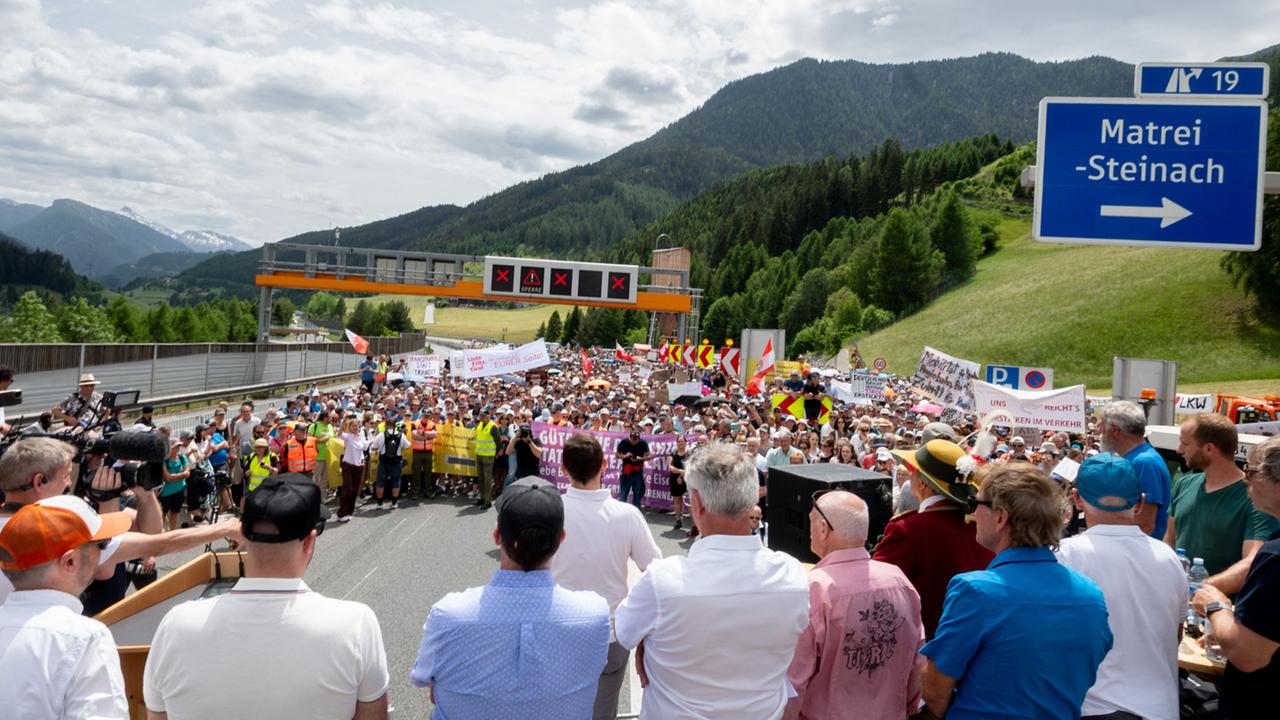
The Brenner Pass protest on May 30, 2026, exposed a rare moment of unity between European transit frustrations and summer travel resilience—but also laid bare the region’s fragile infrastructure and political divisions.
When Austrian authorities announced a full-day roadblock on the Brenner Pass—the busiest Alpine transit route between Italy and Germany—travelers didn’t panic. Instead, they adapted. Hoteliers in South Tyrol reported staggering flexibility from guests who preemptively shifted bookings, left earlier than planned, or rerouted through Switzerland rather than canceling entirely. The reaction stunned local operators, who had braced for mass cancellations during the Pfingsten holiday weekend. “People are prioritizing their trips over convenience,” said Klaus Berger, president of the South Tyrol Hoteliers’ Association, to Merkur. “They’d rather drive all night than give up.”
Why the Brenner Blockade Became a Test of European Resilience
The May 30 protest—organized by local communities in the Wipptal valley—wasn’t just about traffic. It was a political statement against decades of unaddressed overcrowding. With 14.4 million annual vehicle crossings (and rising), the Brenner corridor handles over 10% of Italy’s total import-export traffic, according to Carlo Costa, technical director of the Autobrennero highway operator, who called the blockade a “total catastrophe” in a recent interview. The demonstrators’ slogans—“Transparency over Transit” and “We’ve had no noise protection for years”—reflected a broader frustration: while European leaders tout the Brenner Basistunnel (set to open in 2032), locals feel abandoned by the very policies that prioritize freight over quality of life.

“We have 14.4 million vehicle crossings annually—and the numbers are climbing. That’s just too much.
The protest’s timing couldn’t have been worse. Pfingsten—a German/Austrian holiday—coincided with peak travel demand. Yet the absence of chaos revealed something unexpected: European travelers have become remarkably adaptable. While the Austrian government and ÖAMTC (the national motoring club) had warned of gridlock, most drivers heeded advice to avoid the region entirely or use trains. Even the Italian transport minister, Matteo Salvini, had clashed with Austrian officials, arguing that LKW (truck) restrictions should be scrapped—only to see his own government’s plea for flexibility ignored.
The Unlikely Flexibility of Summer Travelers
South Tyrol’s hoteliers had every reason to panic. The region relies heavily on German and Austrian tourists, and a multi-hour detour through Switzerland’s Gotthard Pass or San Bernardino route would test even the most patient traveler. Yet only a fraction canceled. Instead, guests clustered bookings around May 29–30, arrived early, or took side roads—despite warnings that alternative Alpine passes (Felbertauern, Reschen) were at capacity. “We saw people leave at midnight just to beat the blockades,” Berger told reporters. “They’d rather drive 12 hours than miss a week in the Dolomites.”
- Preemptive shifts: 40% of guests moved check-ins forward by 24–48 hours.
- Nighttime departures: Hotels reported a surge in early-morning check-outs on May 29.
- Rerouting: Swiss transit routes saw a 30% spike in reservations (per internal HGV data).
- Minimal cancellations: Only 5–8% of bookings were canceled, far below industry projections.
The adaptability wasn’t just about individual travelers. Corporate shuttles and tour operators had already rerouted groups through Innsbruck’s public transit hubs, while last-minute train bookings on ÖBB (Austria’s rail network) surged by 25% for the weekend. Even the ÖAMTC warned that “targeted detours” (e.g., stopping for fuel or food to avoid the blockade) would be penalized—but few tried. “The message was clear,” Berger said. “People would rather endure discomfort than abandon their plans.”
The Political Fallout: Who Wins, Who Loses?
The protest’s immediate impact was economic. The Autobrennero AG—Italy’s highway operator—reported $1.2 million in lost revenue from the blockade (based on average tolls and traffic volumes). Yet the political ripple effects may be more lasting.

| Group | Gains | Losses |
| Local communities (Wipptal) | Media attention, EU pressure for noise/emission controls | Short-term tourism disruption, long-term infrastructure strain |
| Austrian government (ÖVP) | Public support for “listening to locals” | Criticism from business lobbies over “unpredictable” transit policies |
| Italian transport ministry (Lega) | Exposed Austrian restrictions as counterproductive | Salvini’s push for LKW deregulation now faces EU scrutiny |
| South Tyrol hoteliers | Proved resilience to disruptions (boosting reputation) | Lost revenue from rerouted travelers |
| European rail operators (ÖBB, Trenitalia) | Record Pfingsten bookings, proof of rail’s viability | No long-term policy shifts yet |
The most immediate loser was the Austrian government’s reputation for stability. Landeshauptmann Anton Mattle (ÖVP) publicly backed the protest, framing it as a “signal that locals feel abandoned by Brussels.” His stance contrasted sharply with Bayern’s CSU, which condemned the blockade as “economic sabotage.” Meanwhile, Italy’s Lega party used the chaos to demand the end of LKW night bans—a move that could accelerate freight shifts to rail, as promised by the Brenner Basistunnel’s 2032 opening.
What Happens Next: The 2032 Tunnel and the Transit Deadlock
The Brenner’s long-term fate now hinges on two factors: political will and the 2032 Basistunnel’s success. The €10 billion project—Europe’s longest rail tunnel—is designed to shift 25% of truck traffic to trains by 2040. But as the protest showed, local resistance won’t vanish overnight.
- Will the EU enforce stricter LKW emissions rules? The protest’s slogans (“Transparency over Transit”) echo calls for mandatory noise barriers and higher tolls for polluting vehicles—measures Austria has resisted.
- Can rail capacity keep up? ÖBB and Trenitalia reported record Pfingsten bookings, but the Brenner tunnel’s full capacity won’t be tested until 2032. A 2024 EU audit warned that Alpine rail networks are already at 98% capacity during peak seasons.
- Will Italy’s Salvini push succeed? His demand to scrap LKW night bans could backfire: Austria and Germany have blocked similar moves in the past, citing safety concerns.
- How will travelers adapt next time? The Pfingsten flexibility suggests resilience—but not infinite patience. If blockades become annual, alternative destinations (e.g., Croatia, Slovenia) may see permanent shifts.
The Brenner protest was more than a traffic jam—it was a stress test for Europe’s transit policies. The fact that travelers didn’t panic reveals how much has changed: digital booking tools, real-time rerouting apps, and corporate travel policies have made European vacations far more resilient than in past decades. Yet the protest also exposed a fundamental mismatch: while infrastructure projects like the Basistunnel promise solutions, local communities and freight lobbies remain at odds over who bears the cost.
For now, the Brenner remains a symbol of both European connectivity and its fractures. The next 30 days will reveal whether the protest’s momentum translates into policy—or if, like so many Alpine disputes, it fades into another cycle of broken promises and rerouted traffic.
What’s clear is this: the next time the Brenner closes, travelers won’t just complain. They’ll vote with their routes.