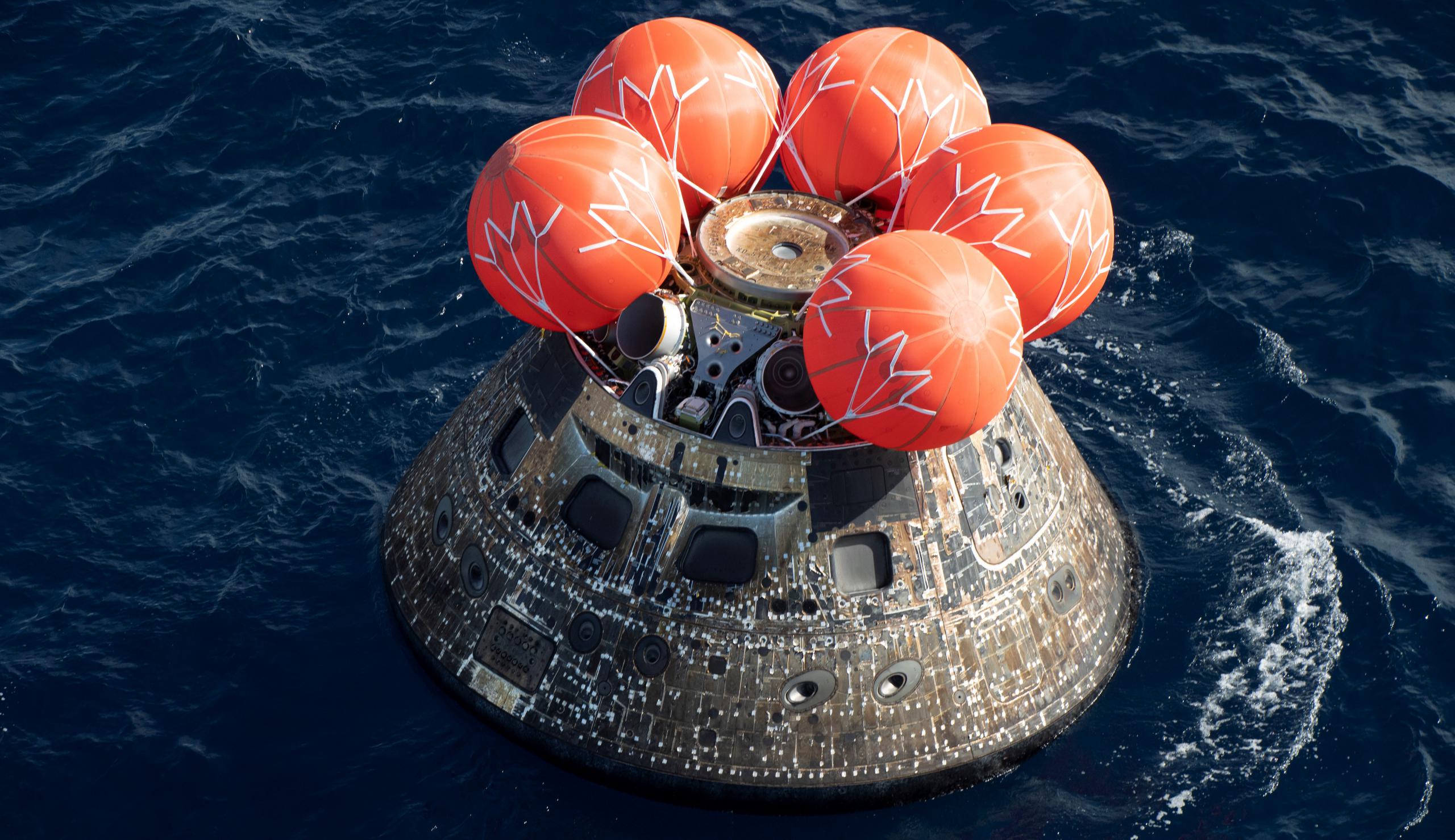
Viral images of the Artemis II mission’s splashdown and recovery are not real NASA photos but AI-generated fakes, according to fact-checkers who examined social media posts claiming to show astronauts exiting the capsule into open water.
The images, which gained wide traction online, depict astronauts in orange suits standing freely in the ocean after splashdown, a scene that contradicts official NASA recovery procedures. Verified footage and documentation show that after the Orion spacecraft splashed down in the Pacific Ocean at approximately 25,000 mph, U.S. Navy divers first stabilized the capsule, and astronauts remained inside while recovery teams attached hardware and an inflatable platform known as the “front porch.” Crew members then exited onto this raft for transfer to helicopters, never entering the open water directly.
This misrepresentation is part of a broader trend where AI-generated content is being used to fuel conspiracy theories about the Artemis II mission. Denialists have shared fabricated videos showing astronauts hanging by harnesses in front of green screens, complete with glitching overlays, missing limbs, and incorrect finger counts — clear signs of AI manipulation identified by experts like France 24 and disinformation analyst Tal Hagin, who determined one video was spliced from a crew waving screenshot and an Earth-view image.
The spread of such fakes is amplified on platforms like X (formerly Twitter) and Facebook, where searches for “Artemis leaks” reveal AI-generated moon scenes and claims that NASA used CGI and green screens to fake the mission. Flat Earth accounts have reused earlier AI slop to argue the mission was staged, despite hundreds of authentic launch videos from the public.
Experts warn that the ease of creating convincing AI imagery undermines public trust in factual information. As one observer noted, it is ironic that those who deny the mission’s authenticity would rely on fabricated evidence to support their claims, highlighting a deeper issue: the erosion of shared reality in the age of accessible generative tools.
Despite the noise, the Artemis II mission achieved its goal of sending humans past the Moon for the first time in over fifty years, allowing humanity to view the far side directly — a fact confirmed by NASA and independent tracking.
How AI-generated recovery images misrepresent NASA safety procedures
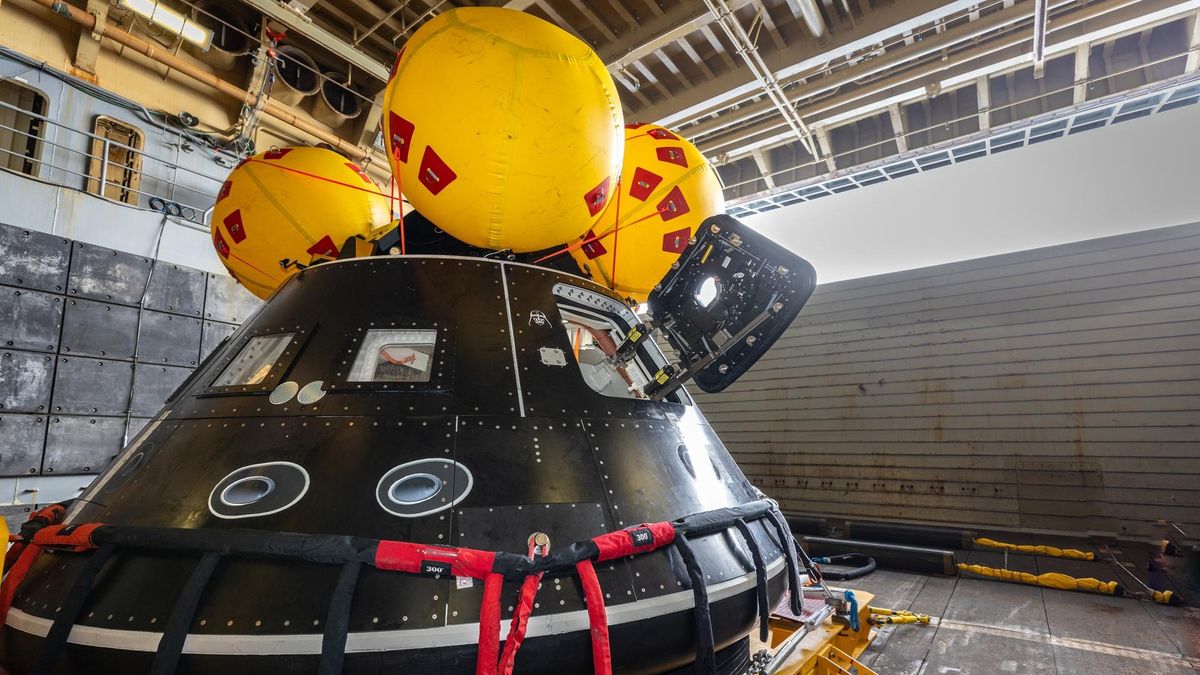
The viral splashdown images falsely show astronauts standing in open water immediately after landing, but NASA’s actual protocol keeps crew inside the capsule until it is secured and stabilized by Navy divers using small inflatable boats. Only after attaching recovery hardware and the inflatable “front porch” do astronauts transfer to the raft for helicopter extraction, a process designed to protect crew members experiencing post-spaceflight disorientation and balance issues.
Why denialists use AI fakes to challenge a verified mission
Conspiracy theorists sharing AI-generated footage as “proof” of a hoax present an ironic contradiction: they rely on fabricated digital content to dispute real-world evidence, including public launch videos and official telemetry. This pattern mirrors past moon landing denialism but is accelerated by the accessibility of generative AI tools that produce convincing fakes with minimal effort.
What makes the Artemis II AI fakes detectable to experts
Analysts identify AI slop through visual anomalies such as glitching text overlays, incorrect limb proportions, wrong finger counts, and implausible details like five-sided spacecraft windows — none of which appear in authentic NASA imagery. Metadata checks and watermark detection, including Google’s SynthID, have also confirmed the artificial origin of several viral images.
Are the viral Artemis II splashdown images real NASA photos?
No, fact-checkers confirmed the images showing astronauts in open water and celebratory scenes on naval vessels are AI-generated and do not depict actual mission events.
How does NASA actually recover astronauts after splashdown?
After splashdown, U.S. Navy divers stabilize the Orion capsule, attach recovery hardware and an inflatable platform, then assist astronauts onto a raft for helicopter transfer — crew members do not enter the open water directly due to post-spaceflight balance and coordination risks.
What evidence shows the Artemis II mission was not faked?
Hundreds of public videos captured the launch on April 1, 2026, and the mission allowed humanity to see the far side of the Moon for the first time in over fifty years, a fact verified by NASA and independent sources.