
Nvidia unveiled the RTX Spark, a new processor for Windows PCs, on June 1, 2026, in collaboration with Microsoft to redefine personal computing through advanced AI capabilities. The launch, announced at NVIDIA GTC, marks a pivotal shift in how developers, creators, and AI enthusiasts interact with hardware, blending cutting-edge silicon with Windows’ ecosystem to unlock unprecedented performance.
The RTX Spark Unveiled: A New Era for Windows PCs
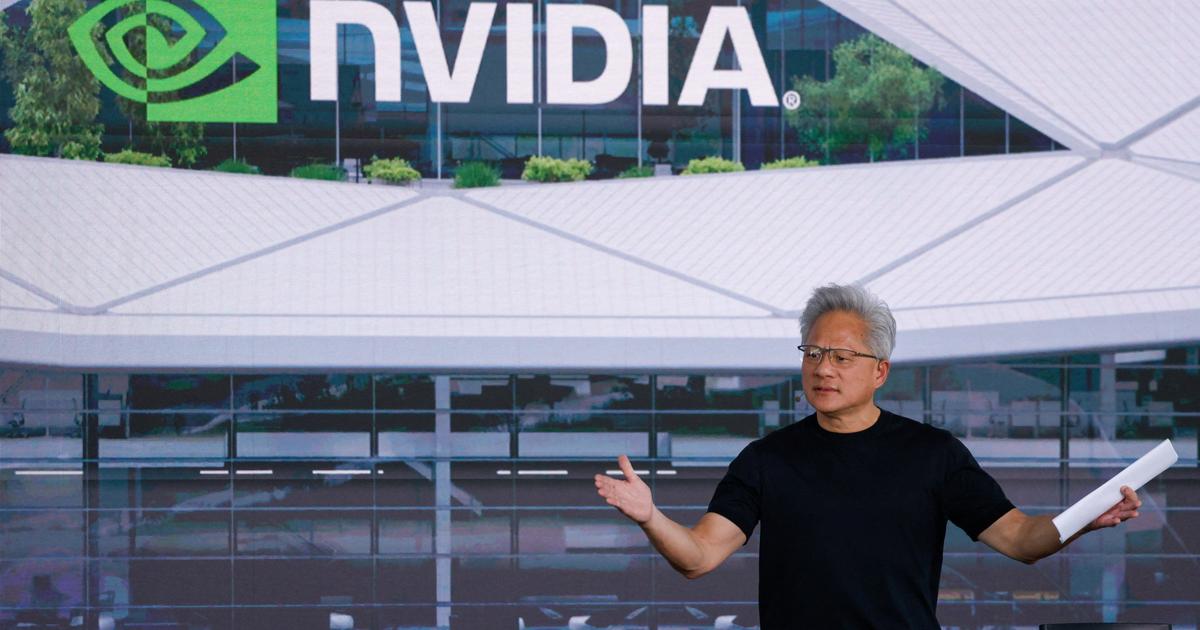
Nvidia’s RTX Spark, introduced during the Computex trade show in Taipei, aims to challenge Intel’s long-standing dominance in the PC processor market. The chip is designed to "reinvent the PC" by integrating AI agents directly into computing workflows, enabling tasks like bioinformatics, seismic analysis, and astrophysics without relying on cloud infrastructure. "Microsoft and Nvidia are reimagining the PC," said Jensen Huang, CEO of Nvidia, during the announcement. "This will be the new PC." The processor’s launch coincides with a broader industry push toward on-device AI, as governments and corporations invest hundreds of billions into AI infrastructure.

The RTX Spark is not just a CPU but a full-stack solution, combining NVIDIA’s Blackwell architecture with Microsoft’s Windows platform. It delivers 1 petaflop of AI performance, 6144 Blackwell RTX cores, 20 power-efficient Arm-based cores, and up to 128GB of unified memory. These specs are tailored for "agents"—AI-driven tools that can autonomously perform tasks for users. "RTX Spark combines NVIDIA’s full technology stack with Microsoft Windows and is purpose-built for creators, gamers, and AI developers in the personal AI era," said Jeff Fisher, senior vice president of personal computing at NVIDIA, in a statement published by Microsoft’s blog.
Microsoft and Nvidia’s Partnership: A Full-Stack Collaboration
The collaboration between Microsoft and Nvidia spans gaming, AI, and cloud computing, with the RTX Spark serving as the latest milestone. Microsoft’s Windows platform has been optimized to leverage the chip’s heterogeneous architecture, including workload profile scheduling (WPS) to balance performance across the 20 cores. The integration also includes the Microsoft Power and Thermal Framework (MPTF) to maximize efficiency on the go. "It’s the combination of Windows’ platform and ecosystem leadership, with NVIDIA’s silicon innovation and industry-leading graphics and AI leadership, that has resulted in a collection of powerhouse laptops," the Microsoft blog stated.
This partnership reflects a strategic move to counter Intel and AMD, which have traditionally dominated the CPU market. Analysts note that Nvidia’s approach bypasses traditional PC supply chains to build a "hardware monopoly from end to end." "For AI users, this will finally provide the memory bandwidth needed to run robust models locally without latency," said Stephen Wu, a former AI engineer and founder of Carthage Capital, in an interview with Le Figaro. The move also signals Nvidia’s expansion beyond GPUs, which have long been its specialty in gaming and AI workloads.
Technical Specifications: Power Meets Efficiency
The RTX Spark’s technical blueprint emphasizes both performance and energy efficiency. Its 1 petaflop of AI performance is achieved through a combination of high-core-count architecture and advanced power management. The chip’s 6144 Blackwell RTX cores are optimized for ray tracing and neural rendering, while the 20 Arm-based cores handle general-purpose tasks with minimal power consumption. Microsoft’s Windows 11 has been specifically tuned to take advantage of these features, ensuring that "the Windows scheduler on RTX Spark will ensure you get the best performance and efficiency out of your CPU," according to the Microsoft blog.
The chip’s 128GB of unified memory is a key differentiator, allowing it to handle complex AI models without swapping data to slower storage. This capability is critical for running "agents" locally, a concept Nvidia and Microsoft have championed as the future of personal computing. "If you want to do digital biology, seismic processing, or astrophysics, no problem," Huang said, highlighting the chip’s versatility. The RTX Spark is set to launch in the fall, with initial models targeting developers and creators.
Industry Implications: Disruption and Competition
The RTX Spark’s launch has significant implications for the PC industry. By integrating AI agents directly into hardware, Nvidia and Microsoft are positioning themselves as pioneers in the "personal AI era." This shift could disrupt traditional PC manufacturers, who may need to adapt to new benchmarks centered on AI performance rather than raw processing power. Intel and AMD, which have focused on CPU-centric innovations, now face a challenge from a company known for its GPU expertise.
Analysts suggest that the RTX Spark could also reshape the AI software landscape.