
The first revenue from Iran’s newly imposed tolls on ships passing through the Strait of Hormuz has been deposited into the Central Bank, according to the deputy speaker of Iran’s parliament, Hamidreza Haji Babaei, who confirmed the move to Tasnim News Agency but offered no details on which vessels paid or how much was collected.
This development comes amid a fragile ceasefire between the United States and Iran, during which Tehran has sought to assert control over the vital waterway by charging fees for passage — a plan first trialled earlier this month that required tankers to disclose cargo, destination, and ownership before paying at least $1 per barrel, or roughly $2 million for a typical 2-million-barrel oil tanker, payable in Chinese yuan or cryptocurrency.
Iranian officials maintain that the toll system is sovereign and necessary for reconstruction, with Alireza Salimi, another senior MP, stating that fees vary by cargo type and risk level, and that “Iran determines how and to what extent these fees are collected. We determine the rules.” Yet the BBC could not independently verify the deputy speaker’s claim, and no Western shipping companies have publicly acknowledged making payments, likely due to existing sanctions that prohibit transactions with Iran’s Revolutionary Guard Corps, which oversees the escort of approved vessels through the strait.
The United States continues to dispute Iran’s right to impose such fees, arguing that the Strait of Hormuz falls under the UN Convention on the Law of the Sea, which guarantees unimpeded transit passage — a treaty ratified by 170 countries and the European Union, though neither Iran nor the US is a party. Still, Washington has made clear it rejects Tehran’s claim to control the route, even as it maintains a naval blockade in the area that Iran says it will not lift until US forces withdraw.
This standoff has already sent ripples through global energy markets: Brent crude prices jumped nearly 13% on Thursday following reports of the naval standoff and seized vessels, underscoring how any disruption to the strait — through which about a fifth of the world’s oil passes — can trigger immediate price volatility. Analysts estimate that adding just $1 to the cost of each barrel transiting the route could impose $20 million in daily costs on the market, or roughly $7 billion annually, though this remains a small fraction of the $3 trillion global oil market.
The toll scheme echoes past attempts by Iran to leverage its geographic advantage, recalling 2019 when Tehran similarly threatened to restrict passage unless its demands were met, though no formal toll was ever implemented then. Now, with peace talks in Islamabad stalled and both sides blaming the other for broken commitments — Iran citing the US blockade and sanctions, Washington pointing to Iranian aggression and nuclear concerns — the Strait of Hormuz remains less a conduit for commerce and more a flashpoint where economic strategy, military posturing, and diplomatic deadlock converge.
How the toll system works according to Iranian officials
Iran’s trial toll system requires ships to provide detailed information about their cargo, final destination, and beneficial owners before clearance is granted. Once approved, Islamic Revolutionary Guard Corps vessels escort the tanker through a narrow route near Iran’s southern coast. The fee is calculated at a minimum of $1 per barrel of oil, meaning a standard incredibly large crude carrier carrying 2 million barrels would pay $2 million per transit. Payments are to be made in Chinese yuan or cryptocurrency, likely to circumvent traditional banking channels restricted by sanctions.
Why Western shipping firms are unlikely to participate
Despite reports that ships from Malaysia, China, Egypt, South Korea, and India have been allowed to pass, there is no evidence that major Western energy or shipping companies have made payments to Iran for transit. This is largely due to secondary sanctions that penalize any entity engaging in financial transactions with Iran’s Revolutionary Guard Corps, which administers the toll and escort system. Any Western company seen as complying risks losing access to US financial markets and facing penalties under existing sanctions regimes.
What the US blockade means for Iran’s toll ambitions
The United States maintains a naval presence in the Strait of Hormuz that Iran characterizes as a blockade, insisting it will not reopen the strait to unimpeded passage until US forces withdraw. This directly contradicts Iran’s toll collection efforts, as the US navy’s presence undermines Tehran’s claim of sole authority over the waterway. Iranian officials argue that the US blockade is the primary obstacle to peace talks, while Washington insists Iran must first de-escalate its nuclear program and cease support for regional proxies.
How toll revenues could affect global oil costs
If implemented consistently, the $1-per-barrel toll would add approximately $20 million per day to global oil costs, based on pre-crisis flow estimates of 20 million barrels per day through the strait. Annually, this amounts to roughly $7 billion — a notable sum but relatively minor in the context of a $3 trillion annual oil market. Still, even small cost increases can be amplified by market sensitivity to perceived supply risks, as seen in the recent 13% Brent crude spike following heightened tensions.
Has Iran ever successfully charged tolls for Strait of Hormuz passage before?
There is no verified evidence that Iran has previously collected formal tolls for vessels transiting the Strait of Hormuz. While Tehran has historically restricted passage to “friendly” nations and discussed fee structures, no independent confirmation of revenue collection existed prior to the deputy speaker’s recent claim about the first deposit into the Central Bank.
Why are toll payments reportedly made in Chinese yuan or cryptocurrency?
Iran likely favors Chinese yuan or cryptocurrency for toll payments to bypass the international banking system, which is largely inaccessible to Iranian entities due to US and European sanctions. These alternatives allow for transactions that are harder to trace and less vulnerable to interdiction by Western financial authorities.
What makes the Strait of Hormuz so critical to global energy markets?
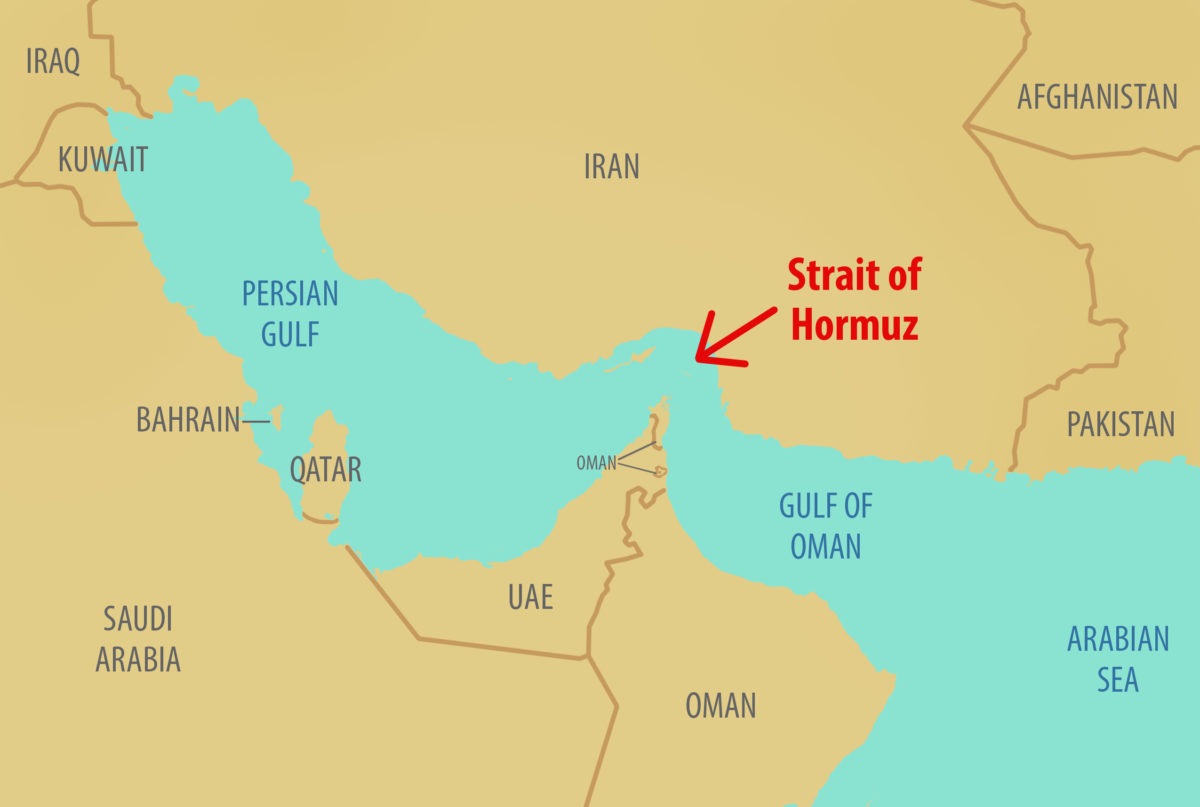
The Strait of Hormuz is a 21-mile-wide choke point between Oman and Iran through which approximately 20-30% of the world’s seaborne oil trades pass, including significant volumes from Saudi Arabia, Iraq, and the UAE. Any disruption — whether from military action, political standoffs, or unilateral toll schemes — can immediately affect global oil prices due to the narrow margin between supply, and demand.
Could the toll scheme lead to long-term changes in shipping routes?
If the toll becomes permanent and widely enforced, some shipping companies might seek to avoid the strait altogether by using longer alternate routes around Africa or increasing reliance on pipelines, though such alternatives are often more expensive, slower, or lack the capacity to fully replace maritime transit. For now, most analysts view the toll as a leverage tactic in negotiations rather than a permanent fixture of global shipping economics.