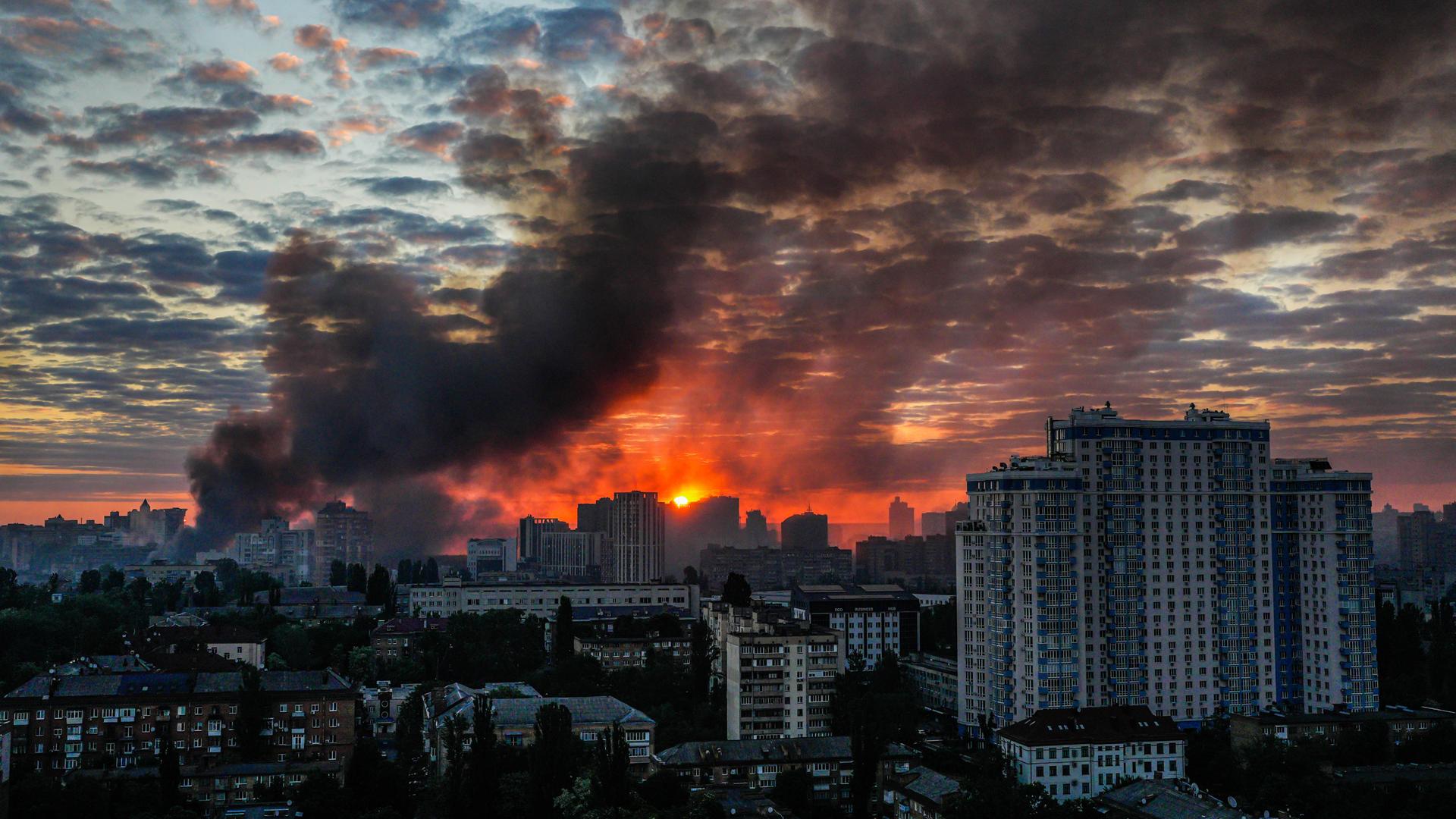
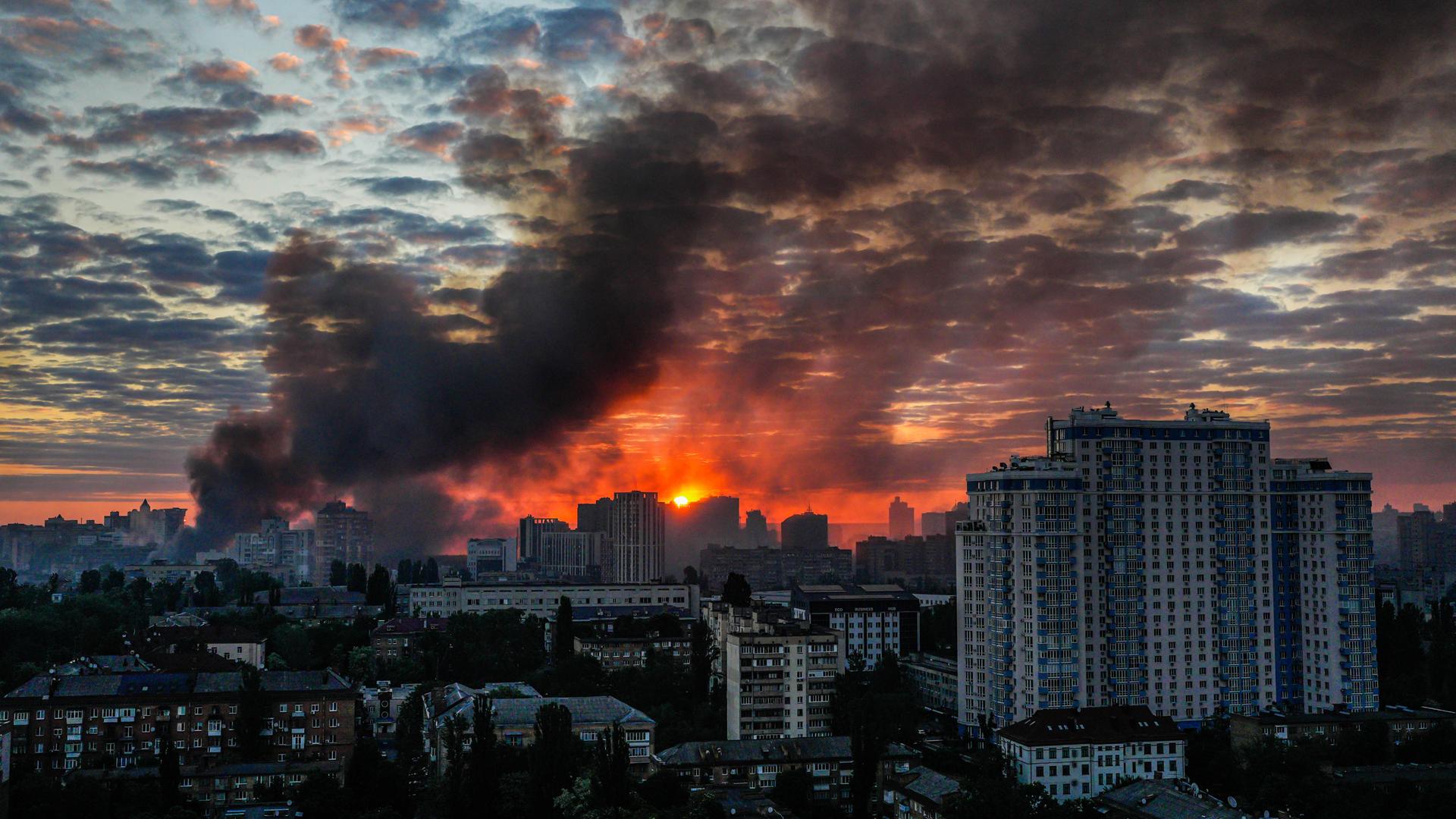
Russia launched a massive overnight assault on Ukraine, deploying 600 drones and 90 missiles, including a ballistic Oreshnik missile that struck Bila Tserkva. The May 24, 2026, attack caused widespread damage across Kyiv, including the destruction of the ARD studio and the Chernobyl Museum, resulting in at least four deaths and dozens of injuries.
A Night of Escalation: Kyiv Under Fire
The assault, which began in the late hours of May 23 and continued into Sunday, marked a significant escalation in the ongoing conflict. According to the Ukrainian military, the Russian barrage included 54 cruise missiles, 33 ballistic missiles, and three Zirkon hypersonic missiles, alongside 600 drones. While Ukrainian air defenses reported intercepting 44 cruise missiles, 11 ballistic missiles, and 549 drones, the remaining projectiles struck critical infrastructure and civilian centers throughout the capital.

Kyiv Mayor Vitali Klitschko confirmed that damages were recorded in every district of the city. Beyond the human toll—four people killed in Kyiv and its surrounding region—the attack hit several cultural and institutional landmarks. The Chernobyl Museum, dedicated to the 1986 nuclear disaster, was partially destroyed, while the National Art Museum of Ukraine and the Kyiv Opera also sustained damage. The Ukrainian Ministry of Foreign Affairs building, a structure dating back to 1939, reported damage for the first time since World War II.
Emergency services reported that across the country, the scale of the bombardment resulted in at least 100 people sustaining injuries. The intensity of the waves of drones and missiles complicated recovery efforts, as crews contended with fires and structural collapses in residential zones. Local authorities described the tactical approach as a deliberate attempt to overwhelm the integrated air defense systems protecting the metropolitan area.
The Oreshnik Missile and Strategic Intent
The deployment of the Oreshnik ballistic missile has drawn intense scrutiny due to the weapon’s capabilities. Known for its ability to carry both conventional and nuclear warheads, the Oreshnik reaches speeds of up to 12,000 kilometers per hour with a range of 5,000 kilometers. As reported by Deutschlandfunk, this marks the third time Russia has utilized the weapon in the current war, following previous strikes in Dnipro and western Ukraine.

The Russian Ministry of Defense described the strike as a retaliatory measure against recent Ukrainian actions directed at Russian territory. However, President Volodymyr Zelenskyy denied that Ukraine had targeted civilians, asserting that the intended targets were Russian drone units in the Starobilsk region. European Union Foreign Policy Chief Kaja Kallas characterized the use of the Oreshnik as a tactic of political intimidation, suggesting that Russia is increasingly reliant on such displays of force due to a tactical stalemate on the battlefield.
Diplomatic observers noted that the choice of the Oreshnik system, capable of high-velocity transit, is viewed by international bodies as an attempt to signal capabilities to Western partners. The Russian state media confirmed the deployment, framing the usage as a demonstration of technical superiority in response to what Moscow termed “provocations.” Conversely, the Ukrainian government has utilized the incident to renew calls for advanced air defense platforms capable of tracking high-speed, maneuvering ballistic projectiles.
Impact on International Media Operations
The scale of the destruction reached deep into the heart of the international press corps in Kyiv. The ARD studio, located within the National Art Museum complex, was severely damaged by the shockwaves of the nearby impacts.
“Rausgerissene Fensterrahmen, überall Splitter, zerstörte Technik – den eigenen Arbeitsplatz völlig verwüstet zu sehen, ist ein Schock.” Vassili Golod, ARD studio director, via Die Zeit
Despite the devastation to their workspace, the team has committed to continuing their mission. ARD correspondent Susanne Petersohn noted that the intensity of the night’s bombardment was unique even for those accustomed to the ongoing conflict. “I believe nobody slept in Kyiv last night,” she said. The team has since relocated to a hotel with a secure bunker to maintain their reporting schedule. The destruction of the studio serves as a stark illustration of the risks faced by journalists operating in proximity to critical infrastructure targets, which have increasingly become the primary focus of Russian strike patterns.
Political Reactions and Future Implications
German leadership has responded with sharp condemnation of the latest Russian tactics. Chancellor Friedrich Merz publicly denounced the strike, stating that the German government condemns this reckless escalation in the sharpest terms. Foreign Minister Johann Wadephul echoed these sentiments, describing the use of the Oreshnik as a form of “rocket terror” that further necessitates increased bilateral support for Ukraine.
The German government has signaled that it is reviewing the implications of the Oreshnik deployment on European security architecture. Within the Bundestag, various factions have debated the necessity of providing further defensive capabilities, with some members arguing that the current trajectory of the war requires a shift in how Western-supplied weaponry is integrated into Ukrainian defense strategy. This political discourse is occurring against a backdrop of ongoing efforts to stabilize the energy grid, which sustained significant damage during the overnight barrage.
As the country processes the aftermath of the largest recent aerial assault, the tactical situation remains volatile. Observers note that predicting the next phase of the conflict has become increasingly difficult. As Petersohn observed, “Whenever you think you have found a rule, the tactic is changed again.” The focus for authorities in the coming days remains on clearing the debris, treating the 100 people injured nationwide, and assessing the long-term impact of the strike on Ukraine’s urban infrastructure. The Cabinet of Ministers has scheduled emergency sessions to allocate resources for the repair of the damaged cultural sites and to facilitate the reconstruction of critical municipal services affected by the missile impacts.