Prof Velandai Srikanth is the director of the National Centre for Healthy Ageing, a position reached through decades of research published in leading scientific journals. Yet, upon turning 60, he encountered a sudden shift in how he was perceived. He recalls a moment when somebody said ‘so when are you going to retire?’
For Srikanth, a geriatrician, the comment was a revelation of the stigma of aging—the societal assumption that a certain age automatically triggers a trajectory of decline. In clinical practice, he observes a wide spectrum of attitudes: some individuals view aging as a path toward decrepitude, while others approach the third age
with excitement, viewing it as a period of new opportunities.
These differing perspectives represent a significant variance in how individuals conceptualize their own longevity. Evidence indicates that these internal mental models can have a profound effect on function and may meaningfully change the trajectory of how a person grows older.
The weight of outdated mental models
The beliefs an individual holds about aging often act as a self-fulfilling prophecy. Prof Ian Robertson, a clinical psychologist and neuroscientist and Prof Emeritus of Psychology in Trinity College, suggests that many people operate under highly inaccurate and out of date
ideas about the aging process. These mental models can lead individuals to prematurely reduce their activity levels, assuming that certain limitations are an inevitable part of their age.
This psychological framing often manifests as a tendency to misinterpret normal lapses in function. Prof Robertson notes that a person in their 30s who forgets a name typically brushes it off. However, an older adult may view the same occurrence as an early sign of dementia. This shift in perception triggers a cycle of worry.
Prof Ian Robertson, Prof Emeritus of Psychology in Trinity College, explains that worrying about one’s memory is similar to consciously thinking about your feet while walking downstairs, which creates an unnecessary state of anxiety.
From a clinical perspective, this anxiety is not benign. Robertson explains that anxiety interferes with memory both biologically and psychologically, effectively using up available memory space. When the mind is preoccupied with the fear of decline, the resulting stress can impair the very cognitive functions the individual is worried about losing.
Measuring the physical cost of negative expectations
The link between mindset and physical outcome has been quantified in large-scale observations. A study conducted by Prof Becca Levy and her colleague Dr Martin Slade from the Yale School of Public Health examined more than 11,000 people between the ages of 50 and 99. Their findings indicated that those with more positive attitudes toward aging performed better on memory tests, mathematics, and walking speed than those with negative views.
Crucially, the research showed that a positive outlook did not just slow decline; for some, it was associated with actual improvement. Over an average eight-year follow-up period, 44% of participants showed improvements in cognition and walking speed. Those who entered the study with positive feelings about aging were more likely to be among those who improved.
Researchers found that while people often point to “super-agers” as anomalies, these individuals are frequently miscategorized as rare exceptions rather than examples of what is possible.
“Many people have examples in their own lives or can point to people that do show improvement in later life, but we tend to classify them as exceptions or exemplars,” Prof Becca Levy, Yale School of Public Health
Similar patterns appeared in data from TILDA, the Trinity College tracking survey on aging. As reported by The Irish Independent, the data revealed that people who held negative expectations about aging walked significantly slower two years later compared to those with a positive view. These individuals also exhibited a slight decrease in social activity and a significant reduction in cognitive flexibility.
The intersection of effort and purpose
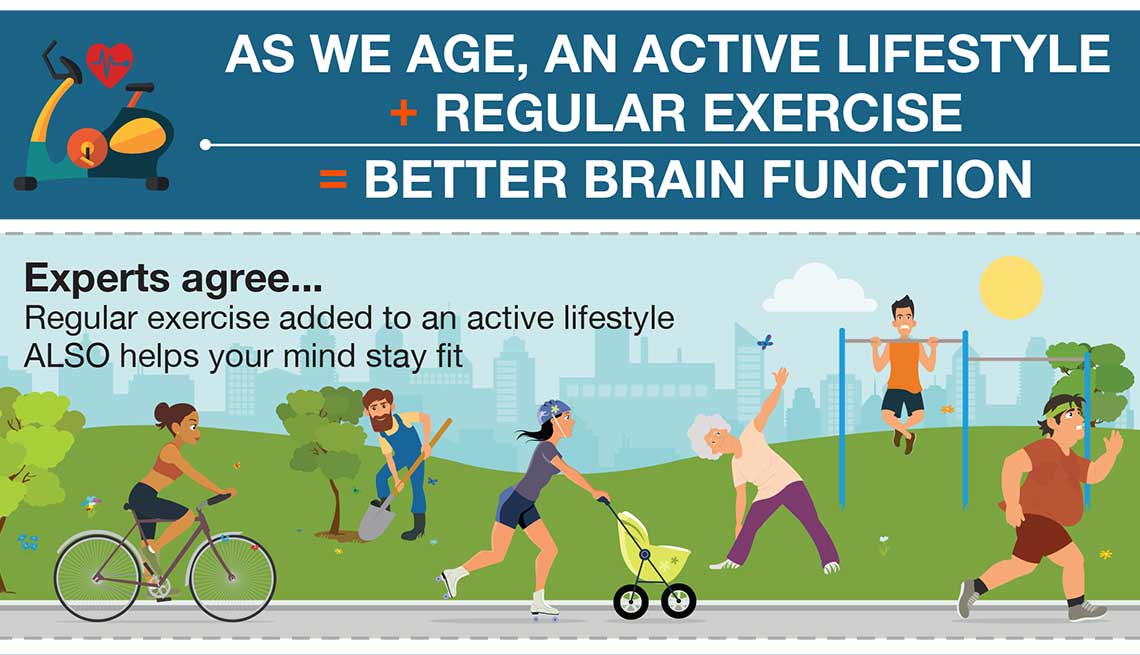
Maintaining function in later life appears to depend on two primary drivers: effort and purpose
. According to Prof Robertson, the act of doing something with effort is intrinsically more rewarding than passive activity. He warns against the risk of becoming lazy
, suggesting that the drive to get up and engage with the world is a critical component of health.
This engagement does not necessarily require traditional employment, though Robertson notes that retiring too early can be detrimental. He mentions data suggesting that diminishing brain function is a concern for those who retire in their 50s. He points to the contrast between retirees in Italy or Austria, who may spend their time playing boules, sitting happily with their coffees in the piazza
, and 65-year-olds in Ireland, the UK, or Florida. In his view, the former group may show differences in memory function compared to those who maintain higher levels of cognitive demand through active engagement.
Whether through professional work, volunteering, or managing a community committee, the demands the world places on the brain reinforce the cognitive pathways that maintain mental acuity. This suggests that cognitive performance is more fluid than previously thought. Data from an International Monetary Fund study of 41 countries found that the cognitive performance of a 70-year-old in 2020 was equivalent to that of a 53-year-old in 2000.
Separating natural aging from medical pathology
A central challenge in geriatric medicine is the tendency to conflate the natural process of aging with the onset of disease. This confusion can lead to a premature surrender of autonomy and activity.
“We must not confuse disease with age. It is not a disease,” Prof Ian Robertson, Prof Emeritus of Psychology in Trinity College
When an individual views a physical limitation—such as back pain—as an inevitable result of being 75, they are less likely to seek rehabilitation than a 35-year-old who views the same pain as reversible. This difference in perception changes the treatment trajectory and the eventual outcome.
These findings suggest that the societal stigma surrounding aging can impact how individuals perceive their own health. When society and individuals treat aging as a period of inevitable uselessness, they may inadvertently accelerate the decline they fear. By contrast, framing later life as a period where improvement is possible—and where cognitive performance can remain high—shifts the goal from merely surviving old age to actively maintaining vitality.
By recognizing that positive aging is a reachable norm rather than a rare exception, healthcare providers can better encourage patients to maintain their physical and mental engagement throughout their later years.