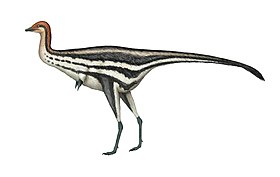
A nearly complete 90-million-year-old skeleton of Alnashetri cerropoliciensis was discovered in northern Patagonia at the La Buitrera fossil site in 2014 and described in 2026.
The fossil belongs to a member of the alvarezsaurs, a group of theropod dinosaurs known for their tiny teeth and almost comically reduced forelimbs.
For years, researchers struggled to understand this group because the best-preserved fossils came from Asia even as South American specimens were mostly fragmentary.
The discovery changed that by providing the first real chance to notice the entire animal after scientists had only known the species from partial remains.
Preparing the fossil took years due to the minor and delicate nature of the bones, which required careful cleaning and assembly to avoid damage.
Peter Makovicky from the University of Minnesota Twin Cities and Sebastián Apesteguía from Universidad Maimónides in Argentina co-led the study describing the skeleton.
Makovicky compared the nearly complete specimen to finding a paleontological Rosetta Stone, saying it allows accurate identification of scrappier finds and mapping of evolutionary transitions.
Having a complete reference point enables researchers to revisit old, puzzling fossils in museum drawers and finally understand where they fit in the evolutionary timeline.
Unlike later alvarezsaurs, Alnashetri had longer arms and larger teeth, suggesting that extreme specialization came later in the group’s evolution.
This indicates that the alvarezsaur lineage did not start out with the full suite of features they are famous for, such as stubby arms and a single enlarged claw.
The dinosaur weighed under two pounds, making it one of the smallest known from South America and providing insight into how the lineage evolved, shrank, and spread across the ancient world.
What does the Alnashetri fossil tell scientists about alvarezsaur evolution?
It shows that extreme physical specializations like tiny teeth and reduced forelimbs developed later, not at the beginning of the lineage.

Why was the La Buitrera fossil site important for this discovery?
The site is already famous for beautifully preserved Cretaceous animals, which helped ensure the Alnashetri skeleton was found in excellent condition.