The textbook model that wasn’t
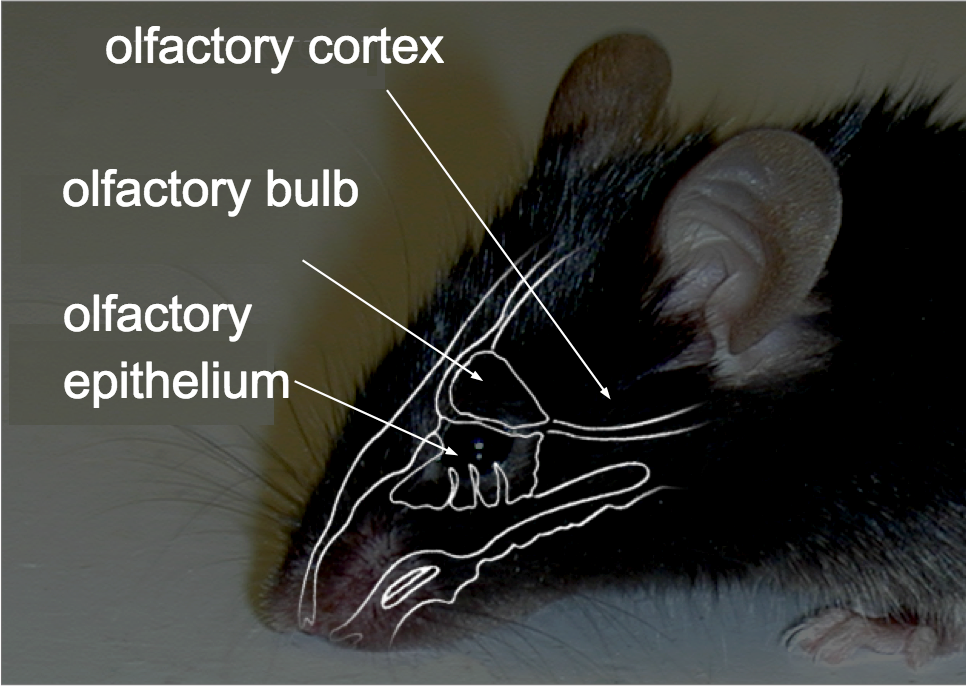
The nasal epithelium—the scent-sensing tissue lining the nasal cavity—has long been described as a patchwork of four or five broad zones. Within each zone, the prevailing model suggested that olfactory receptors, the proteins that detect odor molecules, were expressed without clear spatial order. Researchers at the Karolinska Institute noted that this framework had been the standard for decades, despite growing evidence that the system might be more structured than previously recognized.
The original model was based on early research from the 1990s, which identified distinct regions in the mouse nose where certain groups of receptors were more likely to appear. However, the assumption was that within those regions, receptor expression was largely arbitrary. This randomness was thought to distinguish olfaction from other senses like vision and hearing, which rely on precise spatial maps. The retina, for example, preserves spatial relationships in visual input, while the cochlea organizes sound frequencies along a gradient. Olfaction was considered an exception—a sense without a comparable organizational framework.
Recent technological advances have begun to challenge that view. Tools like single-cell sequencing and spatial transcriptomics have allowed scientists to examine olfactory neurons in greater detail than ever before. Researchers at Harvard Medical School, who led the new study, noted that these methods have only recently become sophisticated enough to map receptor distribution with high precision. This has enabled a closer look at whether the olfactory system might follow a more structured pattern than previously thought.
A thousand stripes of smell
The study, conducted by a team at Harvard Medical School, analyzed millions of neurons from hundreds of mice. Using single-cell sequencing, they identified which of the roughly 1,100 olfactory receptors each neuron expressed. Spatial transcriptomics then allowed them to map the precise locations of those receptors within the nasal epithelium. The results revealed a highly organized system: receptors were arranged in horizontal stripes running from the top of the nose to the bottom, with each receptor type occupying a specific position.
Researchers explained that each receptor type appeared to adopt a consistent location in the nose, forming overlapping stripes that were present in every mouse examined. This consistency suggested a tightly regulated developmental process rather than random distribution. The team also found that neurons expressing the same receptor in the nose projected to the same region in the olfactory bulb, the brain’s primary processing center for smell. This alignment between the nose and brain indicated a coordinated system of spatial organization.
The findings provide new insights into how the olfactory system might process odors. For decades, scientists have debated how the brain interprets input from what appeared to be a randomly distributed set of receptors. The discovery of a structured arrangement in the nose suggests that spatial organization may play a role in odor processing, though the exact mechanisms remain under investigation. Researchers at the Monell Chemical Senses Center noted that the results address long-standing questions about how receptor mapping occurs in the olfactory system.
The study also identified a potential factor in this spatial organization. The team found that retinoic acid, a molecule involved in gene regulation, appeared to guide neurons to express the correct receptor for their location. By adjusting retinoic acid levels in the nose, they demonstrated its influence on receptor expression. This finding contributes to the understanding of how the olfactory system develops, though further research is needed to clarify its broader implications.
From mice to humans: the unanswered questions
While the study offers a detailed look at olfactory organization in mice, it does not yet confirm whether the same principles apply to humans. Mice possess around 1,100 olfactory receptor genes, compared to roughly 400 in humans. The complexity of the mouse system made it a useful model for uncovering spatial patterns, but human olfactory organization remains an open question. The Harvard team acknowledged that their results introduce a new framework for understanding receptor distribution, though translating these findings to humans will require additional investigation.
The research may have relevance for conditions affecting smell. Some individuals experience anosmia, or loss of smell, due to various causes, including viral infections. Understanding how olfactory receptors are organized could inform future studies on how such conditions develop and how they might be addressed. However, researchers emphasized that applying these findings to human health is still a distant goal, with many unanswered questions remaining.
One key question is how this spatial mapping develops. The study suggests that retinoic acid plays a role, but the precise mechanisms are not yet understood. How do neurons determine which receptor to express based on their position? And how does this organization influence odor processing in the brain? These questions will likely guide future research in olfactory neuroscience.
For now, the discovery of “smell stripes” in mice challenges long-held assumptions about olfaction. The sense of smell, often considered less structured than other senses, may follow a more organized pattern than previously recognized. As one researcher noted, the findings overturn a foundational model of olfactory organization and raise new possibilities for how the system functions.
What this means for how we think about smell
The discovery of a spatial map in the mouse nose challenges the idea that olfaction operates without the kind of organization seen in other senses. Vision, hearing, and touch all rely on spatial maps to encode information about the external world. The retina maps visual space, the cochlea maps sound frequencies, and the skin maps tactile sensations. Olfaction was long thought to function differently, relying on a combinatorial code rather than spatial organization.
The new findings suggest that olfaction may share more similarities with other senses than previously believed. Researchers noted that the complexity of the nasal epithelium is striking, with mice possessing millions of olfactory neurons expressing over a thousand receptor types. The presence of a spatial map in the nose raises questions about whether olfaction also uses spatial encoding to process odors, though this remains speculative.
This shift in understanding could inform future research on olfactory disorders. If receptor organization is critical for normal smell function, disruptions to that organization might contribute to conditions like anosmia. Conversely, therapies that restore or replicate this spatial mapping could be explored as potential treatments. The study also prompts new questions about how the brain interprets olfactory input. If receptors are spatially organized in the nose, does that organization influence odor perception? Could it help explain why certain smells evoke specific memories or emotions?
For readers, the research offers a new perspective on a sense that is often overlooked. Smell plays a vital role in daily life, from detecting hazards to enhancing enjoyment of food. The discovery of a spatial map in the mouse nose provides a fresh lens for examining this complex system. It also highlights how much remains unknown about the brain’s intricate workings. As researchers noted, the findings fundamentally alter how scientists conceptualize olfactory processing.
For now, the study demonstrates how new technologies can overturn long-standing assumptions. Single-cell sequencing and spatial transcriptomics, though still evolving, have already revealed unexpected patterns in the olfactory system. As these methods advance, they may uncover further details about the organization of the senses, reshaping our understanding of how the brain processes the world around us.