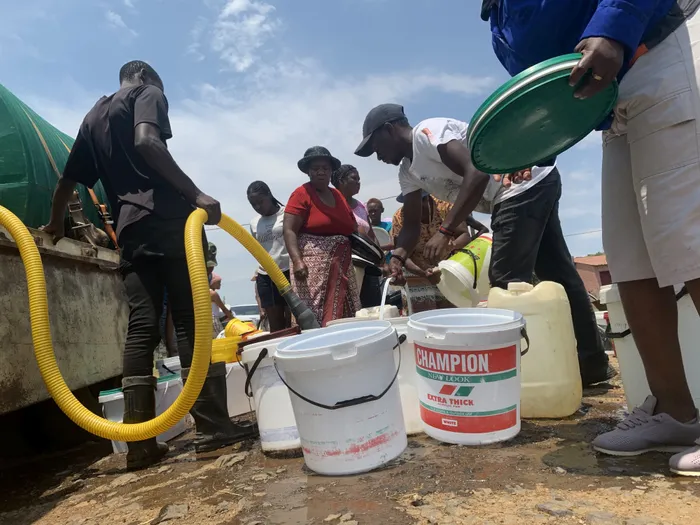
Senegal’s government has launched an urgent water security push this month, targeting a 2030 goal of universal access to potable water after persistent shortages in rural and peri-urban zones. On May 7, President Bassirou Diomaye Faye’s administration presented its Water Compact 2026–2030 at the World Bank’s Spring Meetings, pledging $4.5 billion in public and private financing—yet local officials warn implementation lags behind the crisis.
A Compact Under Pressure
Senegal’s Water Compact 2026–2030, unveiled on May 7, 2026, marks the government’s most ambitious effort yet to address chronic water shortages. The plan aims to raise access to potable water from 88% in 2024 to 100% by 2030, targeting rural and peri-urban areas where shortages persist despite national averages suggesting progress. The compact, part of the Water Forward Initiative led by the World Bank, includes $4.5 billion in financing—$2.5 billion from public sources and $2 billion through public-private partnerships. Key projects include renewable-energy desalination plants, water-transfer infrastructure, and the proposed Fonds Bleu Sénégal, a dedicated fund for water investments.
Yet the urgency is undeniable. While national coverage figures mask regional disparities, local authorities and NGOs report recurring shortages in zones like Bassoungara, where groundwater depletion and erratic rainfall have strained supply networks. The Ministry of Water and Sanitation, led by Cheikh Tidiane Dièye, has framed the compact as a “flagship reform platform,” but critics argue the timeline risks being overtaken by immediate needs.
The Bassirou Diomaye Faye Factor
President Bassirou Diomaye Faye, who took office in April 2024, has made water security a cornerstone of his administration’s economic agenda. Unlike his predecessor, Macky Sall—who in April 2026 separately campaigned for UN Secretary-General while championing Senegal’s water diplomacy—Faye’s approach is grounded in domestic action. His March 4, 2026, Council of Ministers statement highlighted water as a “national priority,” though specifics on Bassoungara’s crisis remained scant.
Sall’s diplomatic legacy, however, continues to shape Senegal’s water narrative. As African Union chair in 2022, he positioned the continent’s water challenges on the global stage, securing commitments for debt relief and climate-resilient infrastructure. His April 22, 2026, UN pitch for Secretary-General—where he emphasized multilateralism and development financing—echoed Senegal’s push to align water security with broader geopolitical goals. Yet Faye’s administration must now deliver on promises made under Sall’s tenure, particularly in areas like Bassoungara, where groundwater overdrafting and aging infrastructure have left communities vulnerable.
Bassoungara: A Microcosm of the Crisis
While national data shows progress, Bassoungara, a rural commune in the Fatick region, exemplifies the gaps. Local officials have not issued a formal statement as of May 21, 2026, but Al Jazeera’s 2018 reporting—though outdated—highlighted Senegal’s broader struggle with potable water access, particularly in drought-prone zones. The Water Compact does not single out Bassoungara, but its inclusion in the 2024–2030 rural water expansion suggests it is among priority areas. The challenge lies in execution: public-private partnerships require regulatory clarity, and desalination projects face delays due to funding bottlenecks.
Minister Dièye, during the World Bank’s “Unlocking Capital for Africa’s Water Security” roundtable, stressed that Senegal’s compact is not just about infrastructure but systemic reform. His call for private capital mobilization reflects a shift from state-led projects to hybrid models—but skeptics warn that without faster disbursement, the 2030 deadline may slip.
What’s Next: Timelines and Uncertainties
The Water Compact’s first phase, launched in April 2026, focuses on mobilizing initial financing and finalizing project tenders. The Fonds Bleu Sénégal, if approved, could accelerate funding, but its governance structure remains under negotiation. Meanwhile, Bassoungara’s situation—like that of other high-risk zones—depends on whether the compact’s $4.5 billion pledge translates into on-the-ground interventions within the next 12 months.

President Faye’s administration faces two critical tests: transparency in water allocation and speed in project rollout. The March 4, 2026, Council of Ministers statement set the tone, but without a public roadmap for Bassoungara or similar hotspots, the compact risks becoming another well-intentioned but underfunded plan. The World Bank’s monitoring will be key—if Senegal fails to meet its 2028 milestone (raising access to 95%), the 2030 target could unravel.
For now, the Water Compact stands as Senegal’s most concrete response to its water crisis—but the gap between policy and delivery remains the defining challenge.