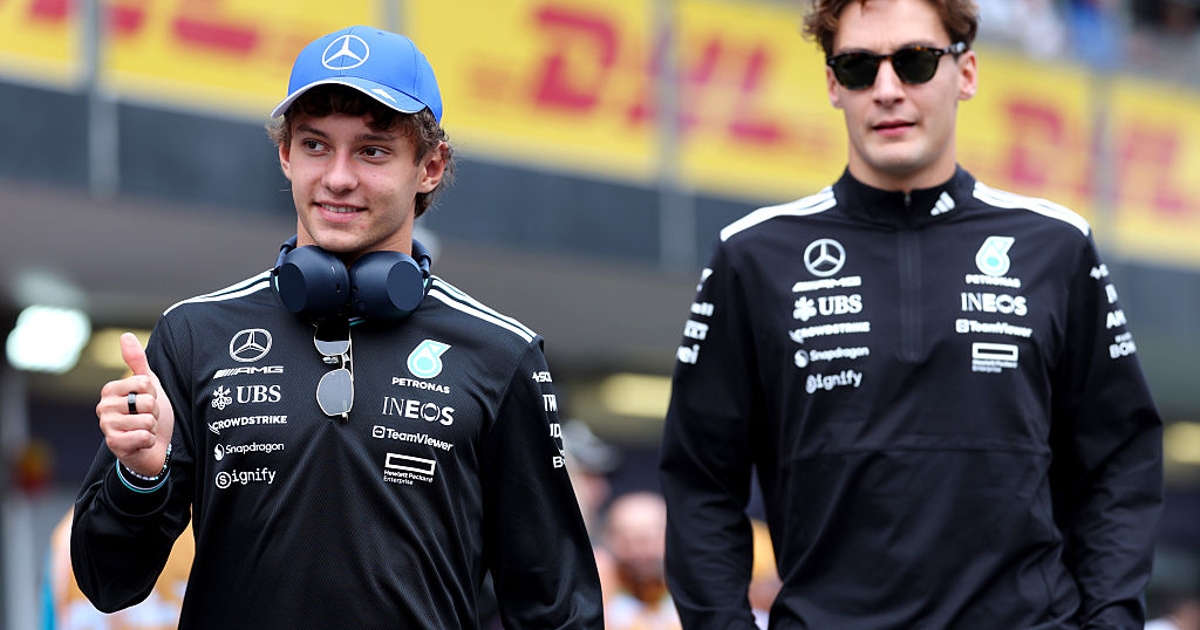
From Protege to Pole Position
George Russell’s season had begun with Mercedes’ expected dominance. As the team’s homegrown talent and pre-season favorite, he delivered a strong performance in Australia, but subsequent races in China and Japan revealed vulnerabilities. Officials later noted that a technical problem almost certainly robbed Russell of pole position in China, while the safety car intervention in Japan disrupted his rhythm. Antonelli, meanwhile, has emerged as the youngest driver to lead the championship, narrowing the gap through a combination of strong performances and favorable race conditions.
In Miami, Russell’s fifth-place grid position highlighted how quickly the season’s dynamics can shift. The Red Bull, McLaren, and Ferrari upgrades had closed the performance gap, and the low-grip surface—where Russell has historically struggled—exposed Mercedes’ limitations. Antonelli, however, had already demonstrated an ability to extract maximum performance from the same car. His pole-to-win trajectory in Miami was built on precise racecraft, where every lap was a tactical decision and every opportunity—whether from rivals’ errors or race incidents—was seized upon.
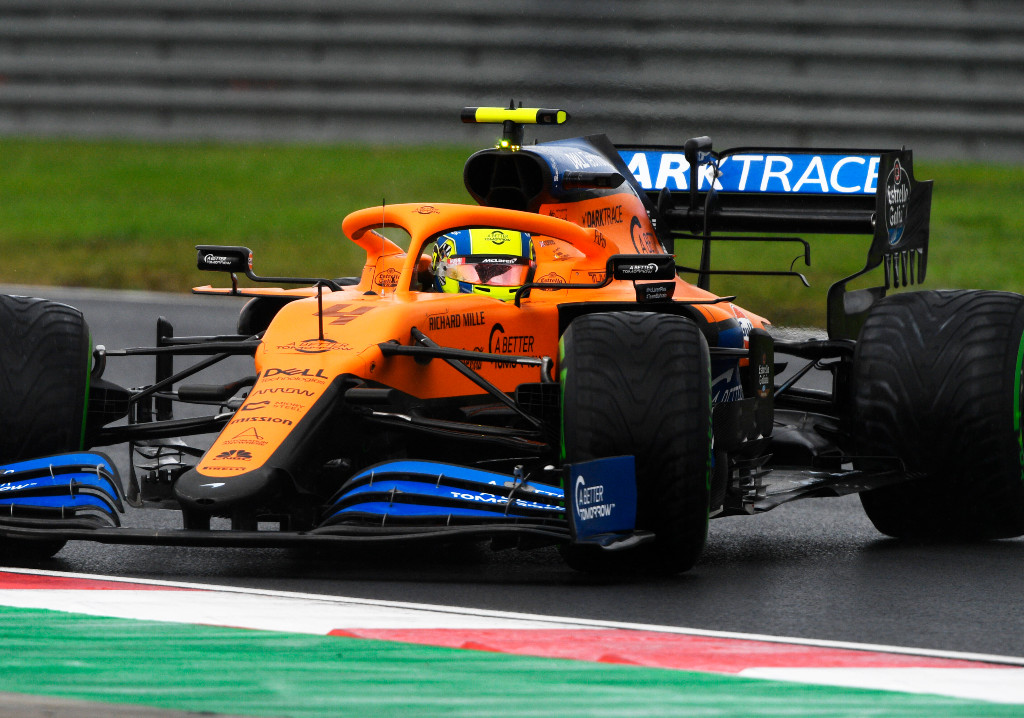
McLaren’s Lando Norris finished as the race’s runner-up, and team principal Andrea Stella later emphasized that Antonelli’s victory was not solely about individual brilliance. Stella pointed to a series of factors: a strong first lap after Antonelli’s pit stop, Norris’s in-lap mistakes, and the team’s timing decisions regarding tyre strategy. The race outcome, Stella noted, was shaped by tyre overheating, the unpredictable nature of pit-stop sequences, and the sport’s inherent unpredictability, where a single miscalculation can alter a race’s trajectory.
The Fragility of a Championship Lead
Russell’s post-race assessment was measured, acknowledging Antonelli’s momentum without overt concern. He observed that the Italian was in a strong position, but the subtext was clear: this was not the same driver who had dominated the season’s opening race. The reality is that in Formula 1, a single race can redefine a championship.
Antonelli’s recent consistency contrasts with Russell’s early-season dominance. While Russell’s lead was initially built on Mercedes’ technical advantage, Antonelli’s progress has been marked by adaptability. His wins in China and Japan were secured under challenging conditions, including the safety car and tyre management difficulties. In Miami, his ability to remain composed despite six consecutive bad starts demonstrated a mental resilience that Russell, despite his experience, has not yet matched on this circuit.
Russell’s admission that Mercedes’ pace in Miami was significantly lower than expected was a rare acknowledgment of the team’s struggles. It underscored a critical shift in the season: Mercedes’ 2026 strategy, which had relied on Russell’s championship experience, is now being tested by a driver who not only matches his talent but exploits the sport’s unpredictable elements. The 20-point gap between Antonelli and Russell, though not yet insurmountable, has grown rapidly over three races. In a sport where momentum can shift overnight, that margin carries significant weight.
Where the Racecraft Meets the Chaos
Miami’s unpredictable conditions—safety car periods, pit-stop sequencing, and tyre management—highlighted the variables that distinguish elite drivers. Antonelli thrived in this environment, maintaining composure and seizing opportunities when others faltered. His ability to claw back positions despite six consecutive bad starts demonstrated a tactical sharpness that Russell, for all his experience, has not yet replicated on this track.
Statistically, Antonelli’s sixth consecutive bad start should have been a handicap, yet he remained within striking distance of Norris. When McLaren finally pitted, Antonelli was nearly alongside, and the Mercedes driver’s late pass sealed the victory. The contrast with Russell’s fourth-place finish—despite starting fourth—was striking. On a circuit where low-speed corners and low-grip surfaces demand precision over raw power, Antonelli’s adaptability has given him a clear edge.
Mercedes’ historical dominance remains intact, but the 2026 season has introduced a new dynamic: a driver who doesn’t just pilot the best car but understands how to exploit the sport’s margins. Antonelli’s Miami win was not an anomaly; it was the latest in a sequence of races where he has turned Mercedes’ technical advantages into racecraft-driven success. With 18 races remaining, that advantage could prove decisive in the title battle.
The Question That Lingers
As the season progresses, the focus shifts from whether Antonelli can sustain his form to whether Russell—and Mercedes—can close the gap without repeating the patterns that have defined this early stretch. The low-grip circuits, safety car deployments, and pit-stop decisions remain the battlegrounds where Antonelli has excelled. For Russell, the challenge is to match that adaptability while maintaining the consistency that has defined his career.
Antonelli’s Miami victory was more than a win—it was a statement about the evolving nature of Formula 1. In a sport where the driver who can turn chaos into opportunity holds the advantage, the question now is whether Russell can adapt. The next safety car, the next pit-stop mistake, the next low-grip circuit will determine not just the next race, but the entire championship.