
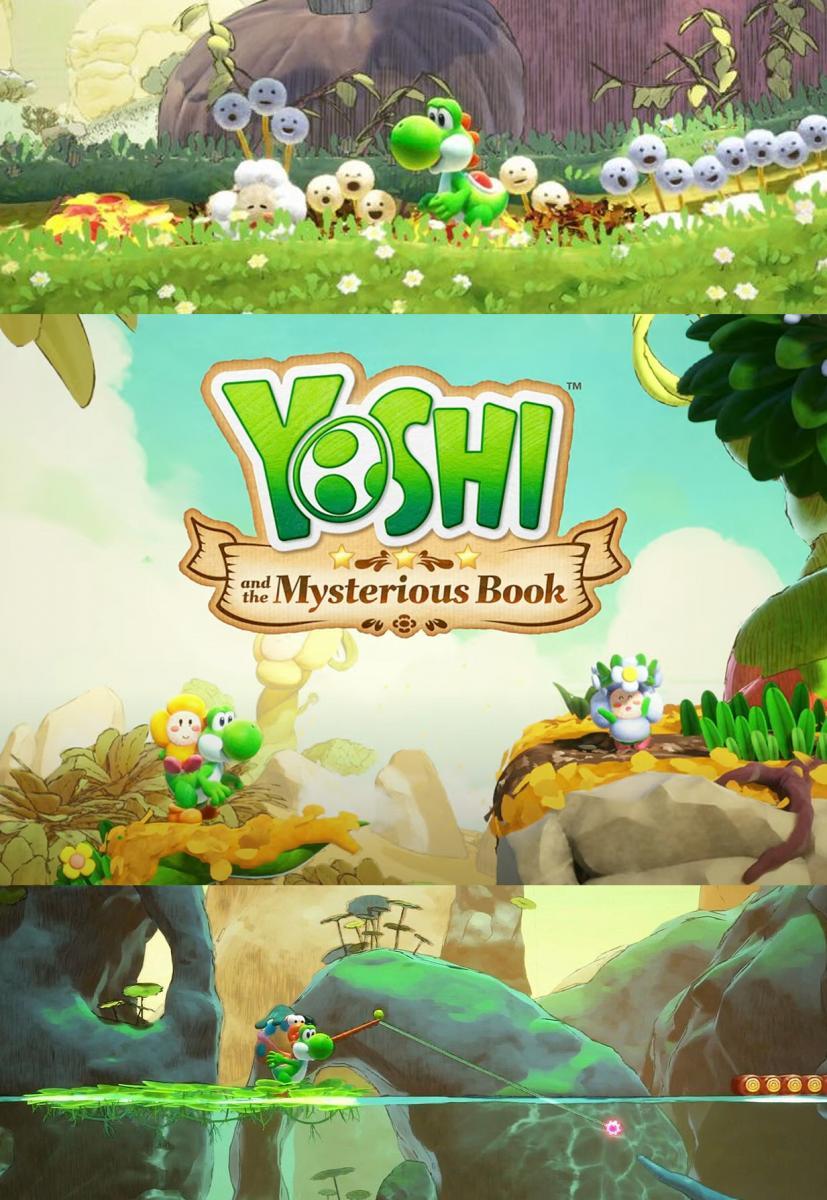
Yoshi’s latest adventure begins not with a jump or a power-up, but with a question: what does this creature taste like? That simple curiosity, posed by a giant talking book named Mr. E, sets the tone for a game that feels both familiar and unexpectedly deep.
After years of spin-offs that leaned heavily on nostalgia, Yoshi and the Mysterious Book marks a shift. Rather than chasing the magic of 1995’s Yoshi’s Island, the game builds its own identity around exploration, observation, and playful experimentation. Early hands-on previews reveal a design that rewards curiosity over speed, letting players linger in each level to uncover how creatures behave — whether they bounce, burp, or bolt when startled.
The game’s structure mirrors a wildlife documentary more than a traditional platformer. Each stage introduces a new creature whose traits — like blowing bubbles or growing vines — become tools for solving environmental puzzles. Players must interact with these beings in ways that sense silly but meaningful: licking them to see if they’re edible, jumping on their heads to test durability, or carrying them to observe how they react to different terrains. These observations are then recorded in Mr. E’s pages, creating a living field guide that evolves as players progress.
What stands out is how the game avoids punishing failure. There are no lives to lose, no timers to beat, and no game over screens. Instead, progress is measured in understanding. This design echoes the open-ended freedom of The Legend of Zelda: Breath of the Wild, a comparison made by multiple reviewers who see in Yoshi’s new approach a similar trust in player-driven discovery. Yet unlike Breath of the Wild’s vast emptiness, this game fills its world with whimsy and detail, turning every corner into a potential lesson.
The tone remains unmistakably Nintendo: bright, silly, and full of charm. A rainbow-wearing, monocle-sporting book guides the Yoshi through a world where renaming creatures becomes part of the fun — turning a mischievous thief into an “ASBO” or a shy flower into “Mr. Brexit.” These moments of absurdity are balanced by genuine mechanical depth, especially with the introduction of the tail-flip mechanic, which lets Yoshi temporarily adopt a creature’s abilities, such as leaving a trail of bubbles to create floating platforms.
Critics note that the game walks a fine line. Its lack of traditional challenge could feel hollow in less careful hands, but the current build avoids that trap by layering in subtle goals — collecting specific items, triggering creature behaviors, or uncovering hidden interactions. These aren’t framed as obligations, but as invitations for those who want to dig deeper.
There’s similarly a quiet ambition beneath the surface. By letting knowledge persist across levels and letting creatures reappear in unexpected places, the game creates a sense of continuity and consequence rare in 2D platformers. What you learn in one area might help you solve a puzzle hours later, not because the game forces it, but because you remember.
For long-time fans who’ve watched Yoshi bounce between roles — from hero to sidekick to experimental subject — this feels like a moment of clarity. The character isn’t trying to be Mario. He’s being allowed to be himself: curious, adaptable, and quietly clever.
What makes Yoshi and the Mysterious Book different from previous Yoshi games?
It shifts focus from precision platforming to exploration and experimentation, using creature interactions as both gameplay mechanics and narrative progression, with no failure states or time pressure.
How does the game handle player failure or mistakes?
There are no lives, health, or timers; players cannot die or be punished for mistakes, with progress instead tied to learning, and discovery.
Is the game connected to any larger Nintendo design trends?
Yes, it reflects the same player freedom and system-driven design seen in Breath of the Wild, applying those principles to a 2D platformer format for the first time in the Yoshi series.