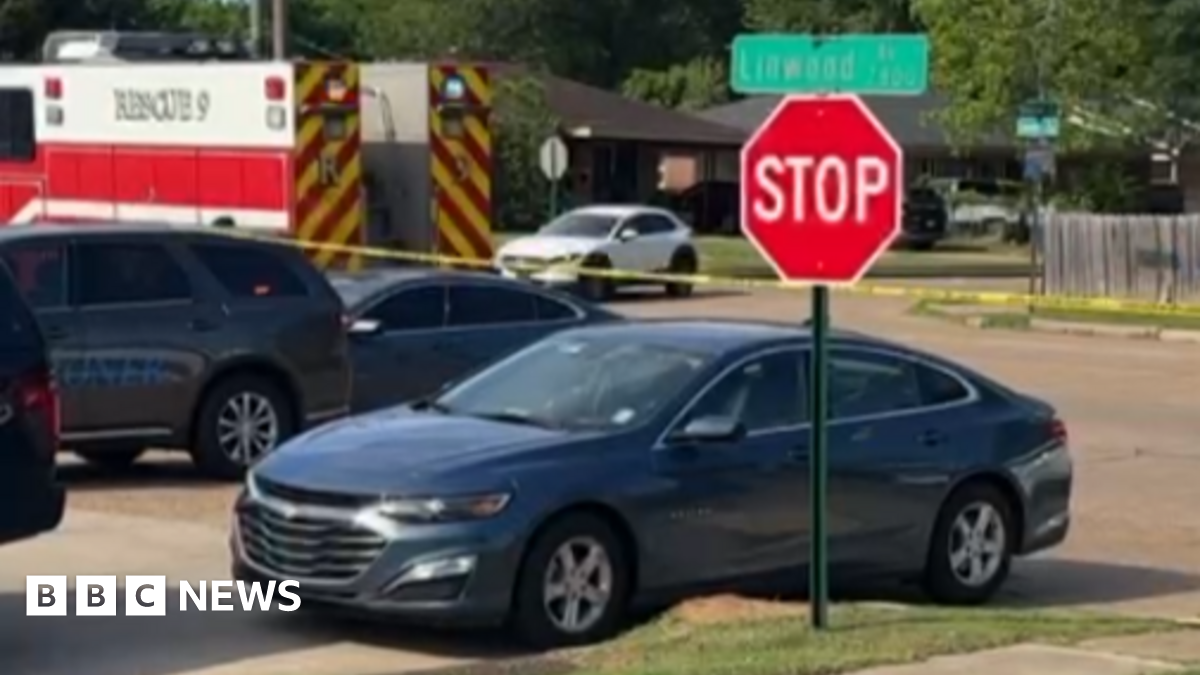
Eight children were killed in a shooting spree across multiple locations in Shreveport, Louisiana, early Sunday morning, marking one of the deadliest attacks on minors in recent U.S. History.
The violence began before 6:00 a.m. When police responded to a domestic disturbance call at a residence in the Cedar Grove neighborhood. Officers found multiple juvenile victims inside, with ages ranging from 18 months to 14 years, according to police reports from all three sources. The suspect then fled the scene, carjacked a vehicle, and led officers on a pursuit through neighboring areas before being shot and killed by police.
Investigators confirmed the attack unfolded across at least four distinct but nearby locations, including two residences on the same block and a third in another part of the neighborhood. Shreveport Police Corporal Chris Bordelon stated that some of the children killed were the suspect’s descendants, indicating a familial connection that investigators are still examining as part of the domestic violence classification.
Beyond the eight fatalities, two women were shot in the head but survived, and a young boy was injured while jumping from a roof to escape the gunfire. Police have not released the identities of the victims or the suspect, citing an ongoing investigation into what they describe as a “very large scene” requiring extensive evidence collection and witness interviews.
Shreveport Mayor Tom Arceneaux described the incident as “the worst tragic situation we’ve ever had” in the city of approximately 187,000 residents, calling for community prayers and support for the affected families. Police Chief Wayne Smith echoed this sentiment, emphasizing the unprecedented scale of the violence in the Cedar Grove neighborhood.
This tragedy adds to a troubling national trend, with the Gun Violence Archive recording at least six mass murders and over 110 mass shootings in the United States during 2026 prior to this incident. The attack occurred just hours after another mass shooting near the University of Iowa campus, where five people were injured, three of them students, further underscoring the persistent challenge of gun violence in American communities.
How the domestic violence classification shapes the investigation
Police have consistently characterized the shooting as stemming from a domestic disturbance, though they have not disclosed specific details about the suspect’s relationship to the victims or the nature of the domestic conflict. The classification influences how investigators approach evidence collection, witness testimony, and potential motives, focusing on familial relationships and household dynamics rather than external factors like gang activity or random violence.
The domestic violence label also affects potential legal proceedings, though in this case the suspect was killed by police during apprehension, eliminating the possibility of prosecution. Investigators must now determine whether any additional charges could be filed posthumously or if other individuals might face liability for failing to prevent the violence, though no such indications have emerged from official statements.
What the national context reveals about recurring patterns
The Shreveport incident fits within a broader pattern of gun violence that has overwhelmed communities across the United States, particularly in areas with high rates of firearm ownership and limited access to violence prevention programs. Experts note that domestic violence incidents involving firearms are disproportionately lethal, with guns present in such situations increasing the risk of homicide by 500% compared to other weapons.
Despite repeated calls for stricter gun control measures following similar tragedies, congressional action has remained stalled, with legislative efforts consistently failing to gain sufficient bipartisan support. The persistence of this legislative gridlock means that communities like Shreveport continue to face heightened risks without significant federal intervention to address the underlying accessibility of firearms in high-risk situations.
Where the investigation stands now and what comes next
As of the latest updates, the Shreveport Police Department continues to process the crime scene, which spans multiple residential properties and requires meticulous documentation of evidence, bullet trajectories, and witness accounts. The department has not established a timeline for completing the investigation, emphasizing the complexity of coordinating efforts across four distinct but interconnected locations.
Community support services have been mobilized to assist grieving families, with local organizations providing counseling, financial assistance, and logistical facilitate for funeral arrangements. The mayor’s office has established a centralized information hub to keep residents updated on developments and to facilitate donations and volunteer efforts aimed at supporting those directly affected by the tragedy.
How many locations were involved in the shooting?
Police confirmed at least four separate but nearby scenes were involved in the deadly rampage, including two residences on the same block and a third in another part of the neighborhood, with additional areas being processed as part of the ongoing investigation.
What is the age range of the victims?
The victims ranged in age from 18 months to 14 years, with all deceased individuals confirmed to be juveniles by Shreveport Police Corporal Chris Bordelon.
Was the suspect known to the victims?
Police indicated that some of the children killed were the suspect’s descendants, suggesting a familial relationship, though specific details about the exact nature of these relationships have not been disclosed.
How does this incident compare to other mass shootings in 2026?
Prior to this incident, the Gun Violence Archive had recorded at least six mass murders and over 110 mass shootings in the United States during 2026, placing this event among the most severe in terms of juvenile fatalities in a single incident.