
The U.S. White House has launched a website, aliens.gov, that uses science-fiction aesthetics to reframe undocumented immigrants as "aliens," drawing sharp criticism for its dehumanizing rhetoric and political messaging. The site, designed to mimic extraterrestrial themes, features a dark background, neon green text, and a phrase—“They walk among us”—to juxtapose migrants with extraterrestrials, leveraging the dual meaning of the word "alien" in English. Published on May 29, 2026, the platform aggregates real-time data on Immigration and Customs Enforcement (ICE) arrests, urging users to report “suspect aliens” while framing undocumented immigrants as a threat to national security.
The Sci-Fi Rhetoric and Dehumanizing Framing
The website’s design and messaging explicitly borrow from science-fiction tropes, with a black-and-starfield backdrop, glowing green typography, and a narrative that mimics alien invasion stories. The homepage declares, “They walk among us,” a line that appears in multiple sources, including the Franceinfo and BFM reports. The text describes “aliens” as infiltrating American communities, living “apparently normal” lives, and “invading” the nation. This framing, as noted by Romuald Sciora, a researcher at the Institute of International and Strategic Relations, “dehumanizes the foreigner, the migrant, by qualifying them as extraterrestrials.” The site’s creators, however, insist it is a legitimate effort to “reveal the truth” about undocumented immigrants, with a spokesperson for the White House stating, “The president has finally had the courage to say the truth.”

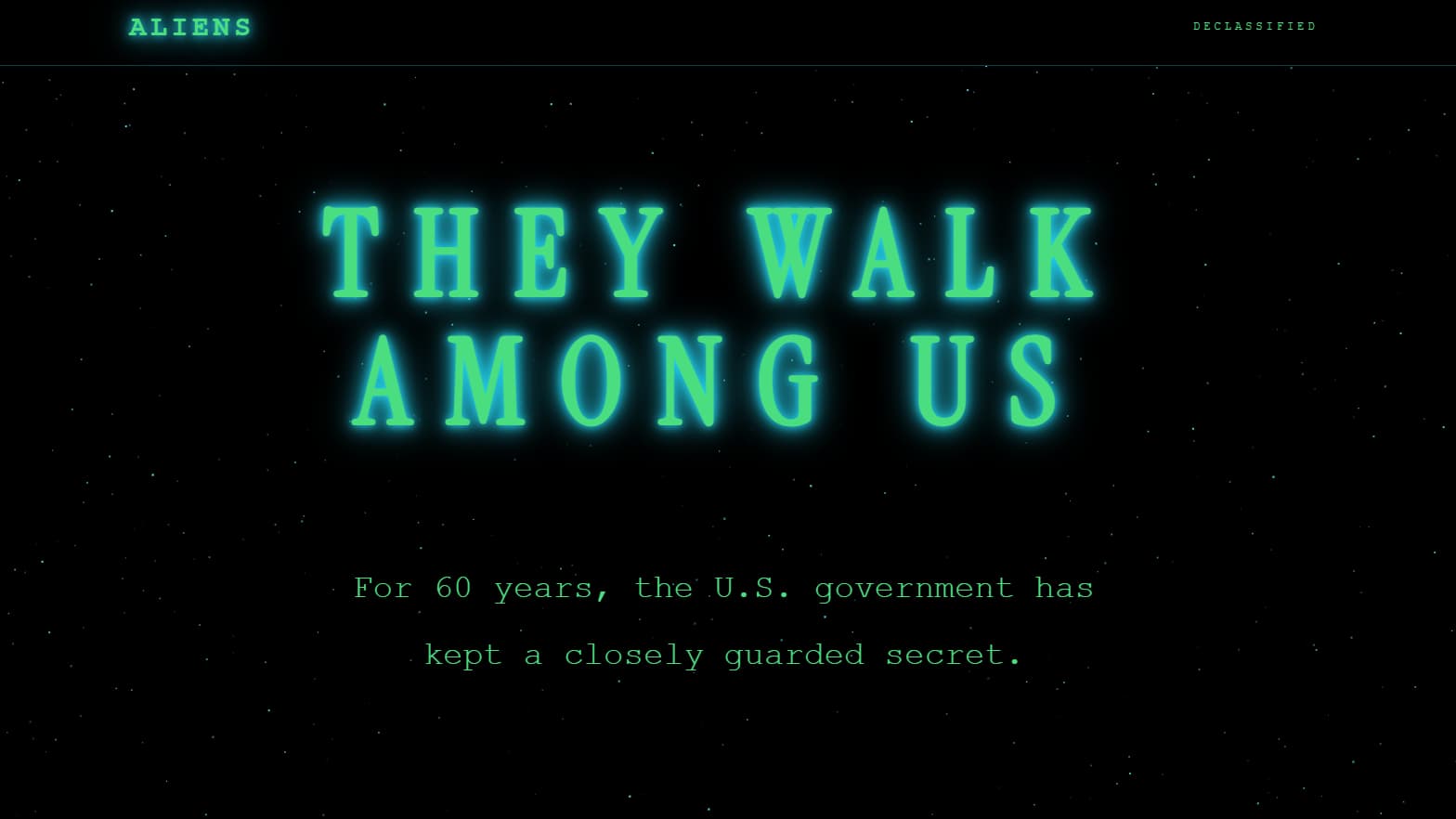
The term “alien” in English historically refers to foreign nationals, but the site exploits its sci-fi connotations to conflate immigrants with extraterrestrials. This duality, as highlighted in Liberation and RFI, is a deliberate political strategy to stoke fear and justify stricter immigration policies. The website’s content, including a real-time counter of “encounters” with “aliens,” mirrors the language of UFO lore, with ICE data rebranded as “alien sightings.” A 2026 report by Franceinfo noted that the site’s interface includes a map of arrests, with statistics on the countries of origin and alleged crimes of those detained.
Reactions and Criticisms: A New Threshold in Stigmatization
The launch of aliens.gov signals a shift in how immigration is framed in U.S. politics, blending populist rhetoric with digital tools to mobilize public support for exclusionary policies. Analysts warn that such strategies could further polarize society, emboldening anti-immigrant sentiment and normalizing surveillance.
Critics argue that the website represents a dangerous escalation in the stigmatization of migrants. Liberation called it a “new threshold” in normalizing anti-immigrant rhetoric, citing how the site’s imagery and language reduce human beings to “foreign bodies” within the nation. The article warned that such framing justifies harsher security measures, increased surveillance, and a culture of suspicion. Similarly, RFI quoted Sciora as stating, “This is a form of digital denunciation, where the state encourages citizens to report undocumented individuals under the guise of combating ‘aliens.’” <!
The website’s call to action—inviting users to report “alien suspects” via a form linked to ICE—has drawn particular condemnation. BFM reported that the site’s final message reads, “If you witness an alien abduction, do not worry. They are in good hands. We will take care of them… and return them safely to their origin.” This rhetoric, critics say, mirrors historical patterns of dehumanization, where marginalized groups are portrayed as threats to national identity. The Liberation article emphasized that such language has been used in past exclusionary policies, from the internment of Japanese Americans during World War II to the criminalization of Latinx communities in the 2010s.
The Data Behind the Narrative: Real-Time Arrests and Political Messaging
The site’s real-time data on ICE arrests, which reportedly reached 3.13 million “encounters” by May 29, 2026, is presented as evidence of an “invasion” by undocumented immigrants. According to BFM, the platform’s counter, updated every second, includes statistics on arrests by city, nationality, and alleged crimes. However, the data lacks context, such as the legal status of those detained or the proportion of arrests linked to violent crimes. RFI noted that the site’s focus on volume over nuance reinforces a narrative of crisis, ignoring the economic and social contributions of migrants.

The White House has defended the site as part of its broader campaign to “secure the border,” with a spokesperson stating, “Trump’s policies have already deported millions of undocumented individuals, and this platform ensures transparency.” Yet, experts like Sciora argue that the site’s messaging is less about transparency and more about propaganda. “It’s not just about data,” he said. “It’s about shaping public perception to justify harsh policies.” The Liberation article echoed this sentiment, noting that the site’s language mirrors the rhetoric of past anti-immigrant movements, which often preceded legislative crackdowns.
Implications and the Road Ahead
The launch of aliens.gov signals a shift in how immigration is framed in U.S. politics, blending populist rhetoric with digital tools to mobilize public support for exclusionary policies. Analysts warn that such strategies could further polarize society, emboldening anti-immigrant sentiment and normalizing surveillance.