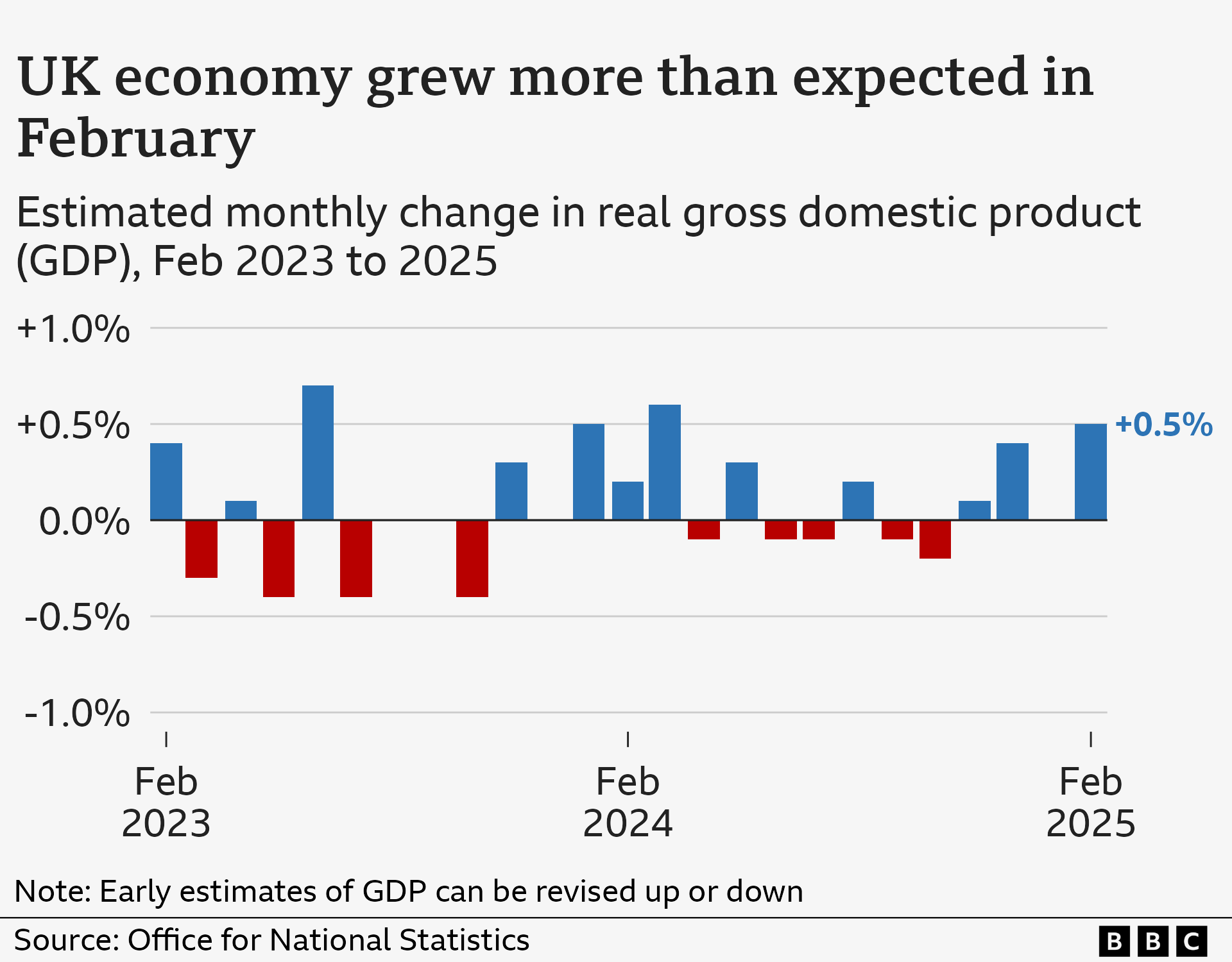
UK GDP expanded by 0.5% in February, far exceeding the 0.1% growth economists expected, though the gain arrives just as a new war in the Middle East threatens to erase it. The surge suggests the economy was gaining momentum before military operations began on February 28, creating a stark contrast between the official data and the current geopolitical reality.
Services and construction drove a surprise 0.5% jump in February
Official figures from the Office for National Statistics (ONS) reveal a broad-based recovery across key sectors. Services and manufacturing both posted 0.5% growth, while construction output climbed by 1%.

Grant Fitzner, the ONS chief economist, attributed the services growth to strong performances in publishing, hospitality, market research, and wholesaling. He also noted that Jaguar Land Rover’s recovery from a damaging cyber-attack last autumn, which had frozen production for weeks, bolstered the three-month figures.
The three-month measure to February—which filters out monthly volatility—rose to 0.5%, up from 0.3% in the three months to January. January’s own figures were revised upward to 0.1% growth from a previous estimate of flatlining.
Why analysts call the latest data stale
Many economists argue that February’s “bumper” growth is already a thing of the past. George Brown, a senior economist at Schroders, told CNBC that the data is “stale” and may not reflect actual conditions on the ground, suggesting that residual seasonality could be skewing the numbers.
Brown pointed to a deteriorating labor market, with the unemployment rate now climbing above 5%, as evidence that the economy isn’t as strong as the GDP figures suggest. Ruth Gregory of Capital Economics added that the growth was “probably already extinguished” by the onset of the Iran war.
Fergus Jimenez-England, an associate economist at the National Institute of Economic and Social Research (NIESR), described the expansion as “sizeable” but warned that an energy price shock has “pulled the rug” from under this momentum.
From the strait of Hormuz to the IMF: how energy shocks hit forecasts
The effective closure of the strait of Hormuz has sent oil and gas prices soaring, leaving the UK particularly vulnerable as a net importer of energy. This geopolitical shift has led analysts to significantly downgrade 2026 growth projections.
The IMF warned that the UK could suffer the most severe hit to growth of any major economy due to the conflict. Sanjay Raja, chief UK economist at Deutsche Bank, expects higher uncertainty to dampen both investment and spending, which will likely drag down output.
Political reactions have been sharp. While Treasury chief secretary James Murray argued that the government’s plan to boost investment is the right way to build resilience, shadow chancellor Mel Stride claimed the IMF’s warnings show the UK is “totally unprepared” for the energy shock.
Bank of England rate cuts are now unlikely
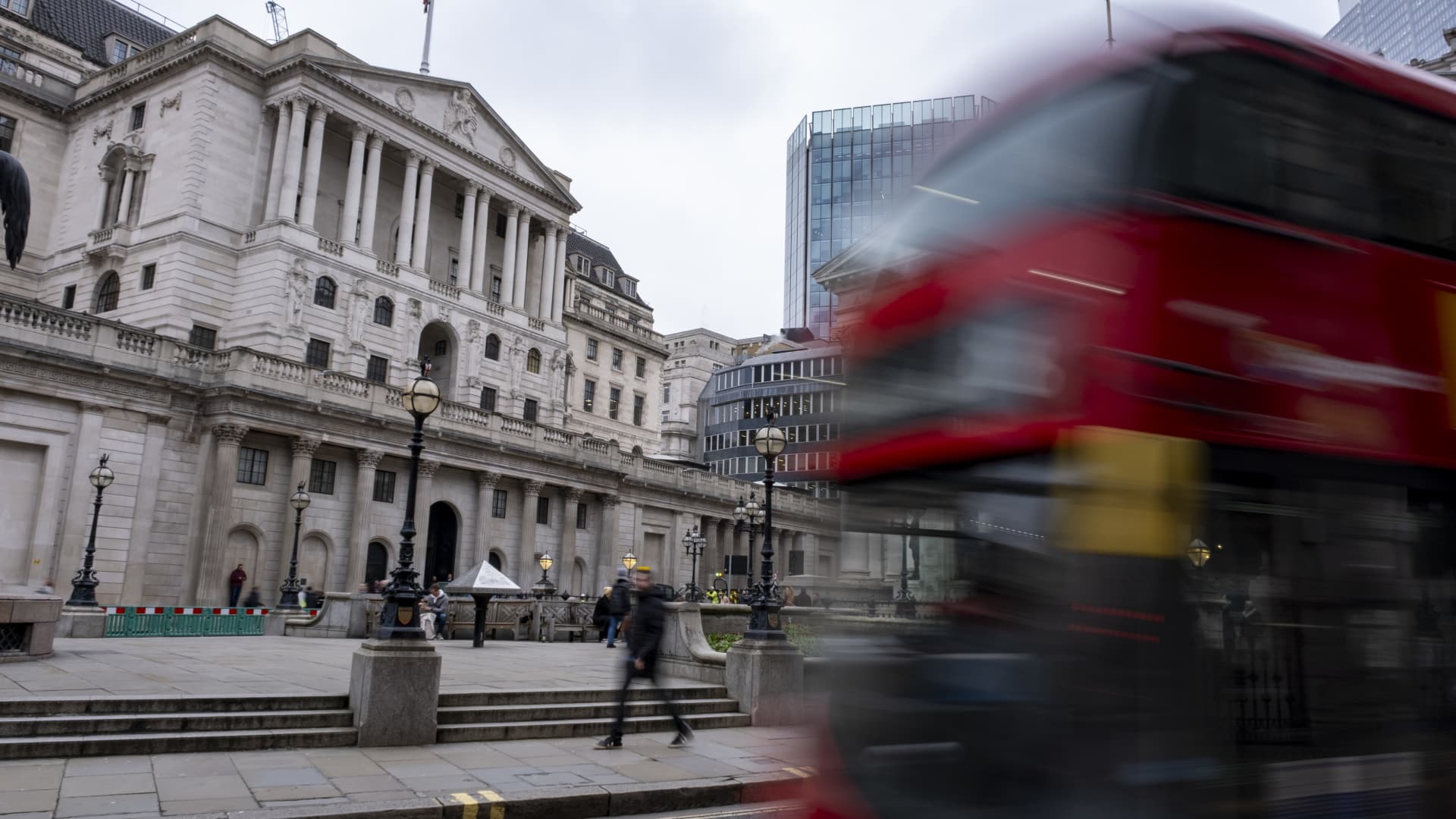
Before the war broke out in late February, the Bank of England was widely expected to cut interest rates as inflation cooled toward its 2% target. Those expectations have vanished.
Economists now forecast that inflation will accelerate to 3.3% in March, up from 3% in February. This spike will likely force the central bank to hike interest rates at least once this year to restrain the inflationary impact of rising energy costs.
Patrick O’Donnell, chief investment strategist at Omnis Investments, believes the positive February GDP data will have minimal impact on policymakers. He expects the Bank of England to “sit on their hands” given the high level of uncertainty and conflicting economic currents.
What specific sectors contributed to the February growth?
Growth was driven by a 1% increase in construction and 0.5% growth in both manufacturing and services. Within the services sector, the ONS highlighted strong performance in wholesaling, publishing, hospitality, and market research, alongside a production recovery at Jaguar Land Rover.
Why is the Bank of England unlikely to cut interest rates?
The war in the Middle East and the resulting energy price shocks are expected to push inflation up to 3.3% in March, from 3% in February. This inflationary pressure removes the justification for rate cuts and may instead force the bank to raise rates.
How has the IMF adjusted its outlook for the UK?
The IMF has downgraded its 2026 growth forecast for the UK from 1.3% to 0.8%, warning that the UK could be the hardest hit of all major economies by the Iran war.