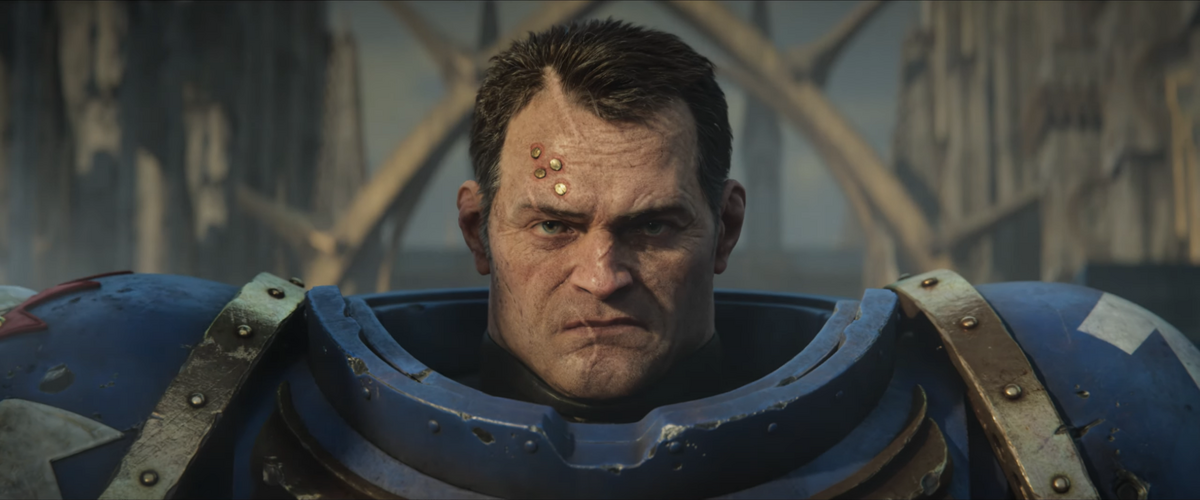
The Return of a Reluctant Hero
Captain Titus’s reemergence on Warhammer TV represents one of the few instances where a video game character transitions into the tabletop universe’s animated storytelling. His initial appearance in *Space Marine*—a third-person shooter developed by Relic Entertainment—introduced him as an Ultramarines captain whose actions in the game contributed to his recognition among fans. While the game’s narrative was not part of the official tabletop lore, it established Titus as a figure associated with accessible, action-oriented storytelling within the broader *Warhammer 40,000* setting.
Warhammer TV’s redesign of Titus appears to align his visual presentation with the aesthetic conventions of the tabletop universe. This adjustment may reflect efforts to integrate characters from different media while maintaining consistency with established lore. The announcement suggests that Titus’s involvement with the Thousand Sons could influence faction dynamics, though the specifics of this interaction remain unclear. The Thousand Sons, known for their pursuit of forbidden knowledge and complex relationships with other factions, have been a recurring element in *Warhammer 40,000* lore, and their connection to Titus may serve as a narrative focal point.
The timing of this reveal coincides with the Thousand Sons’ ongoing prominence in the franchise. The faction, composed of sorcerer-space marines cursed with mutation, has been a subject of interest due to their tragic backstory and intricate lore. Their rivalry with the Space Marines, particularly the Ultramarines, has been explored in various media, but the exact nature of their interest in Titus has not been detailed. The announcement does not provide a clear timeline for how this storyline will develop, leaving room for speculation about whether it will be a limited engagement or part of a larger narrative expansion.
A Multimedia Strategy with Licensing Landmines
Warhammer TV’s growth reflects a broader effort to enhance engagement with the *Warhammer 40,000* franchise beyond traditional tabletop play. The platform has evolved from a community-focused initiative into a significant channel for lore updates, allowing Games Workshop to explore new storytelling methods. Titus’s inclusion serves as an example of how the company is testing the integration of characters from different media while maintaining their core identity within the established universe.
The announcement also highlights the challenges associated with cross-franchise licensing. The legal disclaimers accompanying the reveal reference trademarks for *The Lord of the Rings*, *The Hobbit*, and Middle-earth, illustrating the careful considerations required when incorporating external references. Games Workshop has historically included thematic nods to other franchises, such as the visual similarities between Space Marines and Tolkien’s Orcs, but the explicit inclusion of these disclaimers suggests an increased emphasis on intellectual property boundaries. This caution is particularly relevant for a franchise that has drawn inspiration from a wide range of mythologies and cultural sources.
Games Workshop has previously navigated similar constraints, such as with the *Warhammer Age of Sigmar* universe, which avoided direct comparisons to Tolkien’s work despite thematic parallels. As Warhammer TV’s influence grows, the potential risks of missteps also increase. Errors in licensing or narrative integration could limit future collaborations or necessitate retcons, which would be particularly challenging given the extensive lore accumulated over decades in the *Warhammer 40,000* universe.
The Thousand Sons’ Revenge: A Storytelling Gambit
The Thousand Sons’ interest in Titus is positioned as a key narrative element, leveraging the faction’s strengths in psychological and arcane warfare. Unlike factions that rely on brute force or dogmatic tactics, the Thousand Sons emphasize manipulation and strategic depth, making them a compelling choice for a storyline centered on rivalry and betrayal. Their long-standing conflict with the Ultramarines, Titus’s chapter, provides a foundation for this narrative, allowing Games Workshop to build on existing lore while introducing new dynamics.
However, the announcement leaves several questions unanswered. The reasons behind the Thousand Sons’ focus on Titus, a single captain, are not explained, nor is it clear whether this pursuit is driven by personal vendetta or broader factional objectives. The lack of detail may serve to generate intrigue, but it also introduces risks. Previous narrative arcs, such as the *Horus Heresy* series, have demonstrated the challenges of maintaining consistency across multiple media formats. The success of such expansions depends on careful execution, and any missteps in Warhammer TV’s handling of Titus could affect the franchise’s reputation for cohesive storytelling.
The potential gameplay implications of this storyline are also noteworthy. The Thousand Sons are known for their complex ruleset, which prioritizes psychic abilities and elite units over numerical superiority. If Titus’s appearance leads to new units, detachments, or campaign elements, it could influence the faction’s role in tabletop play. However, the announcement provides limited information on these possibilities, focusing instead on the promise of future conflict without concrete details.
What to Watch Next
Fans will likely focus on Warhammer TV’s upcoming content to see how Titus’s story unfolds. The platform has previously experimented with different formats, including episodic series like *Angels of Death* and anthology-style productions such as *Hammer and Bolter*. The latter, with its shorter runtime and self-contained narratives, may be well-suited to exploring Titus’s backstory, which is already established in the *Space Marine* video game.
The Thousand Sons’ role in this narrative also warrants attention. Their rivalry with the Space Marines is a well-established aspect of *Warhammer 40,000* lore, but their pursuit of Titus could introduce new twists, such as temporary alliances with other factions or internal betrayals. The emphasis on revenge in the announcement suggests a personal dimension to the conflict, though the Thousand Sons are known for their strategic approach, which may extend beyond simple retribution.
More broadly, this development raises questions about Games Workshop’s approach to multimedia expansion. The company has expressed ambitions to grow beyond the tabletop, but each new venture carries the risk of fragmenting the lore. Titus’s appearance serves as a test case for whether a character from one medium can successfully transition into another without alienating existing audiences. The outcome of this experiment will likely influence the franchise’s direction in the years ahead.
Ultimately, this reveal is about more than the return of a single character. It reflects Games Workshop’s efforts to navigate the complexities of modern storytelling, where fans expect seamless integration across platforms and where legal and creative challenges continue to shape the franchise’s evolution.